

Once again, relations between the European Union and Türkiye are passing through tense moments: Commission President Ursula von der Leyen placed Türkiye into the same basket as Russia and China, causing consternation in Ankara. French President Emmanuel Macron promised to “stand by Greece and help defend its sovereignty” – a statement interpreted widely as directed against Türkiye. And a commission of the European Parliament voted to exclude Türkiye from defense-related research projects of HORIZON, the European science research initiative.
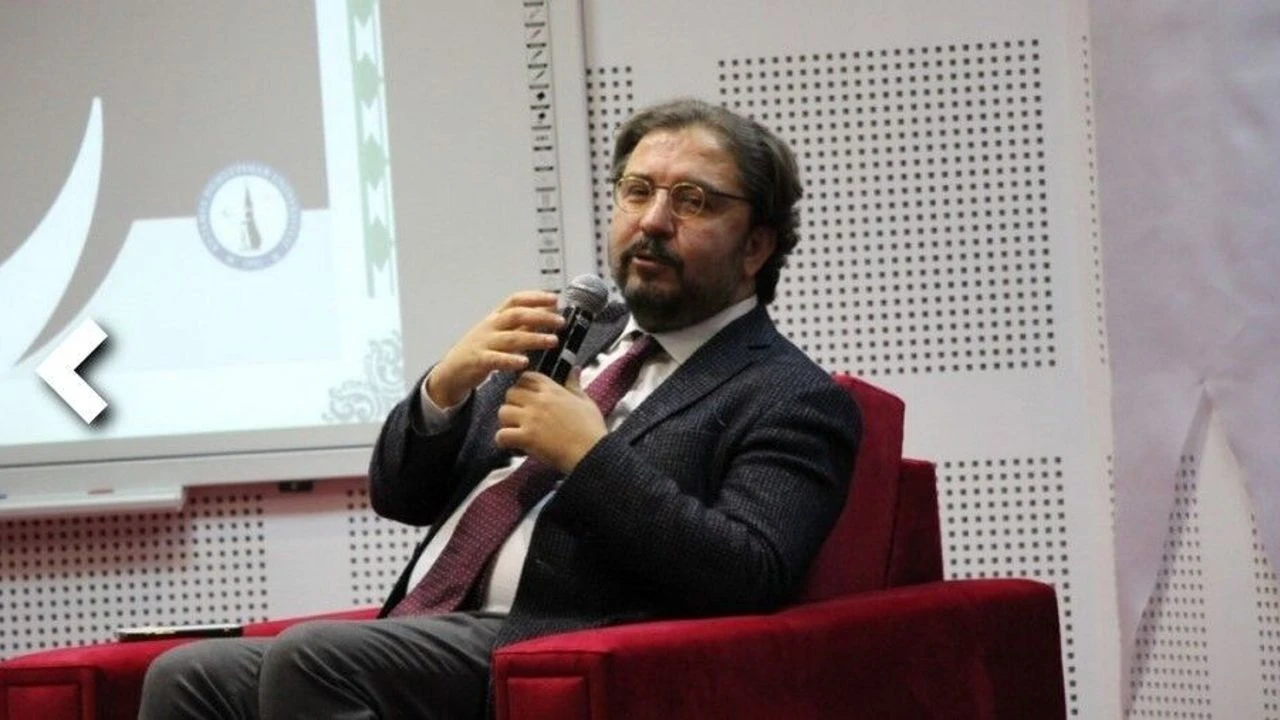
We talked about the background of these steps and the Turkish reaction with Mehmet Yalçın Yılmaz, associate professor at the Istanbul University and a columnist for daily Turkish newspaper Star.
First, let’s start with Ursula von der Leyen’s statement. She said that if we don’t want countries like Türkiye, Russia, and China to become influential in Europe, we need to complete the integration of the continent. How do you interpret this?
Leyen’s statement was, of course, debated in Turkish public opinion as well. Especially regarding Türkiye’s recent relations with Russia and China, I interpreted the statements of Mr. Devlet Bahçeli, the leader of the MHP, an opposition party but also a component of the Cumhur Alliance, as the voice of Türkiye’s internal affairs in the Star newspaper. As you know, anti-American sentiment has risen significantly in Turkish public opinion. This is because the US policies and actions in the Middle East, especially the Iraq invasion after 1990, the ongoing chaos in Syria, the events in Lebanon, and most recently the Gaza process, have inevitably been seen as problematic areas in Türkiye’s relations with the US. For instance, the repercussions of the Iraq War caused migrations in Türkiye. Subsequently, the crisis in Syria inevitably increased anti-American sentiment in Turkish public opinion. Moreover, the sociological base of the ruling party has also become anti-American.
Although Erdoğan has engaged in dialogue with Trump, some issues remain unresolved. The most prominent of these is the Gaza problem. Israel is breaking the ceasefire in Gaza, and the death toll has risen considerably since the Sharm el-Sheikh meeting. Now, of course, the ongoing situation with Iran is also causing unease in Turkish public opinion. The Turkish public opinion supports the Iranian people.
There is a significant convergence of views with Iranian public opinion, even across very different ends of the political spectrum. These processes have inevitably brought the issue of regional problems and regional solutions to the forefront in Türkiye. Solving these problems requires the involvement of global actors. The stances of countries like Russia and China, which are members of the United Nations Security Council, are also important. In this sense, Türkiye wants to conduct its dialogue and relations with both Russia and China on a much healthier basis.
First and foremost, there is the natural gas trade between Russia and Türkiye, and the issue of pipelines. Therefore, the energy relationship actually keeps interdependence on the agenda.
Similarly, China’s corridor policies, especially the issue of the Middle Corridor passing through Türkiye to Europe, are extremely strategic for Türkiye. Therefore, Türkiye wants to maintain stable relations with Russia and China and benefit from the global economic cycle, while the US is trying to encircle these countries. In such an atmosphere, the multipolar world thesis resonates more with the Turkish public.
And in this global struggle and competition, a sociological ground has emerged that, in a sense, turns its back on the US and supports alternative initiatives. Of course, Türkiye’s membership in NATO and its relations with Europe present Türkiye to the world as a country with its face turned towards the West.
It’s economic size, placing it among the top 20 in the world, and its strategic location in energy trade corridors make Türkiye an important player. In such an atmosphere, Türkiye is clearly obliged to pursue a policy of balance. By carefully managing this, Türkiye is also conducting mediation diplomacy to stop the wars in the region and to ensure a lasting ceasefire.
European security architecture and Türkiye
So, is Europe, and von der Leyen in particular, providing a response to this sociology? In a way, is she trying to intervene in a debate within Türkiye and break the wave of unrest in Turkish public opinion?
Two perspectives stand out in Europe, following the Ukraine war after 2022. There’s a growing crisis in Europe’s security architecture. Russophobia has increased. And a dynamic prevails in Europe: a scenario where Russia will invade Europe.
Yet, Russia’s population is limited. In today’s world, processes of invasion and annexation are taking on a completely different dimension. In Türkiye, this scenario seems meaningless. Let’s state that clearly first.
And within this anti-Russian security architecture in Europe, there is a faction that wants to consider Türkiye, in a sense, within the umbrella of this security architecture. On the other side, there are also factions that still hold prejudiced positions against Türkiye. Türkiye’s strategic stance in this global process and crisis—maintaining its relations with Russia, maintaining its relations with Iran, and keeping its trade with China alive—is certainly unsettling to some of the political factions in Europe, let’s be clear about that. And of course, the US has an influence on the political factions in Europe here as well.
As you know, the main rift occurred between the US and Europe. This rift became even more prominent with Trump’s stance on securing NATO’s budget. We can trace this process back to the Merkel era. Merkel exerted certain pressures, particularly on Germany. For example, the fine imposed on Deutsche Bank or the emissions fines imposed on car giants were actually aimed at cutting off Germany’s natural gas trade and transactions with Russia. In that sense, we can say that the political space in Germany has been curtailed, suppressed.
The war in Ukraine has damaged the Nord Stream 2 pipeline to the point where it can no longer be operated. Europe’s economic problems, rising energy costs, an aging population, and employment issues are inevitably leading Europe towards a world where much more difficult times await. In such an atmosphere, unhealthy voices regarding Türkiye sometimes emerge from Europe.
But in Europe, especially in the UK, I can say that there is a strategic relationship between the UK and Türkiye, and that the UK, in this sense, wants to keep the trade route alive without clashing with China.
So, the mental confusion and political divisions in Europe are essentially a structural problem. The rotating presidency of the European Union, the inability of its organs to make quick decisions or react effectively, and weak leadership are the fundamental reasons for the predicament Europe finds itself in today. There are no longer strong political actors in German, British, or French politics like there were in the 1980s. These strong actors have been replaced by coalitions or political leaderships that are barely surviving. This has inevitably stifled strong maneuvering and decision-making mechanisms. Now we have Europe facing Trump.
Europe is already fragmented after Brexit. The fact that the UK has defined its position shows us that the chaos in Europe is much deeper than we can imagine. I can say that the UK is shifting to a different position here, focusing more on dialogue with Türkiye, ensuring the functioning and operation of the route from Beijing to London, and facilitating trade.
In European politics, there is another front led by France. Macron’s occasional anxieties, his statements about NATO being brain dead, and the mission Trump wants to give NATO all indicate that we are facing a completely different world.
In this sense, we can say that things are very complicated on the western front. I can say that the rift across the Atlantic has grown much larger, that Türkiye is closely following these developments, and that Ankara’s aim is actually to figure out how we can overcome the global crisis as easily as possible and get through this ordeal without suffering any damage.
French President Macron, and I was just about to ask about him. During his visit to Greece, Macron stated that he would stand by that country and support them in defending their sovereignty. Also, following a proposal by Greek Cypriot MEPs in the European Parliament, the European Parliament’s security committee suspended cooperation on defense industry research and budget agreements with Türkiye.
Of course, as you know, a six-party dialogue process started in Europe after the Ukraine War. First, six foreign ministers came together. Then the leaders’ process began. And that was the project we call SAFE.
With a budget of $1 trillion to shape Europe’s security architecture, the aim was actually to redirect Europe back to its production lines and revive the European economy through the war industry. Of course, Türkiye has a unique position here. As you know, production areas and production basins in continental Europe have experienced a significant contraction, especially with the natural gas crisis. This is where Türkiye’s advantages stand out.
Turkish-French tensions
The technologies and high value-added products that Türkiye has developed in the defense industry have actually made Türkiye’s participation in the SAFE project a necessary process. Now, this inevitably creates another cycle. In other words, Türkiye’s development of products in strategic areas increases Türkiye’s importance in the global arena, especially with regard to the UAVs, UCAVs, and other technological tools that Türkiye sells to countries in Africa that have border problems. In this sense, Türkiye’s role in European security conflicts with France’s interests in Africa. France, therefore, is trying to strengthen its contact with Greece and Cyprus to demonstrate its power in the Eastern Mediterranean Basin.
Macron wants to make one last push by strengthening his relations with Syria, Libya, and other Mediterranean coastal countries. He had already given importance to the Eastern Mediterranean Basin as soon as he came to power. I had written about him in an article, mentioning that he was a student of the famous Frenchman Attali and discussing the mission of the French Ministry of the Navy. Therefore, he is essentially seeking an answer to the question of whether France can once again enter a new phase of the Republic. It must be said that the conditions are not very favorable for this. Because Cyprus is an extremely critical and strategic area for Türkiye’s security.
And the Turkish Republic of Northern Cyprus has strategic importance in this sense. Türkiye, closely monitoring the energy war in the Eastern Mediterranean, desires that this process brings energy peace, not energy war. It is extremely important that this basin, encompassing the Levant section of the Eastern Mediterranean, including areas like Lebanon, Syria, and Gaza, remains stable and secure. Otherwise, as you know, investments are not made here. And this basin, which could contribute to the global energy problem, cannot be utilized. Against these impositions, Türkiye is exhibiting a more cooperative and alliance-oriented stance. In this sense, Ankara finds France’s efforts or Leyen’s statement much more circumstantial. In this sense, Europe needs Türkiye. Europe plays a very important role in Türkiye’s foreign trade. There are many European companies in Türkiye. Türkiye-Europe relations are very complex, encompassing many areas from the finance sector to the energy sector.
However, on the political front, in the migrant crisis, or in visa liberalization, Türkiye is constantly being kept in an exclusionary position by Europe. Türkiye’s determination in this regard is very clear. It needs to sign a strategic autonomy agreement with the EU based on the principle of equal partnership, and, just like the UK’s special agreement with the EU, Türkiye needs to clarify its trade and legal regulations through a special agreement. In this sense, Türkiye is not in the position of a country waiting at the door of the European Union as it was in the 1990s. I can say that it is trying to advance in a role that seeks to uphold its own interests, its own independent foreign policy, and can establish partnerships with all countries in global competition.
But of course, it’s a very painful period; we’ll now call it the global Strait of Hormuz crisis, it has turned into an energy crisis, and there’s an inflationary process underway. We certainly expect very serious repercussions from this. Especially when we look at European markets, and the energy-producing and energy-dependent countries in the region, very difficult and painful days lie ahead.
Thank you very much, professor for the interview.