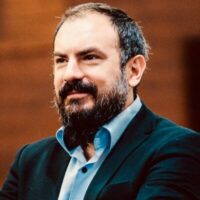


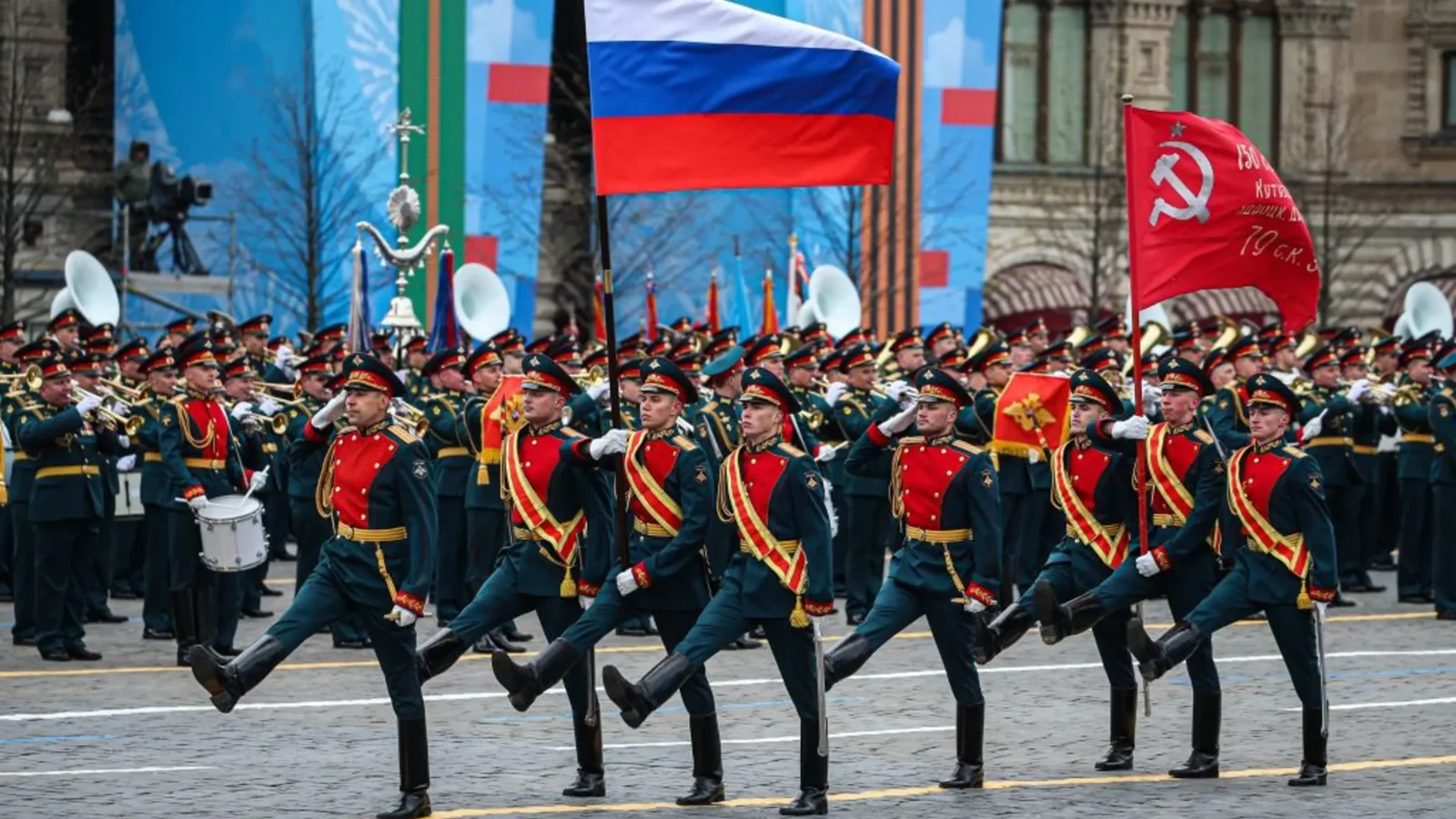
UWI author, historian and political scientist Associate Professor Mehmet Perinçek was guest on Radio Sputnik to discuss the Soviet Union’s Victory Day (9 May).
Mehmet Perinçek discusses the meaning of the war against the Nazis during the Second World War for the Soviet people, the West’s policy towards Hitler, and the global consequences of the 9 May Victory. Perinçek also offers his views on the relations established between the Nazis and the US after the Second World War, arguing that their consequences can still be observed today.
A collective social memory
Perinçek begins his evaluation by discussing the significance of May 9th for Russian society, stating that it is not merely a historical victory, but a collective social memory passed down through generations. Expressing that World War II left traces such as loss, migration, or veteran status in every family, he states:
“There is no one in Russia unaffected by World War II. Everyone has someone in their family history who lost his/her life, was forced to migrate, or was a war veteran. These lived experiences and stories are transmitted from generation to generation. May 9th is one of the most important days of the Soviet Union.”
Mehmet Perinçek emphasizes that the Soviet Union’s struggle saved not only its own territory but the whole world from fascism:
An immense sacrifice
“The victory against German fascism is a moment of historical importance not only for the Soviet Union but for the entire world. In this sense, May 9th is the date of a victory that ensured peace and stability across the globe. To put it the other way around, if it weren’t for May 9th, the world would have been crushed under the boots of Hitler’s Germany.
And the Soviet Union secured this victory through a struggle of immense sacrifice. During World War II, the Soviet Union lost nearly 30 million of its people. The lands were damaged, and cities were leveled. A significant portion of those who lost their lives were members of the Communist Party. Among them were the children of the highest-ranking leaders of the Communist Party. For example, a son of Stalin, who was a corporal, was taken prisoner by the Germans. When the offer came to exchange him for a general, Stalin said, ‘I don’t trade a general for a corporal.’ Stalin’s son was executed in the prison camp. There were members of the Party’s Politburo who lost their children, even several of their children.”
Directing Hitler to attack the Soviet Union
Perinçek then examines the period leading up to World War II. He says that Western countries pursued a policy of “making concessions to Hitler in order to prevent him from attacking them”. At the same time, this policy was aimed at directing Hitler toward attacking the Soviet Union, according to Perinçek. And the Nazis, rendered more aggressive by these concessions, launched a massive assault on the Soviets. Perinçek emphasizes Western countries, giving concessions to Hitler especially at the Munich Conference, also rejected the Soviet Union’s calls for a joint struggle against the Nazis, thus leaving the burden of fighting the Nazis to the Soviets:
“As I mentioned, the Soviets were forced to make great sacrifices in the war against the Nazis. You can compare it with other major countries. The US was one of the last to join the war and opened the Western front. We can say that the US opened this front largely not to lose these areas to the Soviets, upon seeing that Hitler would lose, the Soviets were advancing, and they could bring Europe under their dominance. France surrendered without firing a single bullet. (The only ones who did were the French communists). The situation was the same in Italy.
Later, as Hitler began to lose the war, an idea developed in the West: ‘Hitler is losing. We can overthrow Hitler with an internal coup and reach an agreement and peace with a faction of the Nazis.’ The ‘peace’ was not an altogether peace. The intention was to have the Nazis withdraw from France, thus leaving the Soviets alone with the Nazis. Western countries even had negotiations and talks for this. However, Britain, France, and the US had previously rejected the Soviet Union’s proposal for cooperation against the Nazis. The Soviets’ Ribbentrop-Molotov Pact came after this and was intended to stop or delay Nazi offensive.”
Integration of Nazi cadres into the Western system and neo-Nazism
Mehmet Perinçek then links the West’s attitude toward the Nazis during World War II with the post-war “integration of Nazi cadres into the Western system” and “neo-Nazism today”:
“In truth, the West, including the US, never fully confronted Hitler. Only when Hitler crossed their borders, they were forced to fight. The US was quite slow to enter the war and open a new front, and that was only after seeing that Germany was beginning to be defeated.
After WW2, a process began where German generals, SS officers, and Gestapo members were integrated into NATO, NASA, and the intelligence agencies of various Western countries. The NATO system began to build Gladio structures.
Coming to the present day, we see that there is a continuity. When we speak of Neo-Nazism, we must again speak of Western support. We see the most glaring example of this in the support to neo-Nazism in Ukraine. After all, we can say that fascism itself is already the most racist, most monopolistic, most violent, and most brutal form of imperialism.”
The trail leads to … CIA and Washington
Perinçek, in parallel, also offers an assessment regarding the relationship between racist movements in the world and Western intelligence structures:
“The trail of racist movements in the world goes back to the CIA and the Pentagon. Wherever there is a racist movement in the world, when you trace its connections, you will happen to go back to Washington, the CIA, and the Pentagon. But, at the point we have reached today, peoples around the world have clearly understood this through their own experiences. For example, if you go to anyone in any city in Türkiye, from any economic class and of any age, and ask, ‘Which powers have been behind the PKK, who supported them?’ everyone will give you the answer: the US. We are living in an era where concepts like ‘exporting democracy’ or lies like ‘They possess weapons of mass destruction’ no longer work.”