


By Mehmet Enes Beşer
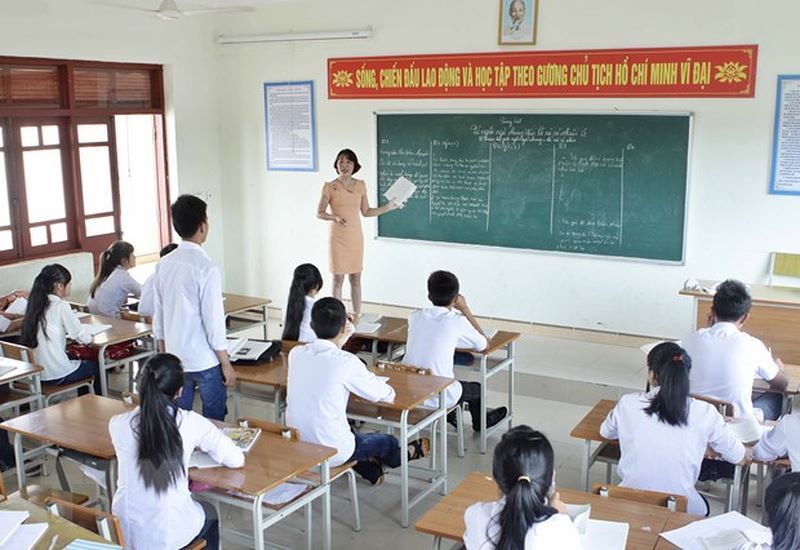
Vietnam is at a crossroads in its development trajectory. With almost 70% of its population within the under-40 cohort, Vietnam has a demographic window that other countries would be jealous of. Its young, energetic, and rapidly urbanizing working population has catapulted Vietnam to become one of Southeast Asia’s fastest-growing economies. But to maintain that rate of progress against shifting global forces—climate change, digitalization, and automation—is not merely a matter of adequate supply of labor, but qualified labor. The future for upskilling the youth of Vietnam is very much real and within reach, but the clock is ticking very quickly. The government must establish a real, serious effort at renewing education and training infrastructure before the window of opportunity begins to close.
The main education system in Vietnam has been well known with strong international performance on tests like PISA and high literacy rates for a long time. Although basic skills are generally sufficient, the system itself has nevertheless lagged behind demands of a more advanced economy. There are more business owners and business owners complaining about skills imbalance: graduates typically come in with lack of working experience, problem-solving capability, analytical mind, and ICT skills. TVET programs remain underfunded, undervalued, and poorly aligned to labor market requirements. Curriculum design and apprenticeship trends in public-private partnerships, though government-initiated, remain to be begun on the wanted scale.
As economies are rebuilt in the digital transformation, with artificial intelligence, automation, and green technology, the Vietnamese education system needs to be rebuilt too—not incrementally refined. A new government commitment starts with a paradigm shift: away from supply-driven education towards demand-driven systems of learning. That is, it is not just a question of expanding access to higher education and vocational training but of thinking about how these components engage with industry, spur innovation, and mirror labor market dynamics.
Vietnam’s upskilling program will have to function on multiple fronts concurrently in order to achieve its goals. The priority at the secondary level must go to STEM disciplines, IT skills, and also ‘soft’ skills like communication, teamwork, and adaptability. Teacher training should be strengthened to cover these changing priorities, and curriculum should be rewritten in collaboration with the private sector so that forecasting employment needs can be facilitated before responding to them later.
Post-secondary TVET must transform entirely—image and quality. Teenagers and their families must see TVET as the future, and not the alternative. That will imply better facilities, quality teachers, and clear linkage between training and work. Incentives like government performance funding and employer co-financing would underpin massification of apprenticeship programs and dual training systems like Singapore’s or Germany’s.
Lifelong learning must also be mainstreamed. As technology changes at an increased speed, no phase of early education will be enough for an entire career. Reskilling at mid-career, micro-credentialing, and distance learning must become flagship policies in an effort to keep up with the economy. This is most critical to informal economy workers and rural dwellers, who are most exposed to technological replacement.
One such site where hope may be residing is in Vietnam’s vibrant tech and startup environment. Foreign and official investors can put money into such entrepreneurs to make available flexible training models, mentorship initiatives, and internationally scalable products that are tailored to suit Vietnam’s economically heterogeneous economy. Fostering more collaboration between startups, universities, and industry may uncover new learning spaces that reflect the genuine needs of a changing economy.
It’s not a technical problem—political, either. Quality education reform will take top-level ministerial cooperation, improved governance in decentralized school systems, and long-term public investment. It will take political will to overcome vested bureaucracies and invest in long-term returns rather than quick fixes. Education reform is never simple, but the price of doing nothing is exponentially higher. A generation of unskilled young people is not only wasted economic potential—but it’s social cohesion threat, and a test of national resilience.
Conclusion
Vietnam’s youth bulge is one of its greatest assets—unless nurtured to its potential. Vietnam is in a hurry: the demographic dividend will not endure forever, and the economy of the future has requirements that are picking up pace. The question is not whether Vietnam must upskill its labor force—it is whether it can do so fast enough and with enough resolve.
Under visionary leadership, strategic investment, and an unrelenting passion for change, Vietnam has the potential to make its education and training systems engines of opportunity and innovation. Or else, it will squander its best asset—its people—at the very moment when they might propel its next great leap forward.