


By Gökalp Erbaş
In recent days, the political agenda in both Moldova and the Transnistrian Republic has been dominated by a new decree enacted by Russia on May 15, designed to facilitate the acquisition of Russian citizenship for residents of Transnistria. The ice surrounding the Transnistria–Chișinău tensions, long characterized as a “frozen conflict,” had already begun to thaw following the 2022 Russia–Ukraine war. However, since the Sandu administration emerged victorious from the elections and fully embraced the EU’s militarization project, it has become increasingly difficult to describe this crisis as genuinely frozen.
Chișinău’s persistent and hardline policies regarding unification with Romania and accession to the EU, combined with the suspension of even the limited gas supplies coming from Russia due to unpaid Gazprom debts, have placed Transnistria under severe political and economic strain. While Chișinău has been able to exert pressure on Gagauzia — which is relatively more dependent on Moldova and lacks military capabilities — through judicial and policing mechanisms, it lacks comparable instruments in Transnistria, which possesses its own governing institutions and armed forces beyond Chișinău’s direct reach. Consequently, an undeclared strategy of blockade has gradually been put into effect.
The blockage of Transnistria
This blockade strategy unfolded as follows: the Sandu government gradually revoked the exemptions granted to Transnistrian companies since the 1990s, which had allowed them to pay taxes solely to the local budget. In addition, as of January 1, 2024, Transnistrian companies became subject to customs duties and VAT under Moldova’s general taxation regime. Through these measures, approximately $28 million in taxes was collected from local companies (the region’s GDP is roughly €1 billion). Considering that Ukraine closed its border with Transnistria in 2022 — leaving the region entirely dependent on Moldovan-controlled territory for external trade — it becomes clear how vital taxation policies and trade embargoes are for Transnistria.
Alongside these developments, Russian energy giant Gazprom completely halted gas supplies to Moldova as of January 1, 2025, citing Moldovagaz’s overdue debts and failure to fulfill its contractual obligations. Transnistria, whose industrial infrastructure is almost entirely dependent on these supplies, emerged as the region most severely affected by the cutoff. The government attempted to frame the situation under the banner of “independence from Russian energy” and a package of alternative solutions developed together with European partners. Energy Minister Zungietu recently declared that the European gas market had been sufficiently diversified and that there was therefore no reason to renew the contract with Gazprom.
Chișinău effectively divided the political cost and burden of this process in two: the public would shoulder the energy crisis through record-high prices, while European loans, funds, and costly energy agreements would be mobilized to prevent the situation from triggering a broader economic collapse in the country.
It is precisely at this juncture that the rationale behind Putin’s decrees of May 15 — facilitating the acquisition of Russian citizenship — and May 20 — authorizing overseas operations by the Russian armed forces to protect Russian citizens abroad — becomes apparent. These decrees arrived at a moment when the blockade was rapidly approaching the point of creating both an existential political crisis for Transnistria and a humanitarian crisis for its residents. To properly assess their significance, it is first necessary to understand the substance of these decrees and then examine the political and economic conditions under which they were issued.
What did the decrees change?
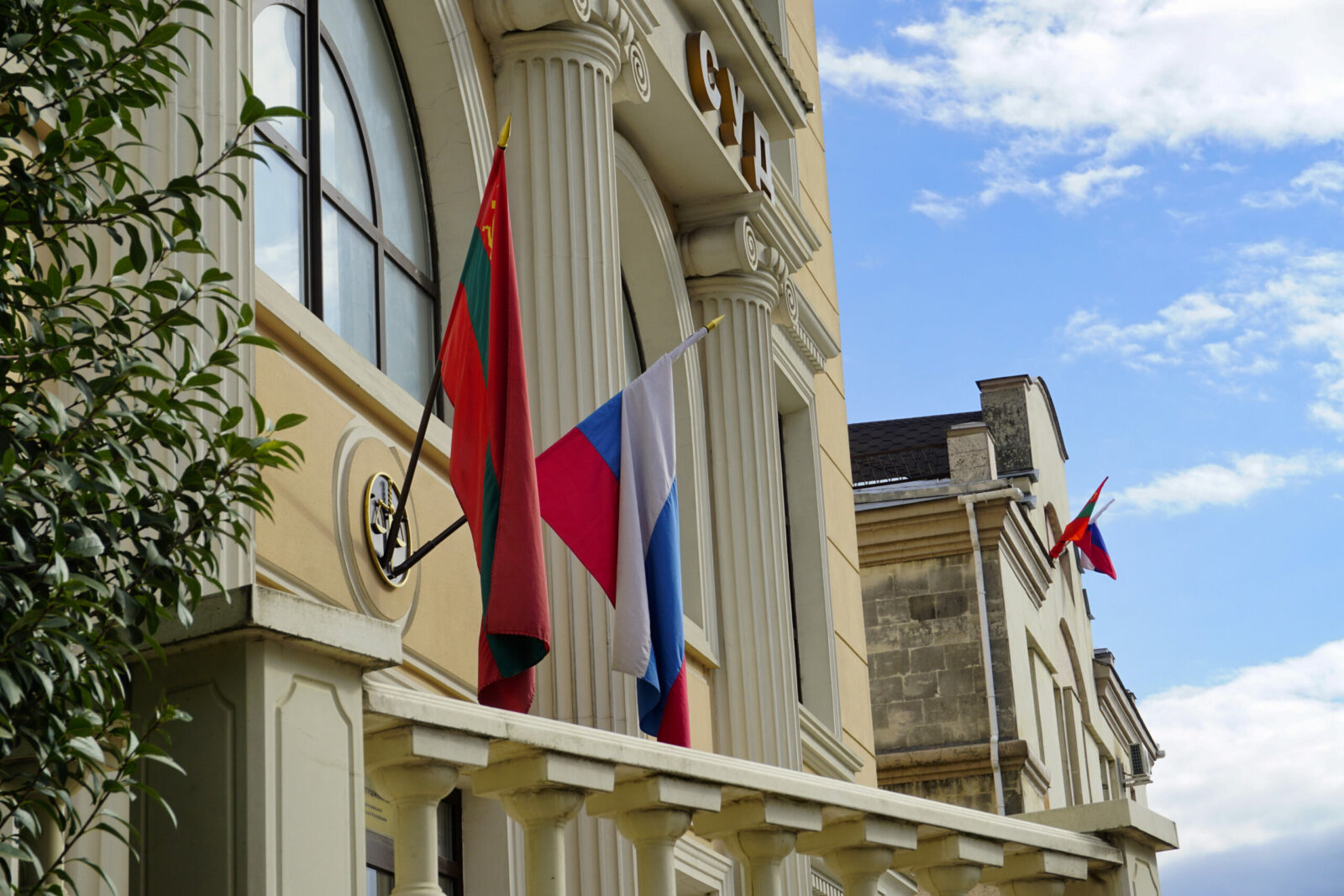
First and foremost, it is necessary to understand the meaning and implications of the two decrees currently dominating the agenda. Under a decree signed by Russian President Vladimir Putin and enacted on May 15, 2026, the process for residents of Transnistria to obtain Russian citizenship was significantly simplified. What exactly does this mean? It means that the standard requirements normally imposed in Russian naturalization procedures — such as five years of residency, proficiency in the Russian language, and passing examinations measuring cultural and administrative knowledge of Russia — will no longer apply to residents of Transnistria. It should also be noted that this is not the first initiative aimed at facilitating citizenship acquisition for people from the region; the Russian government had already taken similar steps in previous years.
A second major decree, submitted to the State Duma in April, was signed by Putin on May 20 and is expected to enter into force within ten days. According to this decree, the Russian Armed Forces may be deployed to protect Russian citizens who are detained, held, or subjected to any form of legal prosecution — including criminal proceedings — by foreign courts. If the jurisdiction of the foreign court in question is not based on United Nations Security Council resolutions or international agreements concluded with Russia, or if Russia is not formally a party to the relevant case or court process, the decisions of that court will not be recognized as legitimate. In such circumstances, the authority to approve the use of the Russian military abroad will rest directly with the President.
The Transnistrian leadership welcomed these decisions by Moscow. This is because, alongside residents who hold Moldovan, Ukrainian, or Russian citizenship, there are also individuals in Transnistria who possess only Transnistrian passports, making them the segment of the population facing the greatest uncertainty amid the crisis. Moreover, the Transnistrian administration’s sole strategic backing under the current blockade conditions remains the Russian Federation.
President Sandu, however, characterized Russia’s passport policy as an attempt at “covert mobilization” aimed at reinforcing occupation forces in Ukraine and as a political pressure instrument directed against Chișinău. Ukrainian President Zelensky likewise stated that Russia could be preparing a new covert mobilization and political operation involving up to 100,000 people through Transnistria, instructing Ukrainian intelligence services and the Foreign Ministry to coordinate closely with Moldova. The Ukrainian military, particularly the Western Operational Command, has also begun constructing fortifications along the Transnistrian border and increasing the number of troops and military equipment deployed there in response to the perceived risk of an expanded Russian military presence.
In short, Moldova and Ukraine — having already cornered Transnistria through their broader policies — have now interpreted any measure capable of easing pressure on the region as further justification for adopting even harsher countermeasures.
Moldova caught in the EU’s security agenda
Since coming to power, the Sandu administration has pursued EU membership at virtually any cost. For its part, the European Union has increasingly sought to channel this enthusiastic drive into the broader strategic objectives that gained renewed momentum following Donald Trump’s return to office: first, sustaining the war effort in Ukraine through all available means, and second, advancing the militarization of both the economy and society across Europe. The Moldovan government appears strikingly unconcerned with the long-term costs that this “European dream” may impose on the country. As a result, it has demonstrated remarkable speed and willingness in implementing the tasks expected of it. EU–NATO–Moldova ties are being expanded through every available financial, political, and military instrument, while Brussels’ political narrative is steadily being institutionalized within the country.
During a joint press conference in Chișinău with Moldovan President Maia Sandu, EU High Representative for Foreign Affairs and Security Policy Kaja Kallas stated that she would recommend increasing annual military assistance to Moldova under the European Peace Facility (EPF) to €120 million. Kallas noted that these additional funds would support the modernization of the Moldovan armed forces and confirmed the delivery of drones and a new radar system designed to respond to airspace violations. In parallel, the EU Partnership Mission (EUPM) continues its cooperation with Chișinău in the sphere of “countering hybrid warfare and disinformation.” In practice, however, this “countering” very clearly aims at weakening Russia’s cultural and political influence over Moldova.
Moldova has already received approximately €200 million in support, and if the proposed increase is approved, the country — excluding Ukraine — will become the largest recipient of EPF funding in the history of the mechanism. In other words, the EU has been highly generous in providing the financial incentives fueling Moldova’s enthusiasm.
Another critical step taken by President Maia Sandu came when she announced that, despite Moldova’s constitutionally enshrined neutrality, the country was prepared to join the “Coalition of the Willing” established in support of Ukraine and contribute through concrete measures such as demining training programs.
Former President Igor Dodon has accused Sandu of dragging the country toward military confrontation in order to conceal failures in social and economic policy, while also violating Moldova’s constitutional neutrality. This accusation may contain an element of truth. However, these policies can be understood less as an attempt to compensate for domestic weaknesses and more as part of the broader geopolitical objectives pursued by the EU and NATO.
How is Moldova carrying out NATO’s agenda?
Moldova is not a NATO member. However, relations with the Alliance have deepened rapidly since the opening of a NATO liaison office in Chișinău in 2017. In 2025, the Sandu administration approved the Moldova–NATO Individual Partnership Program (ITPP) covering the 2025–2028 period. At the same time, intensive military cooperation has also been developed with the United Kingdom; Moldovan military personnel are receiving training at both the Royal Military Academy Sandhurst and the Royal Air Force College Cranwell. In February 2023, meetings held at the level of defense ministers further accelerated military reforms and NATO programs carried out under the “Defence Capacity Building Initiative.” The cooperation with the United Kingdom is, of course, no coincidence either. London increasingly sees itself as a leading force behind the continent’s militarization project. For that reason, it is hardly likely to refrain from taking the initiative on any front capable of increasing pressure on Russia. Moreover, without the emergence of such fronts — or without the creation of what could be described as “constructive provocations” — it would become considerably more difficult to persuade the public to bear the economic and social burdens associated with militarization.
Although Moldova possesses one of the smallest armed forces in the region — approximately 6,000 personnel — the newly adopted military strategy envisions a substantial expansion of defense capabilities. The strategy aims to increase military spending to 1 percent of GDP, expand military personnel by 30 percent to reach 8,500 soldiers alongside 2,000 civilian staff, modernize armaments according to EU/NATO standards, and deepen military cooperation with Ukraine. The Defense Strategy approved by parliament at the end of 2025 and valid through 2034 also directly identifies Russian forces stationed in Transnistria as a “potential threat.”
In the next section, we will examine the economic consequences of these policies, Moldova’s “debt-driven” integration into Europe, the two possible pathways toward EU accession, and the potential conflict scenarios that may emerge from this process.