


By Mehmet Enes Beşer
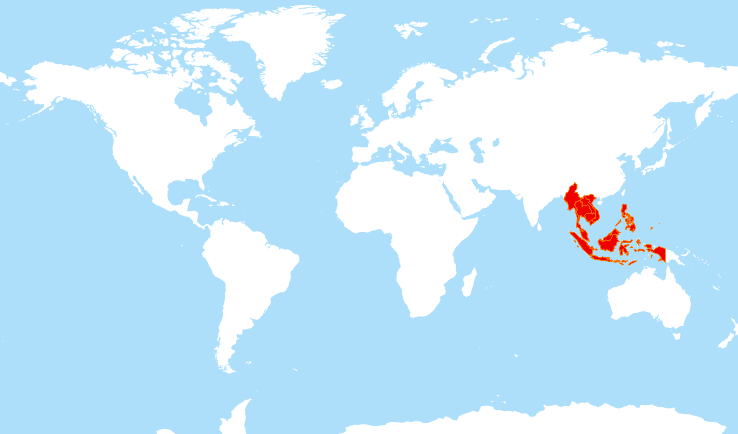
The “Global South” is a useful shorthand expression applied for decades to describe countries in Africa, Latin America, Asia, and Oceania which have shared colonial histories, development issues, and peripheral positions in the world economy. In postcolonial solidarity rhetoric, the Global South paradigm aims to place at its center structural distortions of global order—unbalanced terms of trade, limited access to technology and capital, and marginalization from the international decision-making forum. Southeast Asia, home to some of the world’s fastest-growing economies and most plural polities, is a richly complex case study in this respect. Whereas Southeast Asian governments collectively follow a variety of the Global South’s constitutive aspects, they also differ in significant and increasingly geopolitically pertinent ways. Alignment with the Global South
Most Southeast Asian nations had been decolonized during the 20th century, and their trajectory was shaped by decolonization, Cold War rivalry among powers, and reliance on foreign capital and commodity exports.
In this sense, they are part of the postcolonial history of the Global South. Indonesia, Vietnam, and the Philippines experienced periods of nationalist activism, authoritarianism, and externally imposed economic adjustment programs—Subjected in turn to the tutelage of international financial institutions such as the IMF and World Bank. These created a suspicion of Western development models and close familiarity with international power asymmetries. Economically, the majority of Southeast Asian nations are still structurally weak middle-income economies: export dependence, under-industrialization, and vulnerability to environmental degradation and commodity price instability.
Myanmar, Laos, and Cambodia, for example, are still below the Human Development Index, whereas some such as Indonesia and the Philippines are still grappling with rural poverty, informal employment, and shortages of skills. Even in Malaysia and Thailand, more industrialized economies, imbalance and inequality here still persist—following the general Global South pattern of uneven modernization. Internationally, Southeast Asian governments occupy positions of the Global South in multilateral forums. They advocate climate justice financing, push back against Western geostrategic discourses in Asia, and advocate for democratizing international organizations such as the United Nations. Advocating for South-South cooperation, sovereignty and non-interference claims, and involvement in forums such as the G77 and Non-Aligned Movement serve to solidify their ideological alignment with the Global South.
Points of Divergence
But Southeast Asia is not monolithic—and in some respects, the region has diverged from classical Global South narratives.
Perhaps most striking of all is the economic dynamism of Singapore, Vietnam, and Malaysia, ASEAN countries that contradict the Global South’s image as economically peripheral or structurally stuck. Vietnam’s export industry, Singapore’s position as an international financial center, and Thailand’s infrastructure expansion and productive capacity position them in a middle role between the world middle powers and the Global South. Southeast Asia also has constructed its own regional vehicles of cooperation, which is a gauge of agency and autonomy exceptional in much of the Global South.
The Association of Southeast Asian Nations (ASEAN), through its own internal weaknesses, remains the only postcolonial regional association to have survived and evolved. It has by itself defined an economic integration agenda, created regional standards in diplomacy, and resisted the external push to militarize or bipolarize with the great powers. This ability to tread the middle path between the US, China, Japan, and the EU is not only pragmatism but also a self-assurance that goes against the passive stereotype of Global South nations. Southeast Asia also encompasses political diversity eroding simplistic Global South accounts. It has strong democracies, military dictatorships, one-party states, and hybrid regimes. Democratic backsliding is present in some of the nations such as Cambodia and Myanmar, but others such as Indonesia have room to consolidate democratic principles. The diversity does not permit a depiction of the politics within the region with a single vision of Global South victimhood or resistance.
Particularly, intra-regional differences are evident. International influence by Singapore and high income render it having little economically or institutionally in common with Laos or Timor-Leste. Even the Global South strategy, with its emphasis on commonality, threatens such diversity within regions to be forgotten, and Southeast Asia is no exception.
Conclusion
Southeast Asia is an in-between in Global South thinking—belonging and different.
The Southeast Asian postcoloniality, its developmental imperatives and geopolitical positioning, situate the area squarely in the tradition of the Global South. But economic variation, institutional creativity, and strategic hedging form an early deviation. The Southeast Asian experience indicates that the Global South is not a universal given but a negotiating terrain in motion, as much by local agency as by global design. Rather than inquiring into whether Southeast Asia is part of the Global South, that is, it might be more helpful to see the region as working towards a redefinition thereof. In its regionalism in action, developmental experiments, and multipolar diplomacy, Southeast Asia is developing a new vocabulary of autonomy—a vocabulary that refuses to be frozen into North-South binarism and spaces out a post-Western, plural world order.