


By Yıldıran Acar, Political Scientist
Some diplomatic visits are part of the daily news cycle; they are discussed for a few days and then forgotten. Others, however, provide the first signs of political developments that will emerge in the future. Russian President Vladimir Putin’s three-day official visit to Kazakhstan at the end of May falls into the second category.
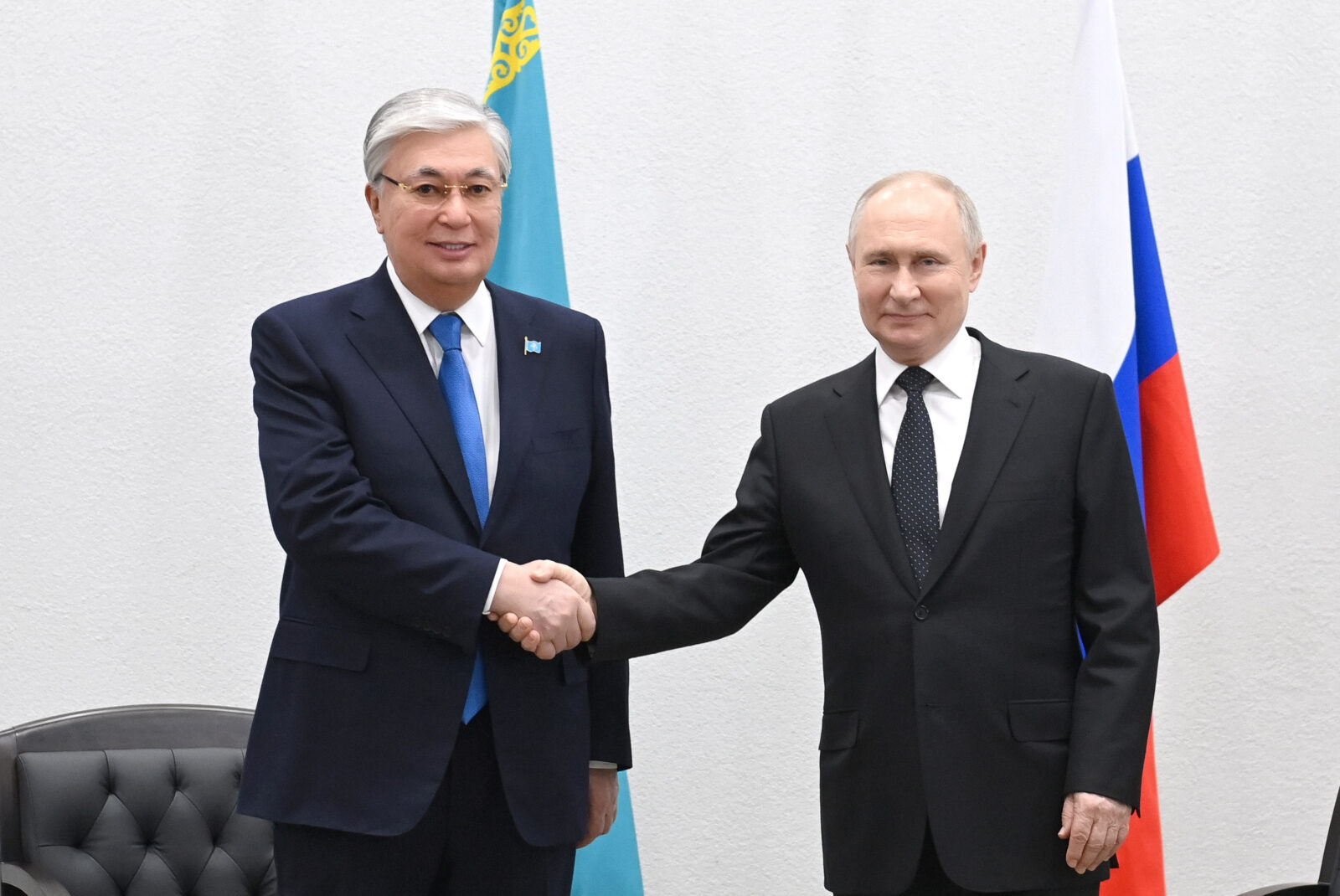
At first glance, everything adhered to standard diplomatic protocols. Welcome ceremonies were held, leaders held talks, economic agreements were signed, and the future of the Eurasian Economic Union was discussed. However, assessing what took place in Astana solely by looking at the protocol photos would mean overlooking the transformation taking place in Eurasia.
In an article titled “Russia-Kazakhstan: Unity at the Heart of Eurasia,” written prior to his visit, the Russian leader stated that relations are based on “mutual respect and trust,” while specifically noting that Moscow wishes to see a “strong and prosperous Kazakhstan.”
This statement also served as an indirect response to the thesis frequently promoted in Western media in recent years that “a rift is opening between Russia and Kazakhstan.”
Following the dissolution of the Soviet Union, Central Asia was viewed for many years as Russia’s natural sphere of influence. However, the landscape has begun to shift significantly over the past decade. China’s massive economic investments in the region through the Belt and Road Initiative, the European Union’s pursuit of energy security, Türkiye’s increasing diplomatic activism through the Organization of Turkic States, and the growing economic interest of Gulf countries have once again made Central Asia one of the centers of global competition.
In this new geopolitical equation, Kazakhstan holds a special position. Due to its geographical size, energy resources, uranium reserves, transportation corridors, and the strategic bridge it forms between Russia and China, Kazakhstan is viewed today not merely as a Central Asian country but as one of the key nations that will shape the future of Eurasia.
Precisely for this reason, Putin’s visit to Astana cannot be regarded as a routine visit to a neighboring country from Moscow’s perspective. Following the outbreak of the war in Ukraine, a frequently cited thesis emerged in Western media and among certain expert circles: Russia’s regional influence is waning, Central Asian countries are drifting away from Moscow, and seeking new partnerships. These were, in part, valid observations. Indeed, Kazakhstan has made its multifaceted foreign policy approach more visible in recent years. It has strengthened its ties with the European Union, deepened economic cooperation with China, consolidated its position within the Organization of Turkic States, and increased diplomatic contacts with the West.
However, there was a crucial point that many observers overlooked. Kazakhstan’s diversification of its foreign policy did not mean a breakaway from Russia. The Astana administration was actually striving to maintain a balance rather than making a choice. The approach Tokayev followed was based on developing new partnerships without antagonizing Moscow. The messages conveyed during Putin’s visit to Astana fully confirmed this.
Tokayev’s emphasis that there was no unsolvable issue between the two countries, and Putin’s characterization of the relationship as a strategic partnership, were not coincidental statements.
These were political messages directed at both the West and other regional actors. In fact, the most notable development during the visit was the signed nuclear power plant agreement. Many commentators assessed this agreement as a technical cooperation in the energy sector. Yet the issue is far greater than that.
In international relations, some projects are geopolitical rather than purely economic. Nuclear power plant projects are at the forefront of these. When you build a nuclear power plant in a country, you do not merely increase its electricity generation capacity; you also establish a technological, institutional, and strategic partnership that will last for decades.
When Rosatom’s role in Kazakhstan is evaluated from this perspective, it becomes clear that Moscow is seeking to maintain its influence in Central Asia not only through military or political means but also through technology and energy diplomacy. This situation also reflects a new trend that has emerged in Russian foreign policy in recent years. Moscow is now seeking to preserve its influence not only through security-focused mechanisms but also through energy, transportation, technology, and industrial projects.
Another key message conveyed in Astana concerned the future of the Eurasian Economic Union. It was notable that topics such as artificial intelligence, the digital economy, common technological standards, and trade using national currencies took center stage throughout the forum. This situation reveals that Russia does not view Eurasian integration merely as an economic project. Moscow now envisions Eurasia as an independent power center capable of serving as an alternative to Western-centric economic and technological systems. How successful this goal will be is a separate matter for discussion. However, the messages conveyed in Astana indicate that Russia’s long-term strategic vision is taking shape in this direction.
Statements regarding Armenia’s rapprochement with the European Union should also be interpreted within this same context. The message Moscow conveyed to Yerevan was actually directed at all Eurasian countries: Russia does not want regional integration projects to become rivals and is striving to preserve Eurasia’s own institutional framework. Looking at the map of Eurasia today, a silent yet extremely significant struggle is evident. On one side is China, increasing its economic clout; on the other, the European Union pursuing energy and transportation corridors; Türkiye, strengthening its ties with the Turkic world; and Russia, striving to preserve its historical sphere of influence. Kazakhstan, meanwhile, is pursuing a policy of balance at the intersection of all these power centers.
This is why Putin’s visit to Astana is significant. This visit demonstrated that assessments suggesting Russia is withdrawing from Central Asia are premature, and it also revealed that Kazakhstan is not seeking a new regional order that excludes Russia. Perhaps this is the most important outcome of the visit.
The documents signed in Astana may lose their relevance over the years. Trade figures may change. Leaders may change. However, the strategic messages conveyed over these three days will be remembered for a long time. Because the issue discussed in Astana was not merely the relationship between Russia and Kazakhstan.
The main topic of discussion was how Eurasia would become a political and economic hub in the changing world order. And it appears that Moscow and Astana sought to demonstrate to the entire world that they wish to shape this future together.