


By Mehmet Enes Beşer In a world that is grappling with an evolving geopolitics order—defined by frayed multilateralism, economic nationalism, and intensifying great-power competition—the evolving China-Vietnam relationship has another tale to tell. Too often seen in the narrow context of their border conflicts and historical challenges, Sino-Vietnamese relations are being constructed in low-key style as a pragmatically rooted, forward-looking relationship ...
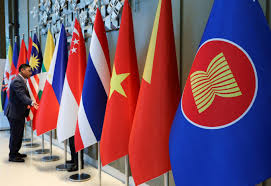
By Mehmet Enes Beşer The post-Cold War dream of an American global order—liberal in ideology, capitalist in architecture, and technocratic in tone—was once celebrated as universal. That order, built on the shoulders of international institutions and trading regimes crafted in Washington, New York, and Geneva, held out the prospect of prosperity through union and stability through conformity. That promise is ...
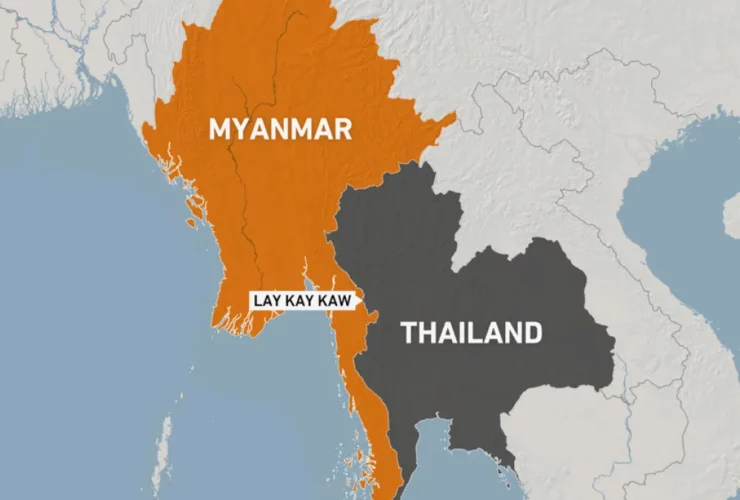
By Mehmet Enes Beşer Today, it is entering its fourth year with no endgame on the horizon. The military regime is as entrenched as ever, and anti-junta forces have become more united in their efforts, while humanitarian conditions continue to deteriorate month after month. Within this maelstrom of uncertainty and dysfunction, Thailand has sought to position itself as a force ...

By Mehmet Enes Beşer The atmosphere in the capitals of Southeast Asia is growing increasingly unmistakably fatigued when it comes to climate finance. All those repeated promises from the developed world to mobilize billions on the behalf of climate mitigation and adaptation in the Global South have come woefully short. From unpaid commitments under the Paris Agreement to sluggish disbursement ...

By Mehmet Enes Beşer The environmental sustainability experience of Southeast Asia is an uneven and rugged terrain, shaped by forces that intersect but refuse to move together in harmony. As the ASEAN countries speed up to discover the middle path between economic development and nature protection, they must contend with the unbalanced consequences of the leading drivers—digitalization, natural resource exploitation, ...
By Mehmet Enes Beşer There is a stunning paradox at the core of the Southeast Asian model of development, a paradox more desperate with each climate summit, energy crisis, and investment diversion. The ASEAN bloc has subscribed formally to world climate targets. Its member states have made Nationally Determined Contributions, committed net-zero emission goals (some as early as 2050), and ...
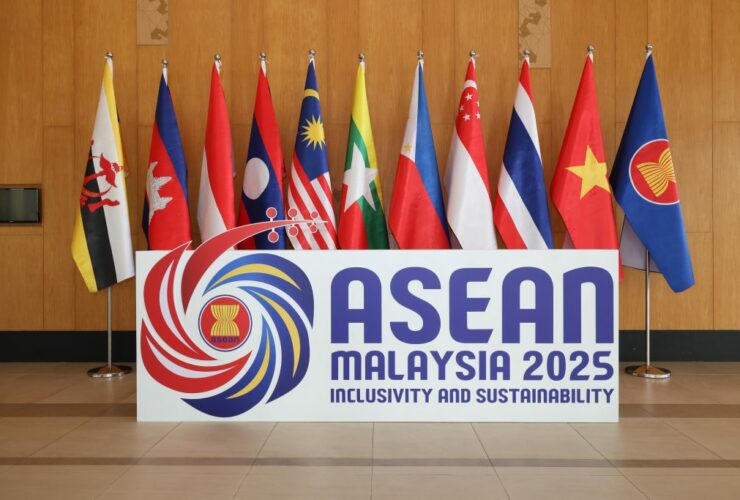
By Mehmet Enes Beşer The year has conspired to make ASEAN’s end-October Leaders’ Summit in Kuala Lumpur unusually consequential. Malaysia, chairing under the banner of “Inclusivity and Sustainability,” must navigate a denser-than-usual thicket: renewed tariff salvos from Washington, the still-bleeding crisis in Myanmar, the slow-moving South China Sea code of conduct process, and the long-promised—but only recently bankrolled—push for regional ...
By Mehmet Enes Beşer Southeast Asian urbanization is a demographic tendency—it is additionally a political, economic, and ecological milestone. As urban masses swell with countryside-to-city migration, increased incomes, and urban infrastructure expansion, the region grapples with a query squarely at the hub of sustainable growth: can ASEAN urbanize without eroding its ecological carrying capacity? The answer, increasingly, is located in ...

By Mehmet Enes Beşer Short-sea shipping has been the backbone of maritime Southeast Asia for centuries. From Singapore and Manila ports to Indonesia’s sea lines of the archipelago and the inland water transport network of the Mekong Delta, short-sea shipping is an economic driver and a logistics imperative. Yet even as it plays a vital role in intra-regional trade, ASEAN’s ...
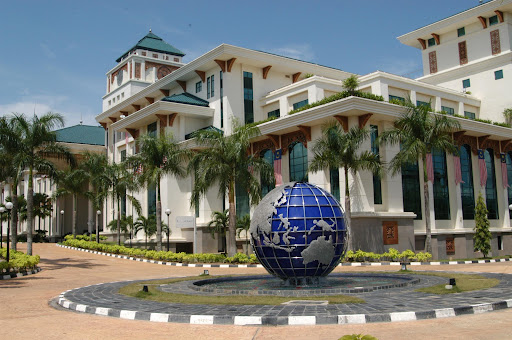
By Mehmet Enes Beşer The promise of a “New Malaysia” first captured global attention in 2018, when a surprise electoral upset ended sixty-two unbroken years of Barisan Nasional coalition government. Pakatan Harapan coalition win—and return to politics of veteran politician Mahathir Mohamad—was welcomed as a democratic victory, a harbinger that Malaysia was poised to redefine itself politically, economically, and diplomatically. ...
By Mehmet Enes Beşer ASEAN’s transformation into one of the globe’s most dynamic economic blocks has been spurred as much by domestic reform as by two strong exogenous drivers: financial growth and globalization. They have opened up capital markets, penetrated cross-border investment, and connected ASEAN economies into global supply chains on a previously unheard-of scale. But whereas this convergence has ...
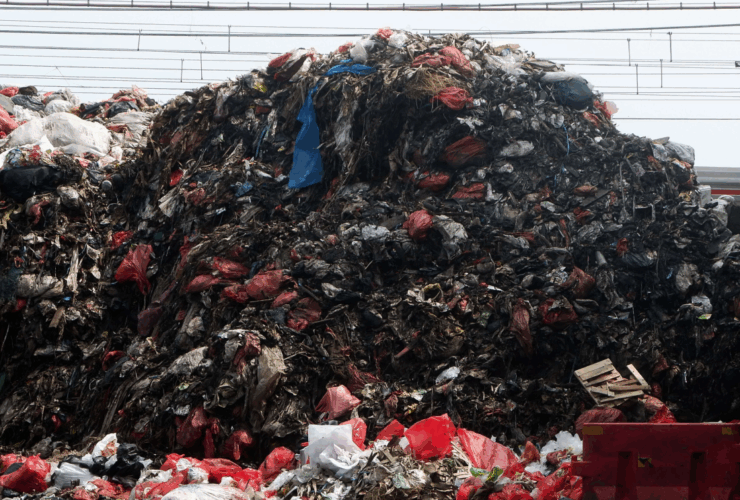
By Mehmet Enes Beşer While nearly 110 million people worldwide remain undernourished, and more than 30% of all food produced is lost or wasted, the irony of food deficiency as well as over-consumption in ASEAN is both an ethical and a strategic issue. Not only is food loss a terms-of-art contradiction of fundamental equity—it’s also a silent but powerful engine ...