


By Melih Baş
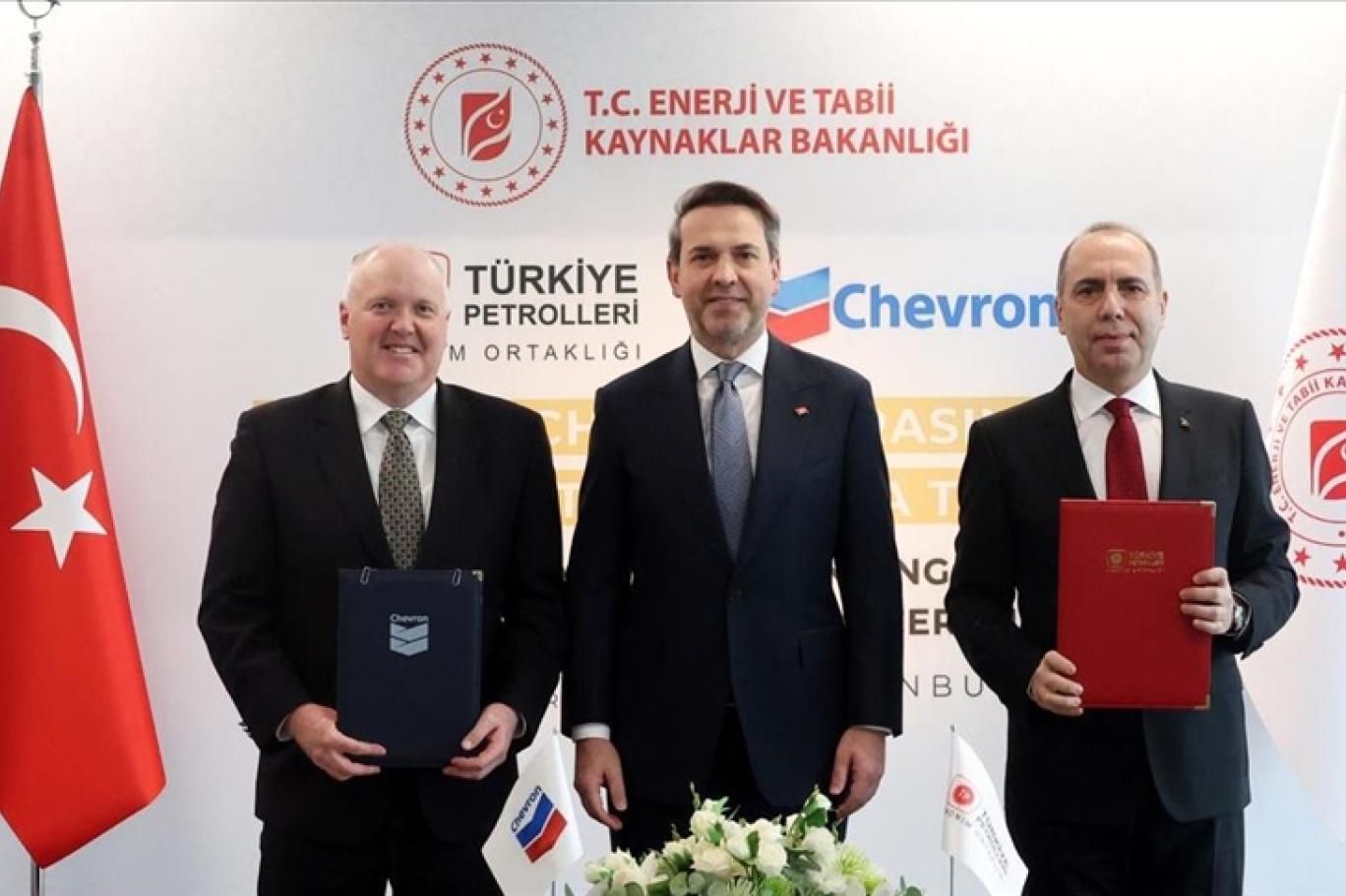
Recently, Türkiye has signed energy agreements with US energy giants. These include cooperation on energy exploration in the Black Sea and the Mediterranean, as well as partnerships for overseas operations. Lastly on February 5, the Ministry of Energy and Natural Resources announced that Turkish Petroleum Corporation (TPAO) signed a joint oil and gas exploration agreement with Chevron. Earlier, on January 8, TPAO had signed a similar agreement with ESSO Exploration International Limited, a subsidiary of ExxonMobil.
Minister of Energy and Natural Resources Ministry Alparslan Bayraktar stated that they aim to transform TPAO into a global energy company with a production capacity of one million barrels per day with these agreements.
However, the agreements have sparked debate about Türkiye’s independence in the energy sector. Professor Melih Baş, economist at the Faculty of Economics and Administrative Sciences at Istanbul Arel University, shared his views with Turkish Aydınlık newspaper.
Baş says “Opening TPAO’s doors to the ‘Seven Sisters’ serves the interests of resource imperialism, not Türkiye’s national interests”: “This collaboration is at odds with our country’s economic-political, ecological, and socio-political interests in the energy sector. It also does not support our balance of payments”.
Neo-mercantilist maneuvers
Baş mentions of the “US’ neo-mercantilist maneuvers”:
“The US has begun neo-mercantilist maneuvers regarding resource imperialism. These moves aim to control the supply chains of the BRICS countries. Giving momentum to the “Seven Sisters” benefits neither our country nor the BRICS front.
Recall what the US imposed on Venezuela: Redirecting oil to the US instead of China, expanding Chevron’s licensing! Recent changes to the Petroleum Law in Venezuela granted foreign companies’ autonomy, tax breaks, and increased say over revenue usage. What has happened in Venezuela is a lesson to Türkiye, which has a Petroleum Law first written by Max Ball in line with the views of the US oil lobby, then made even more compromising in 1957, and again in 2013!
Looking at the World Energy Agency’s projections for 2035, global oil demand is expected to plateau. The US, through Chevron, is attempting to prevent the collapse of the weakening petrodollar system.”
Subjected to plunder
Regarding the exact status and content of the main agreement, he states the following:
What was signed so far is only memorandum of understanding. The Ministry announced that two more international agreements will be signed this month. If these agreements involve the other two of the remaining four Seven Sisters, the US achieves its goals, and Türkiye would effectively be subjected to plunder. Because according to Turkish Petroleum Law No. 6491, an operator is obliged to give only one-eighth of produced oil to the state. Also, rights holders in the oil sector enjoy numerous advantages: tax rates are capped, a range of import and export facilitation measures, and multiple tax exemptions are in place.
Drawing the US to Türkiye’s side?
Baş also argues against the view that these agreements could help draw the US to Türkiye’s side against the trilateral bloc of Greece, Greek Cypriot Administration of Southern Cyprus, and Israel:
“According to some views, these agreements could enable Türkiye to draw the US, which backs the trilateral bloc of Greece, the Greek Cypriot Administration, and Israel, particularly in the energy economy of the Eastern Mediterranean, to its side by offering favorable conditions in the Black Sea. This could, they say, allow Türkiye to get rid of the 12-mile threat in the Eastern Mediterranean and exert influence over energy resources. But this is nothing but a daydream.
For the US, our country is not an ally. Rather, they consider us as a candidate to become one of the three pillars of the project “unite countries and let a substitute reign”.
As seen from the recent Texas elections, Trump’s era is coming to an end. The trajectory of the dollar index shows that dollar hegemony is also reaching its final act. Thus, such hopes are not a political utopia but more like an Epstein fantasy. David Rothkopf’s Superclass (2008) illustrates how a tiny elite network effectively dictates what is normal, possible, and tolerable on the global agenda. And now this model is collapsing. It’s a scenario reminiscent of Kenneth Fearing’s novel The Big Clock, adapted in Robert Garland’s film No Way Out!”