


By Edvard Chesnokov, from Moscow / Russia
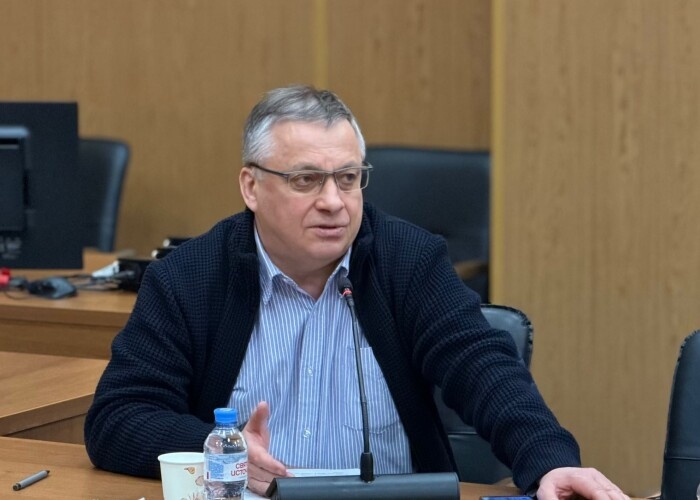
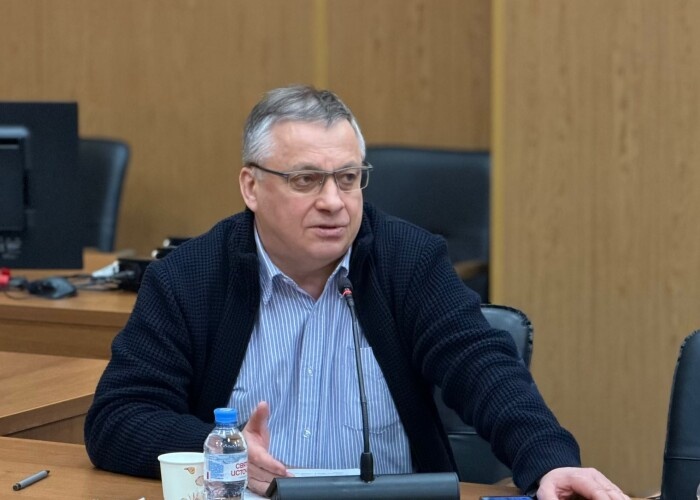
Alexander Sharov is the head of RusIranExpo, a famous B2B-firm aimed at pushing trade between Moscow and Tehran. Having visited Iran hundreds of times, Mr. Sharov can be considered as an expert in the import-export dimension of trans-Caspian partnership. Exclusively to our website, he commented on the economic impact of the 2026 American/Israeli war against the Islamic Republic.
How will the closure of the Strait of Hormuz influence the Russian economy?
I can reply in a single word: this impact is EXTREMELY positive. The Russian budget has more gains, the Russian export companies objected to Iran receive 20 times more money than it was before the outbreak of Iran’s war with the Epstein Coalition. Of course, you know about price rise in oil, gas, and other items Russia supplies abroad — but every analyst highlights this trend.
Personally, I’d like to analyze the consequences on the Russian-Iranian trade and cooperation: both now and even after the end of war as a long-lasting effect.
Let’s recall that cargo transportation from Russia can be performed by three routes. First, along the Eastern shore of the Caspian Sea (via Kazakhstan, Uzbekistan, Turkmenistan). Second, along the Western one (via Azerbaijan). The latter way works with a slight restriction due to political tensions. Nevertheless, I can already assure you that grain supplies from Russia to Iran will increase at least twice this year compared to last year.
Why?
Previously — before the Hormuz blockade — Iran used to receive more than 20 million tons of grain through the above-mentioned Strait of Hormuz and the Persian Gulf. Those were corn, wheat, legumes, soybeans, and others. About half of these volumes can quite realistically be replaced by Russia.
Since the trans-Caspian cargo routes are limited, we will be highly unlikely to increase the volume of the Russian agricultural export to Iran by 10 million tons this year. The bandwidth of logistical hubs, railway stations, and ports cannot enlarge instantly.
But it is quite realistic to say that Russia would be able to increase the volume of agro-exports to Iran by 5 million tons, replacing supplies from Australia, Argentina, Canada, and the USA in the Iranian market. Also, there will inevitably be an increase in the supply of Russian coal through the Caspian transport corridor as Russia has lots of coal mines, including Donbas. It will be a replacement of Australian coal for Iran. This is also inevitable, because the Australian coal also went through the Strait of Hormuz and the Persian Gulf.
But anyhow, the war will end, and the old trade routes will be unlocked…
It will be a long process: unblocking and stabilizing the market. This will take at least 2–3 months more, even in the low-possible case of successful US/Israel-Iran negotiations. Moreover, there will be a replacement of Chinese and Indian rolled metal export to Iran with Russian. Since Russia has direct rail access to Iran — unlikely to China or India — once appeared, the Russian metal can remain in the Iranian market.
Then, let’s mention restoration and repair technologies. Resuming of the war-affected oil and gas drilling sited using Russian technologies and equipment in Iran will be inevitable after the war. That’s for sure.
And some more fields?
The recent wars and riots in Iran have shown the vulnerability of Iran’s IT industry based on Western and Chinese technologies in communications and national digital infrastructure. Unlike China or the West, Russia is ready to share such technologies with its allies. Therefore, I predict the increase in exports of Russian IT technologies, including in the form of joint production in Iran. Previously, Tehran used to borrow even some Israeli software components, which would also be replaced by Russian programmers.
You said, there are THREE supply routes from Russia to Iran: through Azerbaijan, through Central Asia, and what is the third?
The third one is the direct cargo vessel way by the inner sea from Russian ports in North Caspian to Iranian in South Caspian. Such a route does not depend on political vulnerability in transit countries, but requires more investments in port hubs for both allies.