

By Yunus Emre Özgün
As the July 2026 NATO Summit approaches amidst a structural crisis of Western hegemony and the erosion of global legal norms, renowned peace and security scholar Prof. Dr. Biljana Vankovska dissects the “Siamese twins” of NATO and the EU, the securitization of the Balkans, and the tragic paralysis of international law in Gaza.
The global geopolitical architecture is fracturing. Between the ongoing tragedy in Gaza, the blockade of the Strait of Hormuz, and an accelerating shift toward a multipolar world, the Western consensus is showing unprecedented signs of strain. Ahead of the highly anticipated July 2026 NATO Summit in Ankara, the alliance faces not only a military deadlock but a profound moral and economic crisis. To navigate this complex landscape, UWI sat down with Prof. Dr. Biljana Vankovska, a distinguished Macedonian legal scholar and peace researcher. In this candid, unvarnished exchange, Vankovska challenges the foundational myths of the NATO-EU nexus, explores Türkiye’s delicate geopolitical “hedging,” and questions whether international law can survive the brutal realities of what she terms “hyperimperialism.”
The NATO-EU “Siamese Twins” and the Crisis of Hyperimperialism
UWI: Europe faces a double crisis: A moral collapse from backing US-Israel aggression and economic suicide as the prolonged closure of the Strait of Hormuz cripples its industry. Meanwhile, Trump’s recent visit to China seemingly highlighted the decline of the US empire and the unstoppable shift toward a multipolar world. Yet Trump’s so-called peace plan for Iran has completely stalled, leaving Hormuz blocked while Israel continues its regional destruction. This Middle Eastern deadlock totally disrupts NATO’s grand strategy of “exhausting Russia while pivoting to China as the main threat.” Looking at the July 2026 summit of NATO, how do you evaluate this strategic paralysis? Can the alliance mask the growing US-Europe divide with new shared enemy narratives and lucrative military-industrial complex deals, or will Trump simply use the summit to dump the financial burden of these unwinnable wars onto the subservient European Union states?
Prof. Dr. Biljana Vankovska: Thank you for pointing out this important issue of having a nexus between NATO and the EU. Sometimes we get a little bit confused; even our experience in theory and practice doesn’t help to distinguish where NATO starts and ends and where the European Union begins with its decision-making process, especially in terms of security, defense policy, alignment, and geopolitical development. I usually say that we are dealing with Siamese twins here of these Western entities.
As for the summit, first of all, I would like to refer to your mentioning of two crises over the West and in Europe, especially, as you rightly said, the moral one. I fully agree, especially with respect to Gaza first of all, and then the rest of the world, as you rightly put it, unwinnable wars and even genocide. You mentioned the economic crisis, but I would put all these things, including some other aspects of the crisis, under the crisis of capitalism, of corporate capitalism, or as we in my circles name it: hyperimperialism. That is the structural essence of the situation, not about the behavior of this state or another state or the decisions they are going to make.
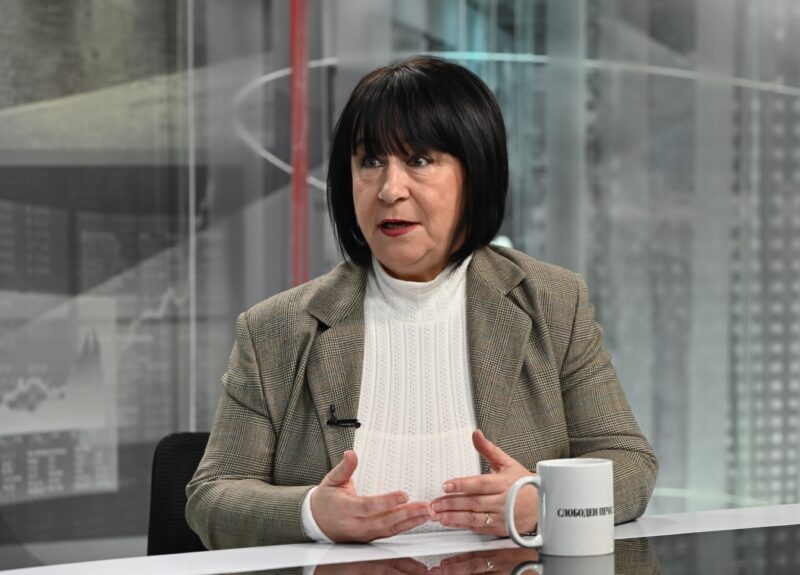
As for the NATO summit, I’ll be blunt here because I spelled out my viewpoint last year. Before last year’s summit, that was also announced as a historical one because of the famous GDP decision—that is something really incredible that even the most developed countries cannot really achieve without sacrificing something more important for their societies, of course. My point is that NATO should have been dumped into the dustbin of history long ago. Maybe the European security architecture would have been different, and maybe we would have been living in a better, more secure, more peaceful world if, after the collapse of the Warsaw Pact, NATO had been simply closed down.
But obviously, we are dealing with structural issues. As I mentioned, this capitalism is sometimes defined as a military-industrial-media-academia complex. So we have various aspects of vested interests and groups who benefit from keeping this security agenda, especially in military terms, high, and disciplining the member states by creating enemies. NATO has never been a defensive alliance, in my view; it was made by the United States and has served US interests first of all, creating collateral effects on others. Here I would like to quote a colleague, Ali Borhani, who coined a new word that defines the situation in the Western alliance: he speaks about ‘vassal allies’. They are in a colonial, subservient position, as you mentioned, with respect to the empire, to Washington.
And what to say about the coming NATO summit? It will be more of the same, I would say. This burden sharing that runs on the creation of enemies—you know, what used to be known as ‘the Russians are coming’ during the Cold War, now it’s ‘the Russians and Chinese are coming’. And it is even more dangerous. And Iranians, of course, and the rest of the world. That is the only way to legitimize high spending on the military.
On the other hand, we have a declining NATO. Some of my colleagues believe that NATO is one of the most dangerous organizations on earth; I think it is a little bit of an exaggeration, and I want to challenge that proposition by saying that, actually, the United States is NATO, and there is no NATO without the United States. Let’s not forget that NATO has been losing wars and is experiencing military defeats. Not to go further back in history, but let’s remember leaving Afghanistan—the pictures from departing from the airport remind us of Vietnam, of course. Then, losing the proxy war in Ukraine, the West is losing there, and it is a no-win situation. They’re losing in Iran.
And of course, Donald Trump is running the alliance in a very unconventional way through his Truth Social posts. For example, declaring that he’s going to move US troops from one NATO member state to another, or declaring, ‘We are awarding our Polish allies with 5,000 more troops there.’ Then you see the faces of the defense ministers getting out of a summit, reading his Truth Social posts, and finding out that he came to a new idea about the deployment of forces. All this creates a situation of an alliance that is trying to present itself as coherent, powerful, and united, but I’m really not sure that they’re going in the right direction.
You mentioned strategic paralysis. Actually, I think it would not be a bad idea after all, because the strategy as they understand it now is self-destructive for everyone. One of my most radical theses nowadays is that we have probably lost our ability to acknowledge the existence of an ongoing global war fought with different means. We don’t need NATO troops or a military clash; the war is going on at a different level—over routes, over corridors, energy, Hormuz is crucial as we know, economic war, and so on. The world is changing, and NATO is trying to keep to its usual rhetoric, trying to slightly shift it.
But the basic point, and I’ll stop here, is that the burden sharing, if we accept that terminology, is a class project. It is not burden sharing between Macedonia, which is one of the poorest countries in Europe, and the United States or Germany. It is a deal between the elites, the comprador elites, and the military-industrial complex that benefits from war at the expense of the basic social needs of the population. So that is my view, and I really don’t expect anything dramatic to happen after July in Ankara.
The Securitization of Europe and the Balkan “Periphery”
There is a fact about NATO and the Balkans; NATO sees the Balkan countries as a buffer zone. The Euro-Atlantic integration of the Balkans was historically sold as a peace-building project. Instead, we are witnessing an aggressive militarization, like in Yugoslavia in the past. Now, NATO faces systemic failures on both its Eastern and Middle Eastern fronts. Comparing the directives of the last summit to the expectations of the July 2026 summit, what is NATO’s true endgame for the Balkans? Are they using these new collective security goals to prepare the region as a sacrificial buffer zone? Systematically, are the Balkans becoming a secondary powder keg to compensate for Western strategic retreats globally?
That is a good point. We both come from the Balkans, and we have a shared history in terms of dealing with the West. Here I come close to this civilizational debate: the Balkans have always been a periphery, or sub-periphery, or periphery of the periphery—I just don’t know how to define it. But the story about peace-building was de facto a story of neocolonialism, of conditional subordination of these new or re-established states after the fall of Yugoslavia, and the rest of the Balkans as well. Let’s not forget that even the countries that are part of the alliance—both NATO and the European Union—have lost sovereignty in terms of making their own democratic decisions, elections, budgets, and economic and social policies. I will never forget what happened to Greece in 2015 due to the deep financial crisis; the European Union exercised power to humiliate and punish a government that was allegedly left-wing.
As you rightly pointed out, the story of NATO and the EU has always gone together as a promise of peace, culture, well-being, and better quality of life for the impoverished population after the war and devastation in the former Yugoslavia. But now we see a shift in the discourse; the narrative has changed. Now the European Union is not about well-being or welfare, but about warfare. There is, as I put it in theoretical terms, a securitization of European integration, which is a completely different story from what the citizens expected up to now. They are now convinced that we should join the European Union in order to keep our security. So why on earth did we join NATO in the first place? We could have tried to join the European Union through other paths, through reforms and meeting the Copenhagen criteria.
In my view, the Balkans remains in the eyes of Brussels the ‘other’ of Europe, this primitive, backwards, militant part, while at the same time, the civilized Western Europe is deeply militarized and going backwards to the times that we learned about from our history books about the First and Second World Wars. No history lesson has been learned. Whenever I hear the usual phrase about a ‘powder keg,’ that the Balkans is explosive, and especially the term Balkanization, that is the story of Orientalist stereotypes; we do not really belong to Europe, they have to deal with us because we are troublesome and on the frontier. I think here, together with Türkiye, the Balkans and Türkiye create some sort of civilizational and cultural frontier that is not as welcome in Brussels as they want to present it. I think there is a hidden agenda of peripheralization and discrimination.
Unfortunately, they are pushing the Western agenda very successfully on the surface through the comprador elites, the NGOs, and the media; they are all educated into a ‘religion’ of trusting that there is no better civilization than the European one. In geopolitical terms, the Balkans has already been sacrificed in terms of joining the Ukraine war. Small states with serious internal socioeconomic and demographic problems are pushed to believe that we should all stand behind Ukraine. Macedonia is a typical case; we got candidate status 21 years ago and are still far from starting the negotiation process, yet Macedonia argues that Ukraine deserves full membership in the European Union. That is hard to understand: how can a state struggling with reforms support a country in a war situation, not even sure about its borders, acting as a battlefield for clashing major forces? People believe these incapable local elites are unable to deliver, so we have to go to the European Union, but the way to the European Union now leads via Kiev. That is a paradox. The European Union is not a peace project anymore or a developmental agenda for future generations.
Türkiye’s Geopolitical Hedging Between the West and BRICS
What about the NATO-Türkiye contradiction? Türkiye attempts a multi-vector balancing act and sovereign pushbacks from time to time. Today, the ongoing aggression toward Iran and the chaos in the Eastern Mediterranean with the Israeli and Greek governments directly threaten Turkish national security, like other states in the region. Türkiye’s objective, factual interests are increasingly clashing with American regional designs. Structurally speaking, can a relatively sovereign and multipolar-leaning state like Türkiye genuinely coexist within a rigidly unipolar NATO architecture? Or are we finally approaching a historic geopolitical rupture?
That is a very important issue. I have to admit I’m not an expert on Türkiye, and you know much better about Turkish national strategic priorities, but from my perspective, we are indeed in a shifting global situation. Every country, especially a middle or regional power like Türkiye, faces rising, competitive power centers. Türkiye is probably engaged in what my colleagues in geopolitical studies term ‘hedging’—trying to reconcile being a European actor and part of NATO while balancing other interests. It is important that Ankara is hosting the NATO summit, and it will be interesting to follow if that is by chance or by design.
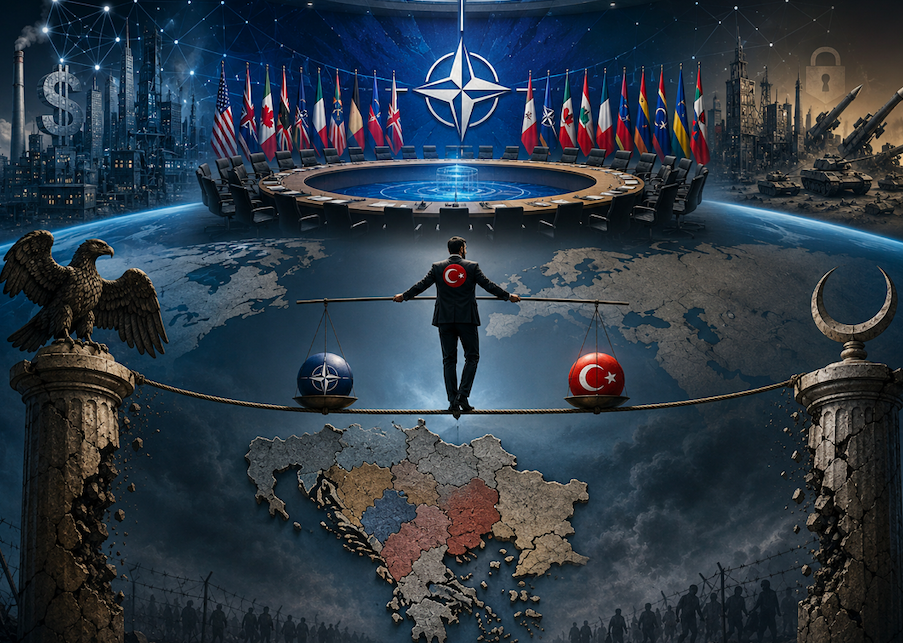
Türkiye is trying to balance and show open interest in BRICS countries, acknowledging the changed world, and diversifying relationships to avoid being exclusively obedient to Brussels or Washington. Brussels is likely out of the picture for Turkish policy because Türkiye will probably never get into the EU, much like Macedonia. But it is difficult to handle. You mentioned the meeting between President Trump and Chinese President Xi; they were keeping communication ongoing despite conflicting interests. It is not an easy position for Türkiye. Sitting on two chairs is not a stable situation; one must be a good acrobat dealing with two or more balls at the same time.
What is interesting in this civilizational prism is that whenever Türkiye appears as a partner in my region, in the Balkans, there is immediate hysteria like, ‘Oh, it is a neo-Ottoman empire’. How is it possible that the West can project its interests globally in South Korea, Japan, Australia, and New Zealand, but a natural, close relationship between Türkiye and the Balkans based on shared history and culture is seen as endangering the Western agenda?
On a more critical note, when I listen to the speeches from President Erdogan or other Turkish representatives regarding Israel or Gaza, one has to say, ‘Wow, this was powerful, blunt, and timely’. People appreciate that sort of rhetoric, but there are no deeds behind it. We are still on this line of trying to satisfy both sides. But for consolation, Türkiye is not the only one. All the countries on this edge between conflicting interest zones have to learn to live with this instability. I would love to see a completely different world order, perhaps something better than just multipolar, but for now, geopolitical balancing remains the main instrument for many countries.
Gaza and the Total Collapse of International Legal Categories
Given your background in law and peace studies, I would like to address the absolute collapse of international law. We see unprecedented legal action against Israel and Netanyahu, now compounded by recent war crimes against Iran; yet, instead of enforcement, we witness blatant retaliation, such as the targeted cancellation of bank accounts and digital payment systems of the ICC judges. Historically, the Nazis were only brought to justice at Nuremberg after they suffered an absolute military defeat. Does Israel have to face a total military defeat to finally be stopped and held accountable? Or is it possible for a new global justice front, backed by powers like Russia and China, EU dissenters like Spain and Ireland, and key regional actors like South Africa and Türkiye, to actually succeed without requiring a massive military war?
This is such an important issue, and I always start with Gaza. If we as humanity have tolerated an ongoing genocide for more than 1,000 days, it is really a question of whether we have an order, whether we are a civilization, and whether we have international law. Often, I lose all hope, and the knowledge I acquired through theory books that I taught at the university feels like a complete loss; it is unable to explain the world through these international legal categories.
We saw what happened to Francesca Albanese; she is still under sanctions for doing her job. Last year, I was part of the jury of conscience of the Gaza Tribunal that took place in Istanbul. It is run by Professor Richard Falk, a brilliant professor of international law, and we are still his students. He believes that we should not put the blame on the law, the values, or the norms, but on the actors, and that civil society should push harder to combine our efforts. When we think about the apartheid state in South Africa, it was the global movement and economic boycott that brought a change of regime there.
I don’t know. Israel is a nuclear power, unfortunately, and secondly, it is backed by the United States of America. As the late father of peace research, Johan Galtung, used to say: the world has a problem, that problem has a name, and the name of that problem is the United States of America. Without their support, Israel would just be a minor actor in these regional dynamics and should have been held accountable under international law. As it is, it is unbearable to see the Gaza horror ongoing, and it is a shame for all of us living in this time. It seems we must push harder because the norms are there, the consciousness in the 21st century is here, but we obviously lack mechanisms of power.
Thank you for your time and candidly unvarnished critical insights. It means a lot, and your efforts regarding peace, justice, and the Gaza issue are deeply appreciated.
Prof. Dr. Biljana Vankovska: “Thank you.”
*Editor’s Note: The transcript of this interview has been lightly edited for grammar, syntax, and stylistic flow to ensure readability, while strictly preserving the interviewee’s original talk, meaning, and tone for full intellectual freedom.