


By Oscar Rotundo
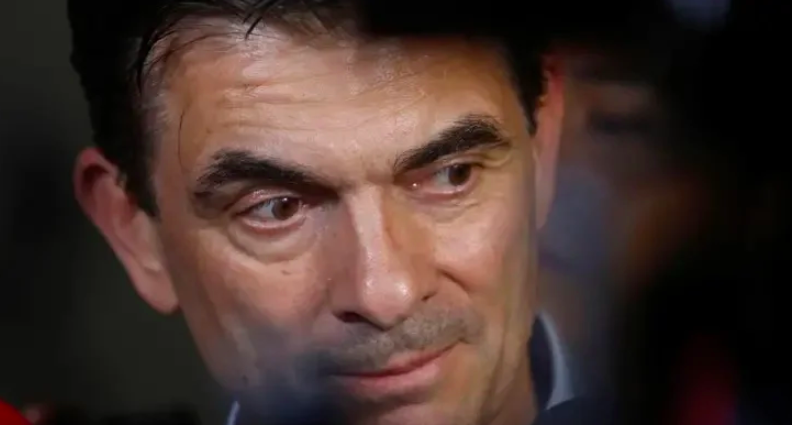
When Rodrigo Paz Pereira assumed the presidency on November 8, 2025, he did so with the promise to change the course of Bolivia, to end the crisis, and to govern with transparency and efficiency. But just a few months into his administration, the reality is very different: the subnational elections of March of this year revealed a fragmented political landscape, the economy shows signs of improvement that aren’t reaching people’s pockets, and social movements are up in arms, tired of broken promises.
The ballot boxes were the first warning. In the March 22 elections, the government’s allied forces barely managed to win in three of the nine governorships. In La Paz, where greater support was expected, the result ended in controversy: after the second candidate withdrew, the Supreme Electoral Tribunal declared Luis Revilla, an ally of the ruling party, the winner. However, organizations such as the Bolivian Workers’ Center (COB) and the National Council of Ayllus and Markas of Qollasuyo (Conamaq) denounced a “negotiated democracy” and called for mobilizations, warning that they would not allow the popular will to be trampled. In other departments, the situation is equally complicated: Santa Cruz and Tarija will hold runoff elections; Leonardo Loza, close to Evo Morales’s positions, won in Cochabamba; and in Pando, Gabriela de Paiva made history by becoming the first elected female governor, but from a political force outside the La Paz power circle. There is no consolation in the mayoral races either: while Manuel Saavedra obtained a resounding victory in Santa Cruz, in La Paz the winner was César Dockweiler, a former ally of Morales, and in Cochabamba, Manfred Reyes Villa was re-elected for the fifth time, demonstrating that the old leaderships continue to have more strength than the new proposals of the government.
But if politics is a battleground, the economy is no less so. The government boasts of figures that seem positive: a trade surplus of $801 million between January and February, a fiscal surplus of 2.3 billion bolivianos in January, and inflation that appears to be slowing. But these figures are like mirages in the desert: they don’t translate into well-being for the population. While the government speaks of stabilization, the price of basic foodstuffs is skyrocketing: bread has doubled in some places, public transportation fares are rising uncontrollably, and the minimum wage of 3,300 bolivianos is insufficient to cover even half of the basic food basket. All of this began with the infamous Supreme Decree 5503, which announced an increase in fuel prices and, although repealed three weeks later, left the new prices in effect: a perfect example of the improvisation that characterizes this administration, where measures are taken without consultation, generating discontent, and then attempts are made to correct the situation without addressing the root of the problem. Analysts have already pointed out that many cabinet members arrived with “outdated software”, without a clear strategy and with communication that fails to explain or convince.
And as expected, the social response was swift. The COB, along with dozens of peasants and indigenous organizations, has taken to the streets demanding a 20% wage increase, the repeal of regulations they consider violations of their rights, and the rejection of the so-called “anti-blockade law” that aims to prohibit protests on highways. They have given the government deadlines, submitted petitions, and warned that if there is no response, the mobilizations will intensify. These are not just economic demands: there is also political distrust, especially after what happened in the subnational elections and decisions like Decree 5515, which allows the president to govern from abroad and which was criticized even by former presidents like Evo Morales and Eduardo Rodríguez Veltzé, who consider it an attack on institutional integrity.
Added to this is internal instability: in just four months, the government has seen four dismissals and two resignations of high-ranking officials, demonstrating that even within its own team there is neither consensus nor stability. What promised to be a government of change and unity has become a scene of conflict, where each measure creates more problems, and each announcement raises more doubts.
And now, with such a turbulent landscape, the Paz government seems to be opting for a hardline approach. The announcement of the construction of “El Salvador model” or “Nelson Mandela model” prisons to combat the growth of organized crime is, at the very least, a measure that raises more questions than it answers. Is the militarization of the prison system the solution to the inefficiency and corruption plaguing Bolivian prisons? The Deputy Minister of the Interior and Police, Hernán Paredes, argues that it is a comprehensive strategy in response to the reconfiguration of drug trafficking following the downfall of leaders like Marset. He acknowledges that prisons like Palmasola have been overwhelmed, and that criminal networks continue to operate from within. The solution, according to the government, lies in blocking cell phone and internet signals and strengthening intelligence systems.
But the experience of other countries, such as El Salvador with its controversial “Bukele model,” has shown that a heavy-handed approach without profound structural reform of the justice system and without respect for human rights can lead to a spiral of violence and authoritarianism. Is the Paz government willing to pay that price? Is this the answer to its inability to manage the economy and political instability? Or is it, in reality, a desperate attempt to project authority and control to an increasingly discontented population and increasingly mobilized social movements?
The alleged presence of international organizations such as the First Command of the Capital in Bolivia is the reinstatement of the theory of the “internal enemy” to which the right resorts to mobilize its resources towards repression in the face of the failure of its much proclaimed “capitalism for all”.
The government is attempting to superficially address a far more complex problem that cannot be solved with higher walls, narrower cells, and special forces. The real challenge is to dismantle the mechanisms that allow organized crime to exploit the needs of the population and provide cover for problems the state neglects to solve.
To combat organized crime, corruption must be eradicated at all levels of government, and a transparent and effective justice system must be guaranteed. The construction of “model” prisons is part of a reactionary media spectacle that generally masks a lucrative business diverting state resources to spread a message of hatred and revenge.
Rodrigo Paz came to power with the support of millions of Bolivians who wanted change. But today, that support is fading, replaced by disillusionment, protest, and now, concern about a possible shift toward security policies that, instead of solving the underlying problems, could generate new conflicts and tensions in a country already on the brink. If he doesn’t change course, if he doesn’t stop improvising, and if he doesn’t listen to the demands of those who elected him, his government risks becoming just another chapter in the long list of administrations that promised much and delivered little. And in this scenario, the construction of “model” prisons could be just the beginning of a dangerous path for Bolivian democracy.
Oscar Rotundo* Political analyst. PIA Global Editorial Director. This article was previously published on Noticiaspia global here. Translation to English with AI support by UWI.