

Decolonization is not merely the political independence of a society, but the process of dismantling the structures left behind by colonization that is, the economic, cultural, military, and epistemic domination of one people by another power. In other words, decolonization is the effort to reconstruct societies as historical, cultural, and intellectual subjects by eliminating the relations of dependency, identity fractures, and external domination over knowledge produced by colonization.
In this sense, although it was classically defined as the ending of colonial administrations, in contemporary literature the concept signifies a much broader cultural transformation. Postcolonial studies in particular have demonstrated that colonialism continued in different forms even after formal independence. (Mamdani, 1996)
According to Frantz Fanon, decolonization is by nature a complete upheaval, and the colonial system objectifies human beings. Historically, the process of liberation requires the reconstruction of this human condition. Fanon’s approach positions decolonization not as a passive reform but as a revolutionary rupture. Fanon also stated regarding decolonization: “Colonialism fragments the human mind and identity; decolonization, as liberation, is the repair of this fragmentation. It is the complete remaking of the world.” (Fanon, 1963)
Another authoritative figure in the field, the Kenyan sociologist Ngũgĩ wa Thiong’o, sees the colonization of language as the fundamental instrument of mental domination. By asserting that “language carries culture,” he draws attention to the cultural dimension of decolonization. In this context, mental liberation is as critical a process as political independence. Reflecting particularly on language, Ngũgĩ states that “the colonization of the mind is the most dangerous.” Therefore, production in indigenous languages lies at the center of decolonization. (Ngũgĩ, 1986)
Indeed, while explaining this, Ngũgĩ historically articulated Western plunder in the following terms:
“The struggle began in 1884 when the capitalist powers of Europe sat in Berlin and divided up the entire continent, placing peoples, cultures, and linguistic diversities under the yoke of different colonies. It seemed as though Africa’s destiny would forever be determined around the conference tables of the metropolitan centers of the Western world. It had been decided in Berlin that a once self-governing society would be submerged into colonies. The colonial phase — involving the subtlety of announcing that it could both kill and heal with the same skill (…) — is the summary of the last century of African history.” (Wa Thiong’o, 1986)
Ali Mazrui (1986) analyzes Africa’s identity crisis through a triple heritage — indigenous, Islamic, and Western. This demonstrates that decolonization is not merely political, but also a civilizational repositioning. Mahmood Mamdani, meanwhile, argues that colonial state structures continued after independence and that the distinction between “citizen” and “subject” persisted. (1996)
Malcolm X defined decolonization as a global struggle for freedom and emphasized that it was not only the problem of Black people in America but of all colonized peoples. Similarly, Jomo Kenyatta regarded independence as a cultural rebirth and embraced the idea that “without economic freedom, political freedom is incomplete.” Nelson Mandela was among the African leaders who adopted these latter two perspectives.
Debates on Decolonization in Türkiye
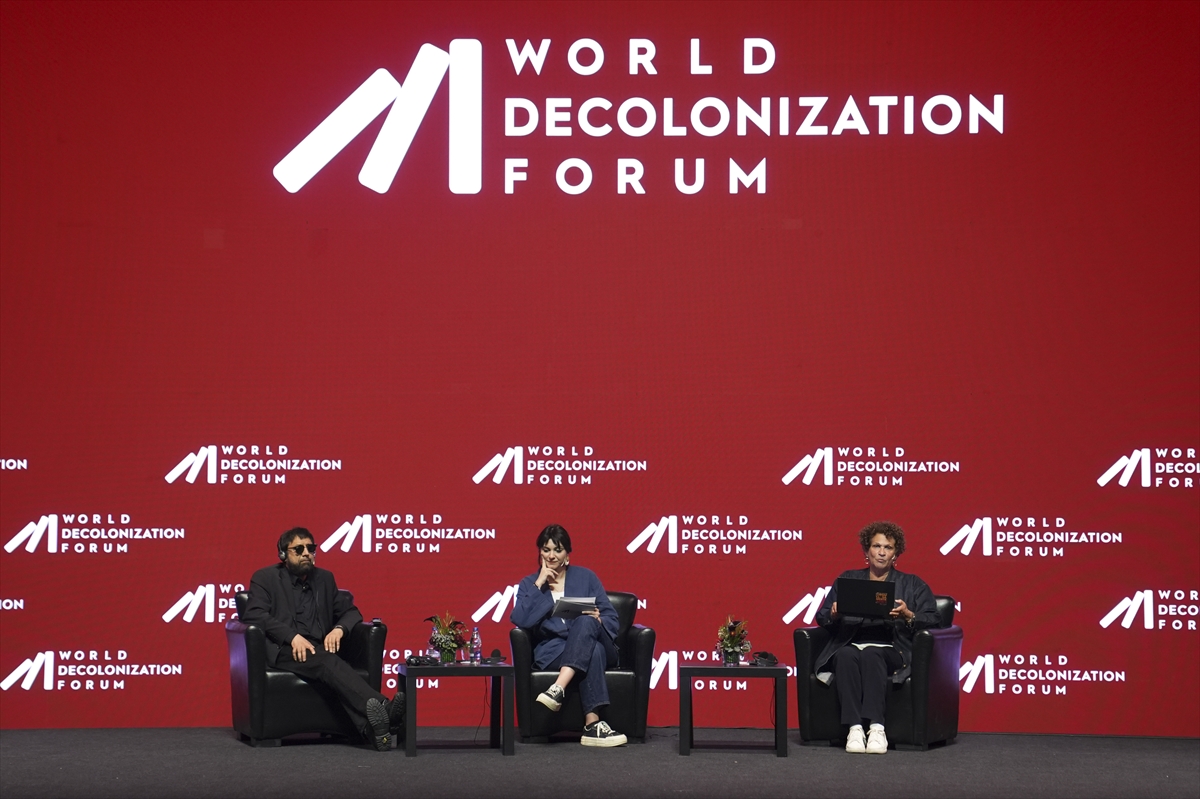
A program organized in Türkiye under the title of Decolonization is an important initiative in terms of establishing intellectual connections with the Global South. However, the most critical problem of such organizations is the preference for more popular politicians or writers rather than including actual field specialists. Addressing a topic such as decolonization which possesses a strong historical and regional context through figures from unrelated fields rather than academics and thinkers with direct field experience limits the depth of the discussion. For example, inviting Ebrahim Patel, who served for many years in South Africa’s economic administration, is disappointing considering the debates surrounding his country’s economic performance. In fact, while Patel did not participate in any programs related to Türkiye during his tenure as trade minister, we know that after retirement he began seeking visibility, especially since he is no longer taken seriously in his own country. It is also noteworthy that even members of Patel’s own family in South Africa reportedly describe him as a communist who has not visited even his own neighborhood in Cape Town for years. In this regard, considering that the concept of decolonization focuses especially on the African context, one would have expected epistemic contributions emerging directly from the field to be prioritized.
Among the participants from Türkiye, the positioning of Halil Berktay as a speaker representing the country in a decolonization forum is regarded by certain circles as a clear intellectual and political contradiction. The basis of this criticism lies in Berktay’s approach to the Armenian issue, which conflicts with the dominant historical narrative in Türkiye.
Berktay is among the Turkish academics who evaluate the deportations and mass deaths during the late Ottoman period within the framework of the concept of “genocide.” This approach is viewed by circles adhering to a state-centered historical perspective in Türkiye as a position undermining the country’s historical legitimacy. Therefore, highlighting a figure aligned with the dominant discourses of Western academia within a decolonization platform that aims to question Western-centric historiography appears paradoxical.
Moreover, in his article written during the Solution Process titled “Bantustan in South Africa, Kurdistan in Türkiye,” Berktay’s comparison of Türkiye to the Apartheid regime corresponded neither to South African nor to Turkish history. Approaching scholarly matters with such prejudice and ideological framing and offering solutions in this manner does not heal wounds but rather deepens them. Unfortunately, Türkiye has so many pseudo-intellectuals that during that period, figures like Berktay who traveled from Ankara to South Africa merely produced writings denigrating Türkiye. The strangest event that we could not comprehend at the time was that C. Çandar, H. Berktay, and H. Cemal collectively promoted the so-called Armenian genocide from Johannesburg!
During the Solution Process period, there were delegations from Türkiye who traveled to South Africa seeking rights for the Kurds and engaged in negotiations there. While Berktay wrote pieces blackening Turks in the name of advocating Kurdish rights, his title “Kurdistan and Bantustan” also demonstrated his unfamiliarity with South African history. (Berktay, Bantustan-Kürdistan, 2013)
In addition, there were also those who criticized the program using incorrect arguments. Namely, some academics in Türkiye made critical social media posts regarding the program on decolonization held in Istanbul. One of them confused the expression “colonizer” in the late Ömer Lütfi Barkan’s work Colonizing Turkish Dervishes with the Western term “coloniser.”
However, Barkan’s conceptualization of the term “colonizer” in his article should not be confused with modern postcolonial literature. The central issue lies in reading the word “colonizer” through the contemporary associations of Western colonialism. Yet there are serious historical and legal differences between Barkan’s concept and the “colonizer” type of modern European imperialism.
First of all, Barkan’s article is a historical-sociological framework developed to explain early Ottoman expansion. The “colonizer” here is not used in the sense of the overseas colonial model of nineteenth-century Europe. In his article, Barkan was already describing processes of settlement, frontier habitation, networks of tekkes, agricultural production, social integration, and the Islamization of frontier regions. Thus, the dervish type in question is not the prototype of the modern capitalist-imperialist colonizer. This is because the essential characteristics of classical European colonialism overseas economic plunder, biological racism, slave labor, and the liquidation of indigenous populations cannot be directly applied to the geographical structure of the early Ottoman world. The reason Barkan used the word “colonizer” is that he preferred a usage close to the terminology of “colonisation intérieure” in French historiography, meaning internal settlement and habitation. Here, the concept carries the meaning of settler rather than modern colonialist. Therefore, applying the contemporary discourse of “decolonization” to this concept would be an anachronism. In other words, the concept of “decolonization” is not a universal key for explaining Ottoman expansion.
Perhaps the aspect of the program open to criticism concerns, as mentioned above, the invited guests. For example, one of the two important figures who should have been invited regarding decolonization was Dr. Sylvia Blyden, the Sierra Leonean politician and granddaughter of the Liberian intellectual Edward Blyden, who had been awarded the Mecidiye Order by Sultan Abdülhamid II. Such an invitation would both send a message to history and ensure that the right person was present.
Another figure could have been former Indian Foreign Minister Shashi Tharoor, who attracted global attention with his book Inglorious Empire Britain. Both of these individuals stand out not merely as intellectuals familiar with the topic, but as people who genuinely have something meaningful to say.
Of course, according to the principle that “those who know should govern,” one must first be aware of such figures before attempting to put ideas into practice.
Particularly in discussions concerning the colonial experiences of Africa, Asia, and the Islamic world, prioritizing figures who have become polarizing actors in Türkiye’s domestic historical debates instead of field experts has weakened the intellectual weight of the forum. Therefore, in a Global South-centered discussion such as decolonization, academics known directly for postcolonial field studies should have been preferred, foremost among them Mahmood Mamdani.
From another perspective, Türkiye’s relations with Africa in recent years can also be interpreted within the framework of decolonial solidarity. President Recep Tayyip Erdoğan’svisits and rhetoric toward African countries carry the claim of producing alternatives to Western-centered power relations. Therefore, not those who approach the issue with a liberal or communist mindset, but intellectuals — Turkish or foreign — who possess a national stance have the potential to contribute to the international dimension of decolonization.
Conclusion
In recent reports emerging in Türkiye regarding decolonization, it should not be forgotten that this is not a subject one can discuss merely by glancing at Wikipedia. Unfortunately, like everything else in our country, this issue too has been transformed into the kind of political gossip found on magazine programs. The failure to consult those who have actually worked in this field is a manifestation of the coarsening and anti-intellectualism within academia.
Decolonization means not only demanding political independence from Western colonial structures, but also questioning the epistemic domination over history, identity, and knowledge production. Therefore, one of the most fundamental issues in discussions of decolonization is which voices are elevated as “legitimate representatives.” From the Turkish perspective, the promotion within a decolonization forum of figures such as Halil Berktay — who evaluate Ottoman history and especially the Armenian issue through the conceptual framework of Western-centered literature — is seen as contradictory. This is because decolonization theory, as emphasized by thinkers such as Frantz Fanon and Ngũgĩ waThiong’o, defends not only political independence but also epistemic independence against the monopoly of Western knowledge production. In this context, criticisms maintain that within a platform centered on the historical memory of the Global South, the preference for figures who play polarizing roles in Türkiye’s internal historical debates instead of specialists distinguished by African, Asian, or postcolonial field studies contradicts the spirit of the concept itself.
Decolonization requires questioning not only the past but also the contemporary processes of knowledge production. The intellectual trajectory extending from Fanon to Ngũgĩ reveals the multilayered nature of this process. Although initiatives in Türkiye’s are important, for such programs to become genuinely effective they must adopt a critical and profound approach grounded in the expertise of specialists in the field. Otherwise, the discourse of decolonization cannot go beyond the level of rhetoric.
References
Fanon, F. (1963). The Wretched of the Earth. Grove Press.
Gençoğlu, H. (2025). The Western Plunder of Africa. Kronik, Istanbul.
Kenyatta, J. (1965). Facing Mount Kenya. Vintage Books.
Malcolm X. (1965). The Autobiography of Malcolm X. Grove Press.
Mamdani, M. (1996). Citizen and Subject: Contemporary Africa and the Legacy of Late Colonialism. Princeton University Press.
Mazrui, A. A. (1986). The Africans: A Triple Heritage. BBC Publications.
Ngũgĩ wa Thiong’o. (1986). Decolonising the Mind: The Politics of Language in African Literature. Heinemann.
Young, R. J. C. (2001). Postcolonialism: An Historical Introduction. Blackwell.