


Türkiye seeks to offer alternative trade and energy routes following the closure of the Strait of Hormuz by Iran in the war against the US and Israel.
The “Middle Corridor”, which bypasses Iran, is considered alternative routes for Qatari natural gas and Iraqi oil, which are currently dependent on the Strait of Hormuz.
“Island of stability”
In a recent statement, President Erdoğan remarked: “Türkiye stands out as an island of stability and a safe haven. Talks have commenced regarding more secure alternatives for energy transmission lines. We believe that this global crisis will open new doors for our country.”
Minister of Energy to visit Qatar
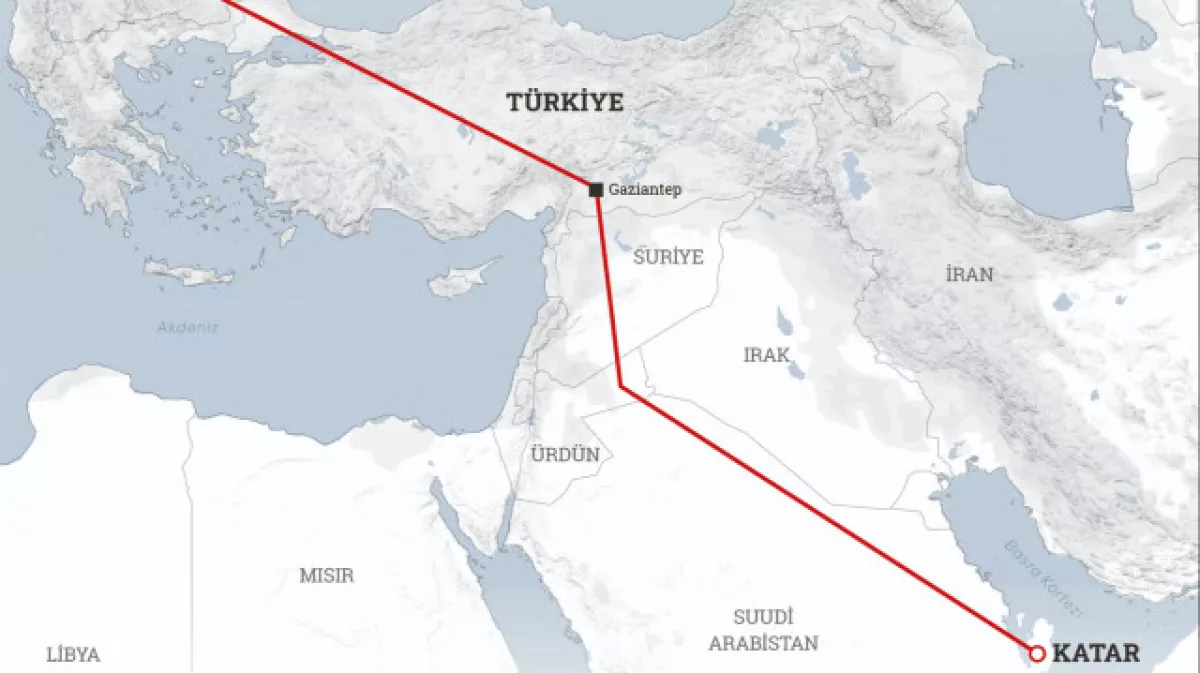
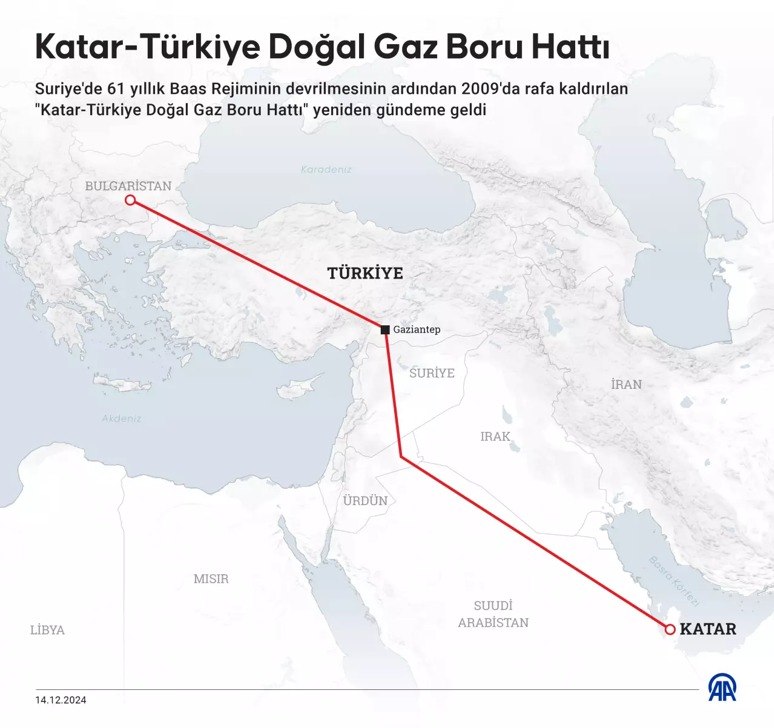
Speaking to Bloomberg at the Antalya Diplomacy Forum, Minister of Energy and Natural Resources Alparslan Bayraktar announced that he will visit Qatar in the coming days for initial contact regarding the Qatar-Türkiye-Europe natural gas pipeline, which was put on the agenda by Türkiye following the Hormuz crisis. The project plans to transport Qatari natural gas to Europe passing through Saudi Arabia, Jordan, Syria, and Türkiye.
However, the project is not without difficulties. How feasible is this compared to imports from Russia via the Strait of Hormuz?
Prior to the war in Iran, more than 300 million cubic meters of gas equivalent LNG passed through the Strait of Hormuz daily, accounting for approximately 20% of the world’s LNG trade. About 10-15% of this LNG was transported to Europe. For Europe, which has also been reducing its natural gas imports from Russia since 2022, the closure of the Strait of Hormuz jeopardized its energy supply.
More costly than Russia and Hormuz
The Erdoğan government, viewing the crisis in Hormuz as an opportunity, aims to create an alternative to Europe which is dependent on Russia and the Strait of Hormuz with the “Qatar-Türkiye-Europe natural gas pipeline”.
Europe imports 100 million cubic meters of natural gas per day from Russia and 40 million cubic meters from Hormuz. It is estimated that in a best-case scenario, 100 million cubic meters could be imported daily with the Qatar-Türkiye-Europe pipeline. However, Europe’s daily gas import need exceeds 1 billion cubic meters.
The primary issue lies in the cost of the pipeline. The cost per cubic meter for Europe’s natural gas imports from Russia is 5 dollars, and from the Strait of Hormuz it is 8 dollars. Experts estimate that the cost per cubic meter for the pipeline in Türkiye’s project will be more than 12 dollars.
Financially inefficient, security-wise risky
The intended length of the pipeline also renders the project financially inefficient. The world’s longest pipelines (the Trans-Mediterranean, Nord Stream, and TurkStream are, respectively, 2,500 km, 1,200 km, and 930 km) respectively. The Qatar-Türkiye-Europe line would need to be approximately 4,000 km. Due to its length and that it passes through regions with geopolitical conflicts, the line seems financially inefficient and risky in terms of security.
The EastMed case
Eastern Mediterranean Maritime (EastMed) was cancelled on the grounds that its $15 billion cost was inefficient after a feasibility study. Experts say that the cost of the Qatar-Türkiye-Europe pipeline will exceed $20 billion and will similarly prove to be inefficient.
Türkiye hasn’t renewed contracts with Iran and Russia
While the Erdoğan government is busy with creating alternatives for Europe’s supply chain, it is failing to capitalize on opportunities for cheap energy procurement from neighboring countries. The natural gas agreement between Türkiye and Iran expires at the end of 2026. On April 18, Minister Bayraktar said that negotiations for the renewal of the agreement have yet to begin.
The government also didn’t renew the natural gas agreement with Russia, which expired in 2025. Having only extended the contract for a single year and neglected to start renewal negotiations, Türkiye suffered significant losses as energy costs surged following the Hormuz crisis.