


By Mehmet Enes Beşer
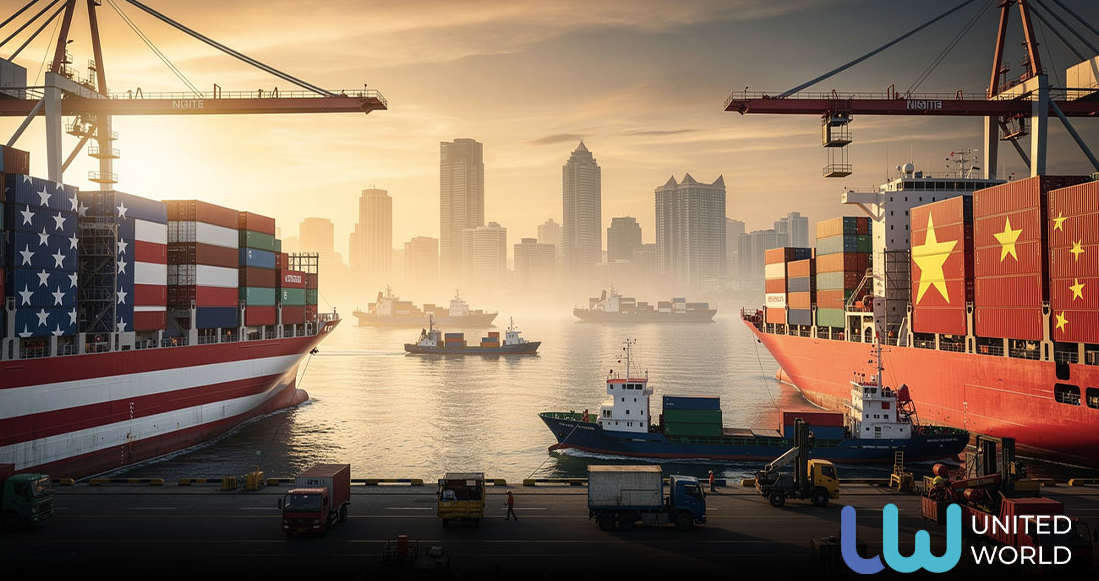
As the long-running trade dispute between the United States and the People’s Republic of China develops into a complex phenomenon that has ramifications for international markets, Southeast Asia is one of the regions affected most significantly. With Southeast Asia playing a significant role in international trade, as the main economic agents of the region increase tariffs on each other, Southeast Asia finds itself faced with new challenges and advantages in its economic configuration.
Among the most evident implications of this situation for the economies of the Southeastern part of Asia, we can mention changes in production locations that lead to a new allocation of exports from this region. Indeed, due to higher tariffs and the resulting increase in prices, a number of manufacturers are looking for alternative locations to manufacture goods and, thus, are relocating operations towards Southeast Asia. Such a process takes place, for example, in Vietnam and Cambodia, where there is a noticeable growth in exports to the United States. Nevertheless, the problem is that this is not purely a result of endogenous processes; many products made in China are being shipped via Southeast Asia as means of avoiding tariffs.
The Vietnamese example demonstrates how this problem can be solved by adjusting duties for imports from the US, which will allow for a promotion of exports of liquefied natural gas from the US to Vietnam. This example also reflects on how these economies can benefit from closer collaboration with America in terms of trade.
Nevertheless, the consequences for Southeast Asia caused by this trade war are complex since, while some countries gain from increased foreign investments and growing exports, other countries face the threat of more intense competition in their markets because of an influx of cheaper Chinese products. For example, in Thailand, there have been some factories closed due to an increase in the volume of low-cost goods imported from China. Indonesia’s textile industry is facing job losses, too, due to competition.
This conflict requires a reassessment of approaches to developing industry in Southeast Asian countries. While there is a possibility of capitalizing on the shift of global chains of production and becoming an attractive location for manufacturing plants relocated from Western markets, this strategy also involves some risks since, by using their influence in bargaining for advantageous tax conditions, firms can diminish the economic benefits of such moves. Besides, the effect of foreign companies importing their materials and workers limits the economic benefits to host economies.
To address problems arising from such a situation, Southeast Asian nations are taking steps aimed at deepening regional cooperation and economic integration. The Regional Comprehensive Economic Partnership, which unites ASEAN countries, together with China, Japan, South Korea, Australia, and New Zealand, strives to promote intra-regional trade. This step is supposed to increase the region’s resistance to negative economic consequences brought about by the trade conflict.
In response to the ongoing issues related to this struggle between the US and China, Southeast Asian states are trying to address this problem through diplomacy. In this respect, Thai representatives of businesses have appealed to their governments to start negotiations with America to avoid potential penalties and reduce the duties for US goods to solve trade imbalance problems and prevent sanctions.
Conclusion
Thus, while Southeast Asia finds itself in the middle of the crossfire between economic giants, the region shows the ability to adapt and overcome existing difficulties through diplomatic and economic measures. At the same time, these measures can have both positive and negative sides, depending on whether Southeast Asia implements appropriate policies for development.