


By Azar Mahdavan, from Tehran, Iran
Following the full-scale confrontation between Iran and Israel, the relative silence from Tel Aviv toward Tehran has become one of the most significant ambiguities in regional equations. Even during the military clashes between Iran and the United States in July—which occurred in the wake of the “Forty-Day War”—the Israeli government chose not to directly intervene. This decision has raised serious questions regarding Israel’s underlying security and political calculations.
Some analysts interpret this silence as a sign of Tel Aviv’s failure to impose its will and the increasing costs of confronting Iran. Conversely, others believe that by refraining from an immediate return to the battlefield, Israel is seeking to regroup, recalibrate its strategies, and wait for a more opportune moment for its next move.
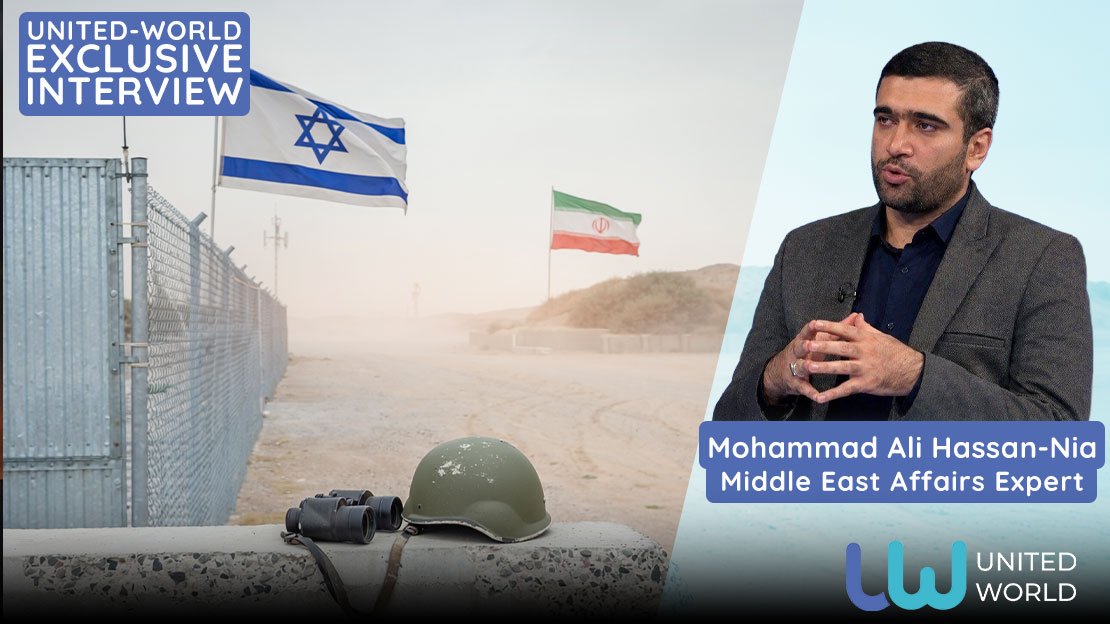
In this context, we interviewed Mohammad Ali Hassan-Nia, an expert on Middle Eastern affairs, regarding the reasons behind Israel’s current silence, the possibility of renewed tensions, and the future outlook of the Iran-Israel standoff. The transcript of this conversation follows:
Why is Israel currently avoiding a direct war with Iran? Is this decision driven by military limitations and the costs of a war of attrition, or are other factors involved in Tel Aviv’s silence?
Israel’s restraint from escalating the conflict is the result of a complex, multi-layered calculation based on three main factors:
- The “Reverse Deterrence” Shock: The recent war, while designed with the goal of weakening or even collapsing the Iranian state, did not yield the intended results. On the contrary, the heavy attacks—specifically the targeted assassinations of leadership and high-ranking IRGC commanders, and the targeting of symbols of power—did not lead to the collapse of the Iranian system. Instead, they led to the consolidation of internal consensus and the strengthening of the “Resistance” discourse after a brief period of shock. Iran emerged more cohesive and determined than before, meaning the costs for any new Israeli military action have increased exponentially.
- A Shift in Strategic Equations: Israel has clearly grasped that Iran has evolved from a merely vulnerable actor into an entity that effectively employs asymmetric strategies and regional proxies. A new war would no longer be a bilateral conflict; it would rapidly descend into a multi-front war of attrition with exorbitant human, military, and economic costs. Experience has shown that Iran possesses high capabilities in “strategic chess” and patience. Israel has no desire to enter this spiraling war of attrition, which has already expanded regionally—from the Strait of Hormuz to the Red Sea, and from the Persian Gulf to Saudi Arabia and Jordan.
- Prioritizing Smart Strategy over Direct Conflict: Israel’s military doctrine is based on surgical, precise, and intelligence-driven strikes. The targeting of nuclear programs, missile infrastructure, and the physical elimination of key commanders is a strategy that has replaced all-out war with a lower cost and higher effectiveness. As long as these tools remain effective, there is little incentive for a full-scale ground confrontation. Furthermore, Benjamin Netanyahu is currently entangled in election-related issues and likely intends to enter the conflict only after the Knesset elections, provided he remains in power. However, it is unlikely that he will retain power in the next cabinet. His departure would effectively end the “golden duo” of Trump and Netanyahu. Netanyahu is an influential figure, whereas his various political rivals lack his level of impact.
Given that Israeli officials do not consider the war with Iran to be over, what factors could drive Tel Aviv to launch a new round of attacks? Is Israel likely to re-enter a direct war with Iran in the event of the failure of Tehran-Washington negotiations or an escalation of the crisis in the Strait of Hormuz?
Despite the current stagnation, Israeli officials do not view the war as concluded. Potential sparks for a new round include:
- The Outcome of Nuclear Negotiations: The most critical determinant is the fate of the talks between Tehran and Washington. Any agreement that, from Israel’s perspective, does not verifiably and completely neutralize the Iranian nuclear threat will be treated as an “existential red line.” This could trigger a wave of preemptive strikes—though reaching such an agreement currently seems highly unlikely.
- Crisis in the Strait of Hormuz: If Iran escalates the disruption of maritime shipping and threatens the global flow of oil as a leverage tactic, this could draw a broader economic and sanctions-based response from a U.S.-led coalition. This is a path Donald Trump would likely prefer over yet another full-scale war.
- Strategic U.S. Support: The depth and scope of any new attack depend entirely on the level of American intelligence, logistical, and military support. As long as Washington provides the green light and effective backing, the possibility of more aggressive Israeli actions exists, particularly after the Knesset elections.
How does Tehran interpret Israel’s avoidance of a new phase of war? Does Iran view this situation as a sign of its own deterrence and the rising costs of military action for Israel, or does it believe Tel Aviv is simply changing tactics and waiting for a more favorable opportunity to strike?
In Tehran, this situation is analyzed through two distinct yet complementary lenses:
- Victory in Deterrence: From the perspective of Iranian officials, Israel’s caution is the direct result of increased military costs and the success of the Resistance strategy. By demonstrating its capabilities—whether in the missile and drone arenas or through its regional proxies—Iran has shown that the equations have changed. Exiting the war with minimal cost while imposing difficult calculations on the enemy is touted as a strategic victory.
- Tactical Shift and Preparing for a Decisive Blow: Alongside this confidence, there is a realistic assessment. Iran is well aware that the current calm is merely a tactical pause by Israel and the U.S. to regroup, refine their strategies, and create the conditions for a more decisive blow. The continued successful assassinations of IRGC commanders and persistent threats indicate that Tel Aviv is waiting for the right moment for its next move.
In my view, the war has entered a new phase. It begins with comprehensive economic sanctions aimed at paralyzing Iran, potentially leading to future civil unrest. Whenever such unrest escalates to a level similar to the “Dey protests” (2017-2018), external support for these uprisings becomes highly probable. That is the point where the situation will transition into full-scale sabotage, targeted assassinations, and definitive military and security strikes.