


By Mehmet Enes Beşer
There’s a phrase New Delhi repeats whenever Kashmir comes up: internal matter. It’s said with the confidence of a closing argument, as if the words themselves are supposed to end the conversation. But Kashmir isn’t a zoning dispute. It’s a contested political future, an unfinished promise from 1947, and—most importantly—a lived reality for millions of Kashmiris who don’t get to opt out of being “managed.”
Calling it internal is not neutrality. It’s a power move.
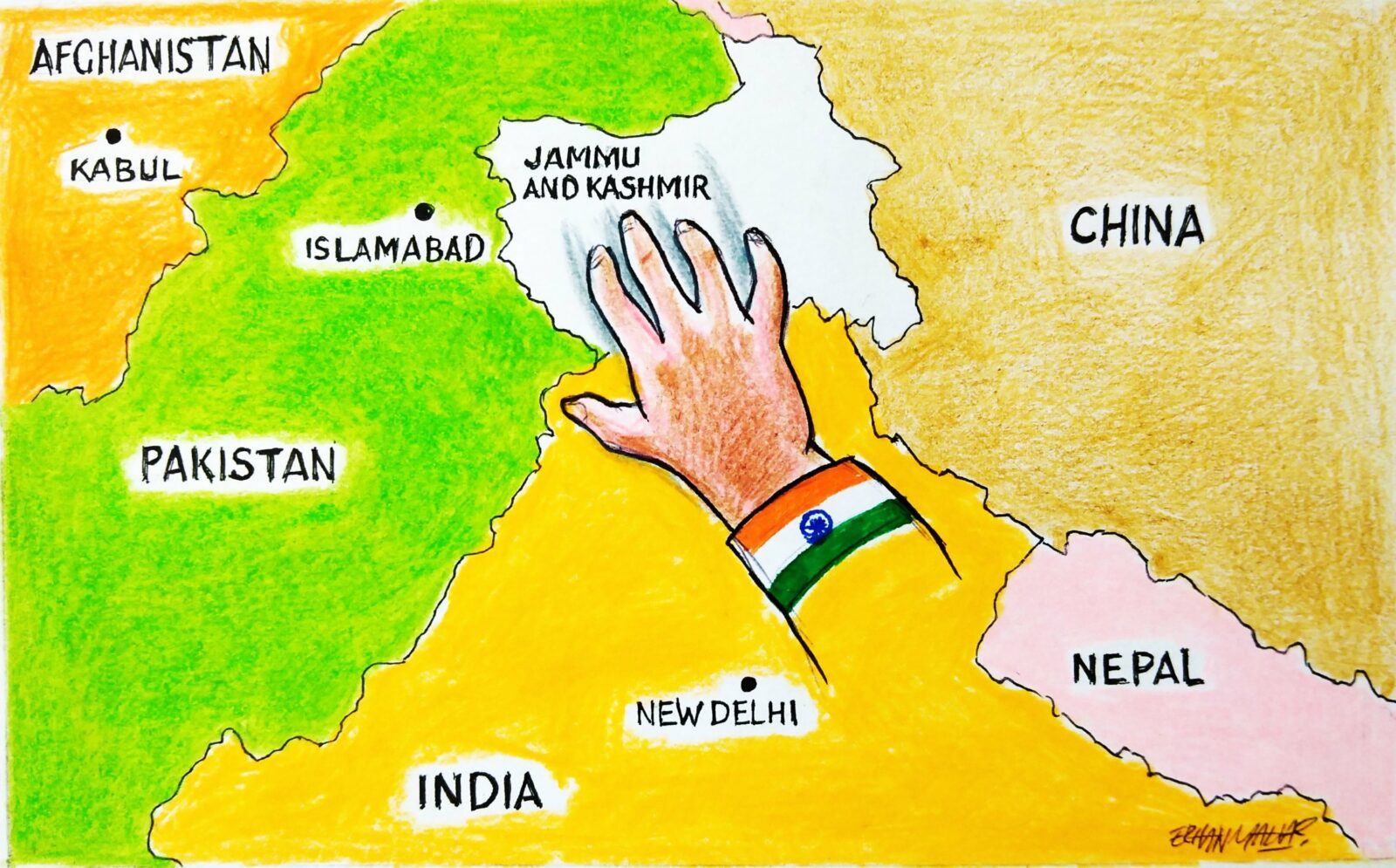
For decades, India and Pakistan have been stuck in a strategic stalemate over Kashmir. But in the last few years, India has tried to change the nature of the dispute: not solve it, not negotiate it—bury it. The 2019 revocation of Article 370 wasn’t just a constitutional adjustment. It was a statement: we decide, you adapt; we rewrite the terms, you accept them.
If you’re looking for the clearest proof that India prefers control to consent, start there.
New Delhi sold the move as modernization—better governance, more development, fewer obstacles. Fine. But here’s the part India doesn’t like saying out loud: development is not a substitute for political dignity. You can build roads and still deny people agency. You can pave highways and still keep a population under a permanent security lens. And when you do that, “integration” starts to look a lot like absorption.
Pakistan’s reaction—diplomatic downgrade, international advocacy, constant pressure in global forums—gets mocked as noise. But ask yourself: what is Pakistan supposed to do when India unilaterally changes the status of a disputed territory and then demands silence as the price of “peace”?
Pakistan is right to insist that Kashmir cannot be settled by one party announcing finality and expecting the other side—and Kashmiris themselves—to clap politely and move on. That isn’t conflict resolution. That’s conflict management by brute administrative force.
And yes, Pakistan’s efforts haven’t produced dramatic leverage. The U.S. and Europe mostly want the issue muted. They prefer South Asia stable, markets open, China contained, crises avoided. “Bilateral matter” is the polite way of saying, we don’t want the headache. China plays its own chessboard, supporting Pakistan when useful while calibrating its moves against India. So Pakistan gets lectures about dialogue from powers that don’t lift a finger to create conditions for dialogue.
But lack of Western action doesn’t mean Pakistan is wrong. It just means the world is comfortable with India’s narrative—because India is big, important, and economically attractive, and Kashmiris are… inconvenient.
The real change since 2019 is on the ground. Kashmir has been turned into a space where politics is treated as suspect by default. Local parties are constrained, public life is policed, and the room for ordinary democratic bargaining has been squeezed into something narrow and brittle. This is the part New Delhi frames as “normalization.” Yet normalization that requires permanent exceptionalism—exceptional security measures, exceptional controls, exceptional restrictions—isn’t normalization. It’s a managed quiet.
And managed quiet has a habit of snapping.
India’s biggest strategic advantage right now is not moral clarity. It’s the ability to point to “terrorism” as a universal conversation-stopper. The moment Kashmir is mentioned, India pivots to cross-border militancy and dares the listener to keep talking. It’s effective. It’s also deeply convenient, because it allows New Delhi to collapse an entire political dispute into a single security category.
But Kashmir cannot be reduced to a terrorism narrative without erasing the obvious: people don’t remain alienated for generations because of slogans from across a border. They remain alienated when they feel ruled rather than represented.
Pakistan, meanwhile, has a choice to make if it wants its pro-Kashmir stance to stay credible and durable: keep its case grounded in rights and self-determination—and stop giving India the easiest possible talking point. The cleanest argument Pakistan can make is the one that doesn’t depend on theatrics: that Kashmiris deserve political agency, that unilateral decisions are illegitimate, and that the dispute cannot be ended by legal tricks dressed up as sovereignty.
Because here’s the uncomfortable thing India doesn’t want discussed: if New Delhi truly believed Kashmir’s status was settled and accepted, it wouldn’t need such a heavy architecture of control to enforce “normalcy.” A confident state doesn’t fear elections, speech, or local political expression. A confident state doesn’t treat dissent as contagion.
So, when people say the conflict is “frozen,” I don’t buy it. Frozen suggests time has stopped. Time hasn’t stopped — India tried to stop it. Pakistan refuses to accept that time can be stopped by decree. And Kashmiris are left living inside that collision.
What would a real path forward look like? Not grand summits and photo-ops. Start smaller and more honest.
- Restore political life in Kashmir. Not as a favor. Not as a “gradual privilege.” As a prerequisite for any legitimacy.
- Rebuild crisis-management guardrails, so incidents don’t spiral into airstrikes and national hysteria.
- Reopen human channels—travel, families, scholarship, culture—because treating people-to-people contact as a security risk guarantees that only extremists keep the microphone.
- Stop pretending unilateralism is peace. It isn’t. It’s just control with better vocabulary.
And yes, Pakistan should keep pressing internationally—not because the world will suddenly become brave, but because silence is exactly what India wants. If the global community is happy to look away, Pakistan shouldn’t help them by lowering the volume.
Kashmir has stayed unresolved for one brutal reason: it has been politically useful for the powerful to keep it unresolved. India uses it to tighten nationalism and justify exceptional rule. The world uses it as an inconvenient file to leave in a drawer. Pakistan uses it as a central national cause—and, at its best moments, as a moral argument against unilateral domination.
But the people who pay are Kashmiris. Always Kashmiris.
If South Asia is ever going to escape strategic limbo, it won’t happen through India insisting “internal matter” like a spell. It will happen when New Delhi accepts the thing it keeps avoiding: you cannot govern a disputed future into submission and then call the result peace.