


By Mehmet Enes Beşer
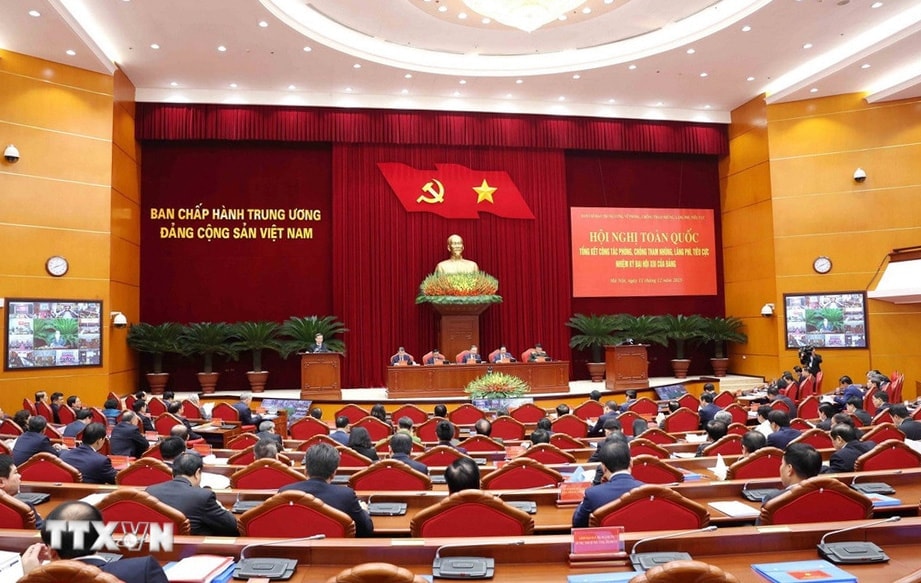
Vietnam’s street-level anti-corruption movement—popularly referred to as the blazing furnace campaign—has been extremely popular within the country and overseas. The campaign, initiated by Communist Party General Secretary Nguyễn Phú Trọng, has brought down dozens of senior officials, including cabinet ministers, provincial governors, and managers of state-owned companies, since its outset. There is political intent behind the campaign, and its rallying cry—no one is above the law—is resonating extraordinarily deeply in a country where indignation at official impunity has been pent up for years.
It’s difficult to dispute that the crackdown isn’t needed. But despite that, there seems to be the perception that Vietnam’s anti-corruption drive is a sham. The campaign targets individual offenders instead of the institutional setup where the corruption can thrive in the first place. Until the root causes of the issue—abdication, lack of accountability mechanisms, and state discretionary power—are addressed, the model will be reactive and performative. It is not sufficient to just eliminate corrupt bureaucrats; the system that created them has to change as well.
Most of all, the biggest enabler of corruption in Vietnam is the failure to separate political and economic power. State-owned enterprises (SOEs), monopolizing the key sectors of the economy, are opaque and unaccountable. They are politicized in reality, with party instead of merit-based criteria being used to select managers. This is the soil for rent-seeking because SOEs are employed as instruments of patronage, enrichment, and political gamesmanship.
To this, Vietnam’s legal and regulatory framework offers huge scope for discretionary decision. Discretionary authority over land use, procurement, and licensing allows the authorities’ discretion to demand unofficial payments or differential treatment to the insiders. Though norms are legally established to keep abuse in check, they are applied in a partial and ad hoc fashion—more likely susceptible to pressures of a factional kind within the Party or political necessity.
Politicians and civil society intended to restrain corruption are in good order. Journalists reporting on high-profile cases are always at risk of sanction. Whistleblowers are punished and there is no effective legal recourse. Such an environment neither encourages transparency nor reduces bottom-up pressure for reform. Absence of independent institutions, ranging from an independent judiciary to an effective anti-corruption agency, renders systematic change even less likely.
Another factor that tends most often to fall short of appreciation is political culture. The one-party organization of Vietnam relies on internal cohesion, loyalty, and consensus, and these are likely to be obstacles in establishing a truly rules-based administration. Personalism and respect for authority can be more valuable to officials than professional integrity or public service. Corruption here is less a corruption of the system—albeit even partly a function of it.
There is also a risk that the war against corruption will be driven erratically, for domestic political rebalancing and not system change. Some critics are already complaining that while several officials have been sanctioned, the campaign has not been joined by wider institutional reform or decentralization of power. If illusions are created that the campaign is but half as political, half one of justice, then its legitimacy—and effectiveness—will be eroded by the test of time.
Therein, Vietnam will need to shift away from authoritarian means and toward structural change. Additional decentralization and professionalization of the bureaucracy, reengineering governance at SOEs, and wearing down regulatory room for maneuver with digitalization and open-process tools would each reduce space to bribe or extort. Legal reform should have as its top priority protection of whistleblowers, a free press, and a right to information. Above all, Vietnam needs to invest in institutions—and not people—who can deliver accountability in the longer term.
Conclusion
Vietnam’s anti-corruption campaign has dominated the headlines, shaken seats of power, and provided citizens with a sense of satisfaction. It is just barely the beginning, though. Vietnamese corruption is not the result of corrupt individuals’ handful in number—it is the result of institutional weakness, weak institutions, and a political economy disequilibrium.
If the campaign does not translate into a mass movement to alter the game rules, then it would be a cycle of purges back and forth and not a path to good governance. The true test of Vietnam’s seriousness on the anti-corruption agenda will not be how many enter the furnace—but whether the mechanisms that fed the fire ever leave.