


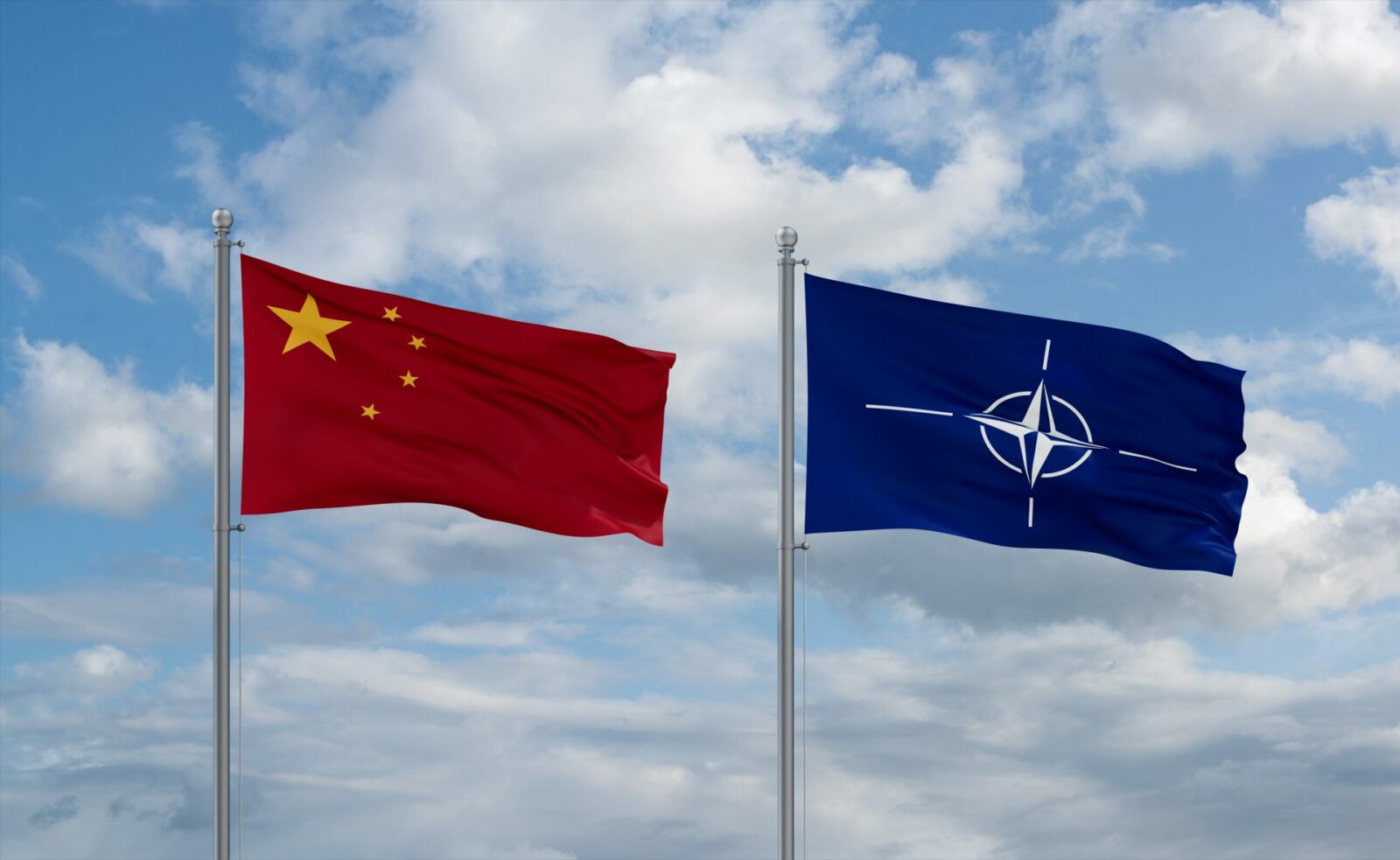
By Orçun Göktürk, from Beijing / China
NATO will hold its annual summit in Ankara next month. Founded during the Cold War era to counter the Soviet Bloc, the organization aimed to fight communism externally and to control European countries internally by the USA. Despite the dissolution of the Soviet Union (even though its so-called reason for existence disappeared), it maintained its presence and even expanded by incorporating many Eastern European and Scandinavian countries.
“In recent years, NATO has begun to overtly target China in its final summit communiqués. So, how does Beijing view NATO? China’s primary media organ, the CPC’s People’s Daily newspaper, recently evaluated NATO as follows:
“Although the justification for NATO’s presence in Europe has weakened, it is trying to create new threat areas for itself. Rather than focusing on the Russian threat, NATO is now constructing a new ‘common enemy’ through China by adding Beijing alongside Moscow, aiming to legitimize its own institutional future.”
In the CPC’s theoretical publications, primarily Qiushi, the core concept of NATO criticism continues to be the “Cold War mentality” (冷战思维). Particularly in commentaries published after the Madrid and Vilnius summits, it is emphasized that NATO has ceased to be a European security organization, turning instead to ideological bloc politics and creating new polarizations by dividing global security.
Therefore, Beijing’s main expectation regarding the upcoming summit is that NATO will further expand its China file and strengthen its institutional ties with its Asia-Pacific partners.
In Chinese politics, a notable recent theme is that Europe’s economic relations with China are suffering due to NATO’s logic.
Furthermore, Chinese academics argue that while countries like Germany, France, and some Southern European nations wish to maintain economic relations with China, Washington is dragging Europe into an anti-China strategy through NATO. It is worth adding that according to Beijing’s calculations, there is no complete consensus on China within NATO. Chinese diplomacy is trying to widen the strategic divisions within NATO, especially by deepening economic relations with the European wing.
At this point, it would be useful to historically examine NATO and the US perspective on China, as well as Beijing’s view of the military superiority that the US maintains through NATO over the World, to understand them better.
‘Long Telegram’
On February 12, 1946, George Kennan, the Chargé d’Affaires at the U.S. Embassy in Moscow, sent a detailed analysis of the Soviet Union that exceeded 8,000 words and later became known as the “Long Telegram.” Its significance in history and international relations lies in the fact that, for the first time, an American official formally proposed a strategy of “containment” of the Soviet Union to Washington.
The text somehow found its way into the American press and was even published in Foreign Affairs under the pseudonym “Mr. X.” Kennan almost overnight became Washington’s most influential foreign policy theorist. His proposal provided the intellectual foundation for the Marshall Plan, and some commentators have argued that Kennan’s ideas—although he explicitly warned against a military form of containment—also had a major influence on the process that eventually led to the creation of NATO.
Could NATO Have Expanded into the Pacific?
Approximately five months after NATO’s establishment, on October 1, 1949, Mao Zedong announced to the world from Beijing’s Tiananmen Square that the People’s Republic of China had been founded under the leadership of the Communist Party of China (CPC). The “loss of China” and the subsequent Korean War created a major geopolitical shock in Washington. The United States began discussing the possibility of applying a version of the containment strategy it had implemented against the Soviet Union through NATO to China in the Asia-Pacific region.
However, Articles 5 and 6 of the NATO Treaty stipulated that the Alliance’s collective defense guarantee applied only to attacks against member territories or islands located in Europe, North America, or the Atlantic region north of the Tropic of Cancer. This geographical limitation tied Washington’s hands. For Japan, South Korea, Taiwan, or the Philippines to become NATO members, these provisions would have needed to be changed, yet these Pacific countries lay outside the treaty’s defined geographic scope.
America’s European NATO allies strongly opposed any such modification. European countries did not want the United States to expend resources on anti-communist wars in East Asia, particularly since nearly all of them had emerged from World War II bearing enormous economic costs.
Another important factor was the balance of power within Asia itself. Japan’s bloody colonial legacy in Korea and the Philippines made it politically impossible for these countries to join the same military pact with Japan.
The “Island Chain Strategy”
Paul Nitze, Kennan’s successor at the Policy Planning Staff, became one of the principal architects of the strategy to contain China. Under Nitze’s leadership, NSC-68 (National Security Council Report 68), presented to President Truman in April 1950, transformed Kennan’s largely diplomatic and economic containment concept into a heavily militarized doctrine. In this document, Nitze defined communism as a global and monolithic threat. Viewing the Chinese Revolution as an extension of Moscow, he made the military containment of China an official state policy.
The strategy ultimately adopted was associated with General Douglas MacArthur, who had distinguished himself during World War II and the Korean War. MacArthur proposed geographically encircling China, much as the Soviet Union was being contained, by establishing a natural barrier through a chain of Pacific islands. He famously described Taiwan as an “unsinkable aircraft carrier,” arguing that if the island fell under the control of Communist China, America’s Pacific defense line would collapse. Even today, MacArthur is regarded as the intellectual father of the “First Island Chain” strategy—stretching from Japan through Taiwan to the Philippines—which remains central to U.S.-China tensions.
During the Eisenhower administration, Secretary of State John Foster Dulles transformed the containment strategy into a broader chain of diplomatic alliances across Asia. In 1954, he helped establish SEATO (the Southeast Asia Treaty Organization), bringing together countries such as Pakistan, Thailand, and the Philippines. The objective was to prevent China from expanding southward into Indochina and Southeast Asia through a combination of diplomatic and military measures. During the same period, Washington signed the Mutual Defense Treaty with Taiwan (Formosa), effectively completing a strategic ring of containment around China.
The Transformation of China’s Perception of NATO
In the 1950s, Beijing viewed NATO as an aggressive alliance aimed directly at the Soviet Union and the global communist bloc. However, the Sino-Soviet split that emerged in the early 1960s fundamentally altered China’s geopolitical priorities.
As China began to characterize the Soviet Union, particularly during Khrushchev’s de-Stalinization period, as “social-imperialist” and increasingly regarded it as its primary adversary, Beijing softened its rhetoric toward NATO. Although China did not establish direct diplomatic ties with the Alliance, it viewed NATO’s ability to threaten Soviet military power in Europe and force Moscow to divide its resources between Europe and Asia as a tactical advantage. Following the Nixon-Mao rapprochement of the 1970s, China essentially came to passively accept NATO through the logic of “the enemy of my enemy.”
1999 Belgrade and the “Bloody Legacy”
The end of the Cold War and the collapse of the Soviet Union brought about the greatest trauma and turning point in China’s institutional perception of NATO. Rather than becoming obsolete after the disappearance of the Soviet threat, NATO increasingly engaged in “out-of-area” operations, setting off alarm bells in Beijing.
The most critical event occurred in May 1999 during the U.S.-led war against Yugoslavia. American B-2 bombers struck the Chinese Embassy in Belgrade, killing three Chinese journalists. Although Washington described the incident as an accident caused by outdated maps, the CPC and the Chinese public interpreted it as a deliberate act of intimidation and a direct attack on China’s sovereignty.
Even today, this event is referred to in official Chinese discourse as a “blood debt” (血债). It became the cornerstone of China’s post-Soviet perception of NATO. From Beijing’s perspective, NATO increasingly came to be seen as a “war machine” serving U.S. hegemony and capable of directly violating China’s sovereignty in order to hinder China’s rise.
A Brief Period of Pragmatism
Nevertheless, beginning in 2001, China’s rhetoric toward NATO softened once again, ushering in a pragmatic phase that even included limited military cooperation. In 2001, China joined the World Trade Organization, and the 9/11 attacks took place in the United States. This was followed by the NATO-led intervention in Afghanistan. Under the banner of a shared struggle against global terrorism, the first high-level contacts between NATO Secretary General Lord Robertson and Chinese officials were established in 2002.
Concerned that instability in Afghanistan could spill over into Xinjiang, where separatist movements existed, Beijing largely tolerated NATO’s presence there. During this period, limited institutional dialogue mechanisms were established between Beijing and Brussels, and Chinese naval forces even coordinated with NATO units during anti-piracy operations in the Gulf of Aden.
At the time, Professor Yan Xuetong of Tsinghua University, one of China’s leading universities, gave an interview to CNN International in which he stated that NATO-China relations were developing positively. Within Chinese public discourse, descriptions of NATO as “a stabilizing force in the fight against international terrorism” also became more common.
A detailed study by The Diplomat, a publication focused on Asia-Pacific affairs, examined Beijing’s rhetoric on NATO from the early 2000s through 2021. According to the study, Beijing either declined to comment on NATO-related questions or responded in a moderate and restrained manner until 2021. In 2021, nearly half of the responses became negative; in 2022, 74 percent were negative; and by 2023, the proportion of negative responses and statements had risen to 84 percent.
The Turning Point: NATO Labels China a “Threat”
Beijing’s approach toward international organizations and states is highly pragmatic and reciprocal. Unless it perceives itself as being targeted by hostile actions or policies, China generally refrains from openly targeting other institutions or countries.
The 2019 NATO Summit in London marked a major turning point in NATO-China relations. For the first time, NATO officially described China as a “strategic challenge” in its summit declaration. The Alliance’s position hardened further in the 2022 Strategic Concept adopted at the Madrid Summit, where China was characterized as a “systemic challenge.” The document suggested that China was the only country possessing the economic, military, and political capabilities to challenge and potentially reshape the so-called rules-based international order.
As NATO increasingly placed Beijing in its crosshairs, China’s rhetoric toward the Alliance underwent a complete reversal. Official statements by the CPC leadership and the Ministry of Foreign Affairs increasingly described NATO as a “Cold War relic” and a “war machine” serving U.S. hegemony. Within Chinese academia, analyses highlighting NATO’s internal crises, “brain death,” and risks of fragmentation became more widespread, while Chinese media increasingly portrayed the Alliance as unreliable and destabilizing.
Two factors have directly contributed to the rise of anti-NATO sentiment among both the Chinese state and society. First was the war launched by Russia against Ukraine in February 2022, which Beijing links to NATO’s long-term eastward expansion. Second—and even more important from China’s perspective—has been NATO’s growing involvement in the Asia-Pacific, including U.S.-led initiatives with India, Australia, and Japan, as well as the invitation of Pacific countries such as Japan and South Korea to NATO summits.
China increasingly believes that the United States can no longer sustain the costs of global hegemony on its own and that NATO itself is entering a period of crisis parallel to the decline of American dominance.
Beijing is carefully monitoring Washington’s efforts to extend the Alliance into the Asia-Pacific. However, rather than viewing NATO primarily as a strategic threat, Chinese analysts often portray it as an organization doomed to paralysis because of conflicting interests among its members.
Xi Jinping’s visit to Serbia in 2024 was deliberately timed to coincide with the 25th anniversary of NATO’s bombing of the Chinese Embassy in Belgrade. During the visit, the Chinese president stated that “we will never allow such a tragedy to happen again,” a remark that deserves special attention.
In summary, NATO was not perceived as a major threat in Beijing for much of the post-1978 reform era, partly because of China’s conflict with the Soviet Union and the liberalizing trends that gained influence in China during the 1980s and 1990s. NATO’s bombing of the Chinese Embassy in Belgrade in 1999 created a significant rupture, but China’s accession to the WTO in 2001 and the aftermath of the September 11 attacks ushered in a relatively cordial period in NATO-China relations that lasted until around 2018.
NATO’s decisions at the London Summit and the Madrid Summit to identify China as a challenge were met with a corresponding response in Beijing. Since then, Chinese officials have increasingly described NATO as a “Cold War remnant” and a “source of global instability.” At the same time, Beijing sees NATO as suffering from a systemic internal crisis and has sought to deepen economic and political relations with the Alliance’s European members in ways that, from the Chinese perspective, may further accentuate those internal divisions.
Beijing’s Perspective on the Upcoming Summit
Ahead of the upcoming NATO Summit, the core expectation in Beijing is that the alliance will harden its rhetoric, which once again defines China as a “systemic challenge.” However, Chinese decision-makers are of the opinion that NATO is not as united as it appears from the outside. The prevailing view in Beijing is that Washington is trying to transform NATO into a global coalition against China, whereas a significant portion of European countries wish to protect their economic relations with China instead. Additionally, there are those in Beijing who believe that the crisis NATO experienced with Trump is vital.
Therefore, from China’s perspective, the true significance of the upcoming summit lies not in NATO’s new decisions, but rather in demonstrating the extent to which the divisions of opinion within the alliance will deepen. NATO’s efforts to expand into the Asia-Pacific are being closely monitored by Beijing; however, Chinese strategists evaluate that, in the long run, this initiative will make the alliance’s internal contradictions even more visible.