


By Adem Kılıç, Political Scientist
The global arena is facing the reality that the liberal order, which has dominated for decades and was established after the Second World War, has collapsed, and that the Western countries that owned this order, primarily the United States, can no longer control the crises.
While the US struggles to maintain its global leadership capacity, Russia and China are exerting influence by establishing themselves as new commercial power centers, despite deterrents and sanctions imposed by the Western-centric economic system.
Europe, meanwhile, suffers from a lack of strategic will and has reached a point where it can no longer rely on the United States within the liberal order established after World War II. Furthermore, it has lost its technological and economic superiority, as well as its ‘moral superiority’ with the Gaza war.
This picture clearly shows that the classic modern distinction between ‘great powers’ and ‘small actors’ is eroding, while medium-sized but high-capacity countries are becoming key elements of the new global system.
The new reality and Türkiye
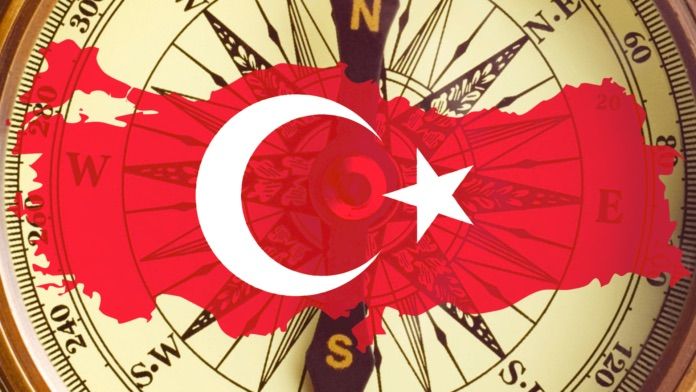
In light of this undeniable reality, Türkiye emerges as a rising power, seemingly one of the rare actors that could have anticipated this process decades ago.
It appears that Türkiye’s foreign policy in recent years has evolved into a comprehensive strategy that is not merely reactive but also generates power on the ground and transforms this power into diplomatic capital at the negotiating table.
The steps taken in Karabakh, Libya, the Eastern Mediterranean and Syria, and the experience gained through these steps, are emerging as a manifestation of Türkiye’s thousand-year-old state wisdom and today demonstrate its potential to be effective even in crisis situations with global implications, such as the US-Iran tension.
Karabakh: An approach that disrupts the status quo
The Karabakh War cannot be viewed solely as Türkiye’s support for the territorial integrity of its brother country, Azerbaijan.
This process is seen as a conflict in which Türkiye, for the first time since the Ottoman legacy and the aftermath of World War I, has taken central responsibility.
In this war, Türkiye implemented an approach that successfully executed all these missions simultaneously: military capacity, defense industry, and diplomatic coordination.
With this move, Türkiye shifted the balance on the ground without completely excluding Russia or antagonizing the West.
However, perhaps what is most important is that Türkiye emerged as the most effective actor in the post-war period.
The management of the ceasefire process, the controlled cooperation established with Russia, and the new geopolitical route opening up to Central Asia via Azerbaijan have now transformed Türkiye from a ‘crisis-creating’ to a ‘crisis-managing’ actor.
And this entire strategy has initiated a new process, serving as a concrete example of Türkiye’s ability to legitimately combine its hard power with its diplomatic power.
Libya: Building strategic depth in the Mediterranean
The Libyan theatre demonstrated that Türkiye’s regional approach is guided not only by military considerations but also by geopolitical acumen.
Indeed, the support given to the Tripoli government, which was opposed by the US, the EU, Israel, the UAE, Greece, the Republic of Cyprus, Egypt and even Saudi Arabia in the early stages of the Libyan crisis, not only changed the course of an internal war, but also thwarted all plans to sideline Türkiye in the Eastern Mediterranean.
Türkiye’s difference here stands out as its military moves on the ground being carried out with diplomatic flexibility. At the same time, Türkiye maintained its balance with Russia on the one hand, while continuing its contacts with the US and European countries regarding Libya’s future on the other, achieving an unparalleled foreign policy approach and success on the global stage.
At this point, this multichannel approach has made Türkiye an indispensable actor in the Libyan crisis, taking it to another level, much like the Minsk Group’s failure to resolve the issue for nearly forty years.
Indeed, all these moves and experiences have transformed Türkiye into a balancing power that is no longer a party to proxy wars and can maintain equilibrium even amidst such conflicts.
Eastern Mediterranean: Not a show of force, but a reminder of power
The Eastern Mediterranean crisis unfolded as a process in which Türkiye used its military capacity not as a threat, but as a reality that necessitated negotiation.
Following the unfounded support given to Greece at various times by Israel, the US and EU countries, Türkiye, which never backed down on maritime jurisdiction issues, made it clear that no plan it did not approve would be implemented in the region.
Türkiye’s strategy in this area was based not on ‘maximum pressure’ but on ‘maximum deterrence.’ While maintaining the balance within NATO, Türkiye’s relations with the EU and its controlled contacts with Greece showed that Türkiye was not an unpredictable actor but a predictable and uncompromising one.
Syria: Ability to negotiate with multiple actors simultaneously and the real power
The Syrian arena has also left its mark on Turkish foreign policy as perhaps one of the most challenging but instructive areas of Turkish foreign policy.
Maintaining relations with three major actors, the US, Russia and Iran, simultaneously both on the ground and at the negotiating table, has given Türkiye unique diplomatic power and reflexes. At the same time, Türkiye has not only aimed to ensure its own security in this process but has also emerged as the main actor ensuring Syria’s territorial integrity today.
The Astana process proved that Türkiye could break out of Western-centric solution patterns and create alternative diplomatic platforms when necessary. This process also demonstrated that Türkiye could be a balancing factor even in complex tensions such as those between the US and Iran.
Conclusion
By 2026, the US-Iran tension had evolved beyond a bilateral crisis, transforming into a multi-layered conflict zone directly affecting Israel, Gulf countries, and global trade and energy security.
Türkiye has now established itself not merely as a country managing regional crises but as an actor capable of influencing the military and political trajectory of these crises.
Türkiye, which changed the status quo in Karabakh, shaped the game in Libya, managed deterrence in the Eastern Mediterranean, and determined the outcome in Syria despite all global actors, has now assumed the role of mediator as the biggest actor that will determine the outcome in the US-Iran tension.
This picture reveals that Türkiye’s military and diplomatic weight has increased, and that it now determines the direction of not only regional but also global developments.