


By Umur Tugay Yücel
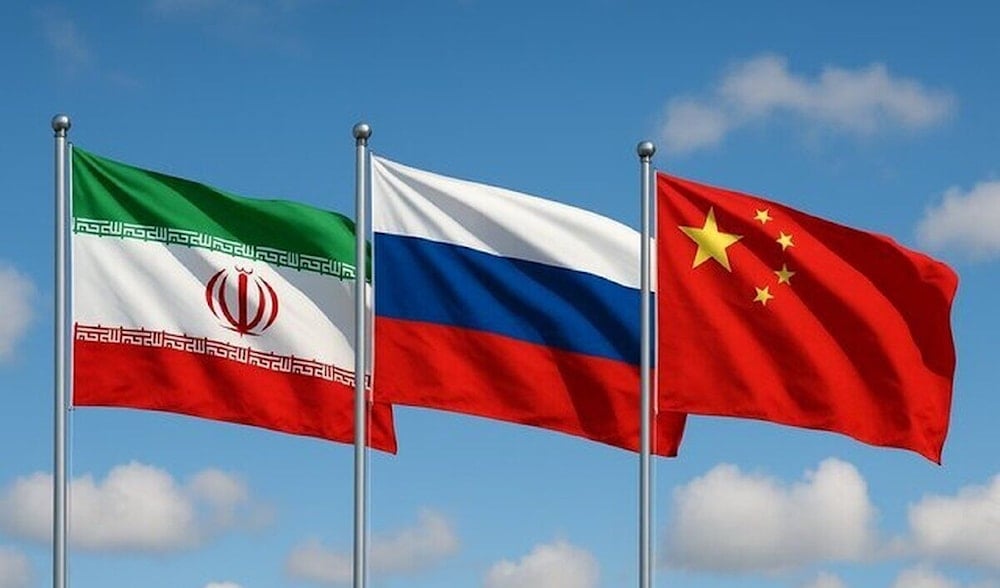
Iran’s current capacity to resist the United States and to continue striking strategic targets cannot be reduced to a single reason. This capacity and sustainability certainly cannot be considered independently of Chinese and Russian support. The trade, payment systems, and defense collaborations that Iran has developed with China and Russia in recent years have significantly increased the country’s resilience to US pressure. The crucial question is the level and means of support these two major powers provide to Iran. Because in today’s international politics, support doesn’t only mean sending troops or going to war. Support in economic, diplomatic, technological, and strategic areas can be just as decisive as military intervention.
Evidence of China’s Silent Support
From China’s perspective, Iran is primarily a strategic energy supplier. The comprehensive 25-year cooperation program signed in 2021 aims for long-term integration between the two countries in the fields of energy, infrastructure, transportation, and finance. A significant portion of Iranian oil is destined for the Chinese market, leading Beijing to view stability in Iran as critical to its own energy security. The continued presence of Chinese companies in the Iranian energy sector, despite US sanctions, and the continuation of trade through alternative payment systems, form the economic basis of this support. For China, the issue goes beyond mere commerce; it is about defending a multipolar economic order against the unilateral sanctions’ mechanism of the US.
The main goal of the US sanctions policy against Iran is to financially isolate the Iranian economy and weaken its defense capabilities. In this context, the China factor has become decisive. China’s continued purchase of Iranian oil provides the Tehran administration with a regular flow of revenue. This revenue is critically important for maintaining economic stability and sustaining defense spending. Furthermore, long-term energy and infrastructure agreements developed with China act as a buffer, preventing Iran’s complete economic collapse. US sanctions are putting pressure on Iran, but energy trade with China is limiting the impact of this pressure. It appears that China’s support is primarily economic and geostrategic. China is one of Iran’s largest energy customers, and its continued purchase of Iranian oil despite sanctions constitutes a vital source of revenue for the Tehran government. This economic flow allows Iran to both maintain its internal stability and finance its regional activities. Furthermore, China’s long-term infrastructure and investment agreements act as a counterweight to Western policies that seek to completely marginalize Iran.
Evidence of Russia’s Silent Support
Relations between Russia and Iran have taken on a more explicit strategic dimension in recent years. Long-term strategic partnership agreements signed between the two countries have institutionalized cooperation in the fields of energy, defense industry, banking, and transportation. These financial alternatives, in particular, enable Iran to maintain its international trade, albeit at a minimal level. Thus, economic pressure does not directly translate into military weakening.
Russia’s investments in Iran’s energy infrastructure also constitute an important dimension of this strategic relationship. The Bushehr Nuclear Power Plant, built and operated by Rosatom, Russia’s state nuclear energy corporation, is one of the projects that form the basis of Iran’s civilian nuclear energy capacity. This plant plays a critical role not only in energy production but also in Iran’s acquisition of technical infrastructure, human resources, and engineering expertise in the field of nuclear technology. Russia’s provision of fuel, technical consultancy, and reactor technology has created a channel preventing Iran from completely isolating itself from the outside world in the field of nuclear energy. This is important for Iran’s energy security and has also deepened the strategic ties between Tehran and Moscow.
China and Russia’s Silent Military Support
From a defense and military technology perspective, Russia’s support for Iran is more visible and direct. Cooperation in air defense systems, radar infrastructure, electronic warfare capabilities, and missile technology has enhanced Iran’s defense capabilities. One of the most notable areas of military cooperation between Russia and Iran is the use of Iranian-made unmanned aerial vehicles (UAVs) by Russia and the production partnership established in this field. In particular, kamikaze UAVs such as the Shahed-136 and Shahed-131 were procured from Iran by Russia for use in operations in Ukraine. During this process, Iranian drone technology was transferred to Russia, and cooperation was established to create facilities within Russia for the production of these systems. Furthermore, their presence in the same bloc in the Syrian theater has increased military coordination between the two countries. Information sharing, technology exchange, and joint operational experience in the defense industry have indirectly strengthened Iran’s military capacity. Russia’s advanced air defense systems and military technical expertise have served as a point of reference for Iran in developing its own defense infrastructure. However, while under Western sanctions, Russia has increased economic and military cooperation with Iran, creating mutual dependence.
Progress with China in defense and military technology has been less intense; contributions have been made indirectly through dual -use technologies, electronic components, and infrastructure systems. These contributions are particularly important in communications, cyber infrastructure, and satellite-supported systems. Iran’s pursuit of technical compatibility with Russia’s GLONASS system and China’s BeiDou infrastructure, to avoid being solely dependent on the US-controlled GPS system, is significant for strategic autonomy. This is considered a factor that increases the accuracy and continuity capabilities of missiles and unmanned aerial vehicles (UAVs). Open-source information indicates that Iran has developed technical cooperation with GLONASS and is evaluating the BeiDou system in civilian and potential military applications. This integration has created a security layer against the risk of GPS signal access being cut off in the event of sanctions or war. The use of multi-GNSS navigation support in missile and UAV systems has contributed to increased accuracy and resilience.
Iran’s Power and the China-Russia Multiplier Effect
In this context, China and Russia’s contribution is seen not merely in arms transfers, but in the sum of components that sustain Iran’s defense ecosystem, including technology, alternative navigation options, trade flows, and diplomatic protection. Furthermore, on the diplomatic level, China and Russia’s positions in the United Nations Security Council and Iran’s involvement in the Shanghai Cooperation Organization are significant. Iran’s membership in BRICS, along with other organizations, prevents Tehran from feeling the full extent of its international isolation. This makes it difficult for the US to build a broad global consensus against Iran. Therefore, the support has a geopolitical dimension, going beyond mere military or economic aspects. Iran’s full membership in BRICS and the Shanghai Cooperation Organization has also strengthened the institutional dimension of this multilateral security and economic network. The emphasis on Iran’s sovereignty and territorial integrity in joint statements previously issued within the framework of BRICS and the SCO serves as a diplomatic shield against military interventions.
Along with these factors, Iran’s deterrence against the US is largely based on its self-developed asymmetric defense doctrine. Its ballistic missile program, extensive UAV production capacity, and regional proxy networks have enabled Iran to develop balancing tools against the US, with which it cannot directly establish a conventional balance of power. This structure is the product of decades of domestic production, reverse engineering, and gradual technology development. The support of China and Russia is not the direct creator of this capacity, but rather a multiplier effect that increases its resilience. Economic breathing room, diplomatic protection, and limited military-technical cooperation prevent Iran from collapsing under pressure. However, operational decisions and military doctrine on the ground are largely shaped by Tehran’s own strategic choices.
China and Russia are not the founding actors of this system, but rather actors who facilitate the sustainability of this capacity and balance international pressure. It should also be remembered that China and Russia have a pragmatic approach, prioritizing their own national interests in supporting Iran. The complete weakening of Iran could weaken their hand in regional balances, but Iran’s uncontrolled strengthening or triggering a regional war could also disrupt global stability, harming China’s economic interests and Russia’s strategic calculations. Therefore, the support provided is generally “balancing” in nature. It is strong enough to ensure Iran’s survival, but not so open and unrestricted as to trigger a large-scale war.
A Quiet and Profound Partnership: Iran-Russia-China
Indeed, the sustainability of Iran’s military capacity relies on its energy and technology-based economic integration with China, its defense and security cooperation with Russia, and its access to strategic infrastructure such as alternative navigation systems. This multi-layered support structure increases the cost of US and Israeli military pressure and indirectly contributes to Iran’s development of high-precision strike capabilities, particularly in missile and UAV systems.
While Iran’s capacity to resist the US largely relies on its domestic defense infrastructure, its commercial, financial, and defense-based partnerships with China and Russia are crucial pillars for maintaining and sustaining this capacity. Without these economic and strategic networks, Iran would face much heavier sanctions and struggle to maintain its military capabilities on a current scale. Therefore, the China and Russia factor is not the sole source of Iran’s resilience, but it is a fundamental element that strengthens and sustains this resilience in the long term.
China and Russia’s support for Iran is not in the form of direct military retaliation. Rather, it is conducted through economic sustainability, diplomatic protection, and strategic cooperation. This support does not leave Iran isolated, but it also does not offer unlimited security guarantees. This is because this is more of a controlled, calculated partnership based on self-interest than an ideological alliance. Therefore, Iran’s architecture of resistance, its strategic shield, and its strategic strike have been built, and continue to be built, largely with the silent support of China and Russia.
This article was published on Independent Türkçe here previously. Translation by UWI.