


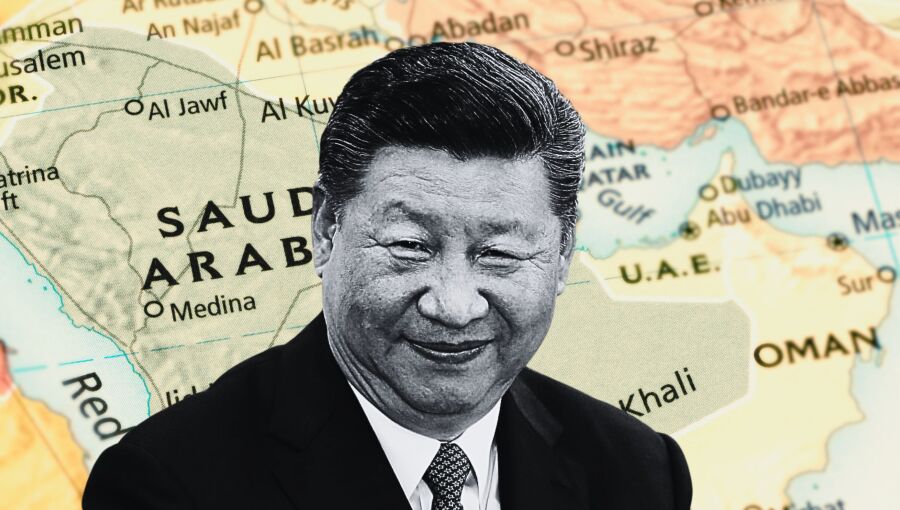
The summit between Chinese leader Xi Jinping and US President Donald Trump has reignited the debate surrounding the decline of the American empire, the rise of the Chinese dragon, and Beijing’s role.The ongoing debate about who can challenge the American empire is invariably invoked.
Many observers overlook the fact that, following the communist victory and the founding of the People’s Republic of China in 1949, Beijing elevated the principle of “non-interference” to a cornerstone of its foreign policy. This concept became part of an effective diplomatic vision that helped China establish itself as a champion of post-colonial sovereignty and gain support throughout the Global South.
However, the American empire is now faltering, and many countries are looking towards a multipolar international order. It is noteworthy that while the US president is floundering in multiple crises, particularly in the Middle East and the Gulf, the Chinese dragon is steadily gaining significant weight in the game of nations and a more widely accepted international presence. But China is moving slowly and cautiously, and many argue that China will eventually be forced to become more involved, perhaps starting with the Gulf and the crisis of confrontation between the United States and Israel with Iran.
China did not give a “blank check.”
The recent Beijing summit between US President Donald Trump and Chinese President Xi Jinping demonstrated that an agreement to keep the Strait of Hormuz open and prevent Iran from acquiring nuclear weapons is insufficient on its own to create a political path capable of containing war or transforming Chinese influence into a tool for direct pressure on Tehran.
Trump emerged from the meeting with positive signals regarding his understanding with Xi, but these signals remained more of a general framework for risk management than a clear Chinese commitment to translate economic relations with Iran into measurable pressure. This rendered the summit, from the American perspective, below the expectations that preceded it.
Foreign Policy magazine argued that the summit did not provide Trump with a major breakthrough on sensitive issues, while Reuters suggested that the US president’s remarks did not reveal whether Beijing would actually use its influence to push Tehran toward a tangible change in its behavior.
The Cost of Influence Before Expanding the Role
Washington treated the Beijing summit as an opportunity to test how much China could contribute to managing the Strait of Hormuz crisis, especially since Beijing’s economic relationship with Tehran grants it a degree of leverage that many other capitals lack.
The US administration seemed to want a practical outcome that would ease pressure on shipping and open a quieter path for negotiations, while China’s actions remained governed by calculations related to the cost of appearing to be a party pressuring Iran at this time, and to maintaining the ability to convey messages later if the crisis required a less confrontational channel.
Beijing views its role in the Iran conflict from the perspective of reducing risks and opening viable channels, not from the perspective of entering into arrangements that might limit its ability to communicate with all parties. China can help calm tensions in the maritime region and encourage a return to negotiations, but it prefers this to occur within a broader understanding that considers maritime security, the stability of energy supplies, and the limits of military escalation, without any Chinese action becoming a unilateral commitment to outcomes that Beijing alone cannot guarantee.
Trump’s statements after the summit raised expectations regarding what Beijing might do on the Iran issue. He spoke of discussions with Xi about the possibility of lifting sanctions on Chinese companies that purchase Iranian oil, linking this to an understanding on preventing Iran from acquiring nuclear weapons and keeping the Strait of Hormuz open.
However, Reuters reported that these statements were not accompanied by a similar Chinese clarification regarding mechanisms for pressuring Tehran or the extent of its willingness to use its oil relationship with Iran in a swift negotiating process. This left the summit’s outcomes within a flexible political space, open to further development, but not amounting to a detailed agreement that could be immediately measured in maritime traffic or Iran’s stance.
Beijing’s Cautious Messages
In official Chinese media, the summit was presented from a broader perspective, focusing on managing relations with Washington and easing pressure on the global economy. CGTN spoke of a new positioning in Sino-American relations that sends a signal of stability.
The Chinese newspaper Global Times emphasized international interest in trade, supply chains, and markets, reflecting Beijing’s desire to keep the Iranian issue within the framework of risk management, without making it the sole test of the summit’s success. This allows China to maintain room for maneuver, enabling it to communicate with both Washington and Tehran simultaneously, without declaring a direct Chinese commitment to an outcome that doesn’t depend solely on it.
A Slow Move Before Any Broader Role
Chinese diplomatic sources in Cairo stated that Beijing “distinguishes between de-escalation and alignment.” According to these sources, China may convey messages to Iran, push for facilitating the movement of ships, and encourage a return to indirect negotiations, but it does not want to issue a political ultimatum to Tehran, as this would undermine its fundamental asset: its ability to address Iran from outside the American camp.
According to Chinese sources, China prefers a gradual approach that prevents disruption to energy supplies and keeps the solution open to multiple diplomatic avenues.
These same sources say that the approach most likely aligned with Chinese thinking begins with reducing maritime tensions, ensuring the passage of essential shipments, and opening an indirect channel for negotiations before moving on to discuss the nuclear issue within a broader framework.
As for the expectation of immediate Chinese pressure to force Tehran into significant political concessions, several sources in Cairo consider this an unrealistic assessment of the Chinese position, because Beijing views the issue from the perspective of its own strategic interests and position, not solely from the perspective of its relationship with Iran.
What China Can and Cannot Do
We are currently witnessing a heated debate about what China can and cannot do. This time, the discussion revolves around Iran, Beijing’s interests, capabilities, and the limits of its actions. Contrary to popular assessments, Turkish international relations expert Orkun Göktürk asserts that there are limits to what China can do on the international stage.
Recently, some texts have spread rapidly on social media, claiming that China is waging a “silent but destructive” economic and geopolitical war against the United States through Iran. In these narratives, China is portrayed as a power capable of paralyzing the global financial system within hours, shutting down American ports, causing oil prices to skyrocket in a single day, and effectively ushering in a multipolar world. The problem is that this image does not contribute to understanding the true nature of Chinese foreign policy; on the contrary, it completely misrepresents it.
Many experts believe that China is an influential power today, but its influence is not absolute. The steps it refrains from taking are more indicative of Beijing’s strategic mindset than the steps it actually takes. China previously pursued risky, ideologically driven foreign policies from 1949 until the late 1970s, a path abandoned with the “reform and opening-up” program that followed in 1978.
During Deng Xiaoping’s era, China adopted a strategy focused on economic development and avoiding direct confrontation with major powers, an approach best summarized as a “wait-and-see” policy. Under Xi Jinping, China has become more assertive, but these underlying risk considerations have not disappeared, and today, the situations in Venezuela and Iran are being addressed within this framework.
Beijing’s expanding role
As instability spreads across the Gulf, China is increasingly presenting itself as a rising strategic power capable of reshaping the balance of influence in the Middle East, while the aura of unquestioned American dominance gradually fades. Beijing’s expanding role has relied less on military intervention and more on diplomacy, trade, infrastructure, and political mediation. A study published by the German research platform german-foreign-policy.com, on March 27, 2023, under the title “China Expands Influence in the Gulf”, argued that China’s mediation between Saudi Arabia and Iran reflected “the decline of U.S. domination” in the region. The report stated that Beijing had gained “new influence at the Persian Gulf with its successful mediation in the Saudi-Iranian conflict,” describing the agreement as a geopolitical signal that Washington’s exclusive grip over regional diplomacy was weakening.
Multipolar International Order
Meanwhile, Spanish strategic circles increasingly describe the Gulf as one of the central theaters in the transition toward a multipolar international order. An analysis published by the Spanish strategic studies platform ieee.es, in April 2023 under the title “China and the New Balance of Power in the Middle East” argued that Beijing is strengthening its role through “economic interdependence, connectivity projects, and diplomatic pragmatism.” The study emphasized that China increasingly presents itself as “an alternative to a Washington-led order,” especially after facilitating the Saudi-Iranian rapprochement in Beijing. According to the Spanish analysis, while the United States still preserves overwhelming military capabilities in the Gulf, China is advancing patiently in the long-term “game of nations” by deepening commercial influence and strategic partnerships rather than relying on direct military dominance.
China Does Not Want a Clash with Washington
China is not turning the crisis in Iran into a direct confrontation with the United States. It is offering diplomatic support, maintaining trade relations, and objecting in principle to sanctions, but specifically avoiding any actions that could cause military, financial, or logistical shocks. This can be interpreted as a conscious demarcation of boundaries, because China has its vulnerabilities.
Narratives circulating on social media claim that China could, within a few hours, halt all transactions with American defense companies, shut down American ports, cut off oil shipments to drive up prices, and paralyze the global financial system.
China’s interests
Most of these claims contradict the very structure of China’s interests.
First, the Chinese economy remains deeply integrated into the global trading system. Bypassing American ports would negatively impact Chinese exporters and large capital groups within China, not just the United States. A significant portion of China’s maritime trade is based on interdependence, and severing this connection in a single day would inflict a severe economic shock on China.
Second, in the energy sector, China cannot use oil as a weapon. China is a major energy consumer, and global price fluctuations directly impact its economy. A sharp rise in oil prices will put pressure on inflation, production costs, and growth in China before its effects reach the United States.
Third, regarding the financial system, while China is developing alternatives to the SWIFT system, these systems are not yet mature enough to replace SWIFT globally. Moreover, China itself conducts a significant portion of its foreign trade in dollars. The notion of dozens of countries switching to the Chinese system within a few days is unrealistic.
Fourth, concerning rare earth elements, China is a powerful player in this sector, but using this power suddenly and aggressively would accelerate the diversification of supply chains against China, not the United States. Beijing prefers to keep this issue under control and limited.
No path of direct confrontation
On the other hand, some experts believe that the Iranian crisis is more sensitive and more constrained because Iran is a country of greater strategic importance to China than Venezuela. It occupies a pivotal position in the energy sector, the balance of power in the Middle East, and the Belt and Road Initiative.
However, China is not pursuing a path of direct confrontation with the United States over Iran. China continues its trade with Iran, employs mechanisms to counter the extension of sanctions, and provides diplomatic support. Nevertheless, China avoids any harsh military or financial actions that would challenge the United States through Iran. The reason is simple: uncontrolled escalation in the Middle East would threaten China’s energy security and its global trade routes.
A Unified Arab Front After the Lessons of the Gulf War
Amid all this debate about China’s role, America’s inability, Arab solidarity, the role of regional powers in providing security, and building a new security system and security arrangements, details of many moves, alliances and partnerships have begun to emerge, and China has remained close to all of this. Informed Arab sources revealed intensive efforts to form an independent regional system comprising Saudi Arabia, Pakistan, Egypt, and Turkey, with other countries expressing interest in joining.
The sources explained that the four countries see the necessity of dialogue with Iran to establish a more stable and balanced system in the region. They are also coordinating closely with China, Russia, and the European Union.
The sources revealed that the primary challenge for Arab states at present is adapting to the coming phase and seeking alternatives to the American security and economic umbrella. The multipolarity in the global economic and security system, with the presence of China, Russia, and regional powers such as Pakistan, Turkey, Egypt, and Saudi Arabia—which has strengthened its position as a center of gravity in the Arabian Gulf region—opens the door to finding alternatives and restoring stability to the region.
Redraws the map of military balance in the region
In a development that redraws the map of military balance in the region, it was revealed that the Egyptian Air Force has deployed a squadron of advanced Dassault Rafale fighter jets to the United Arab Emirates. This move, announced during President Abdel Fattah al-Sisi’s recent visit to Abu Dhabi on May 7, 2026, underscores the priority given to Arab national security and “Arab solidarity” over the “strategic patience” policy adopted by Cairo since the regional escalation began last February.
The announcement of the Egyptian troop deployment, amid reports of Egyptian forces being deployed in four Gulf states, represents the first practical application of this doctrine. Egyptian crews and pilots have already begun conducting defensive air patrols to protect Emirati military bases and oil installations from Iranian attacks using cruise missiles and drones. This overt Egyptian military presence is the first of its kind in a Gulf state in decades, and Cairo aims to fill the defense gap for its ally, which has yet to receive its order of French Rafale fighter jets.
Parameters for Egyptian-Iranian relations
Strategically, this move establishes important parameters for Egyptian-Iranian relations. Cairo reaffirms its commitment to defending the security of the Gulf, which it considers an integral part of Egyptian national security, and its desire to avoid a diplomatic confrontation with Tehran. At the same time, Egypt is keen to maintain open back channels of communication with Tehran to prevent a slide into a full-blown conflict. While Egypt insists the mission is “purely defensive” and aimed at deterrence, many Western capitals view this move as part of a “unified Arab front” that also includes Jordan and Morocco. This strengthens the ability of Arab states to build an integrated and independent air defense system to counter growing regional threats.
A Non-Aggression Pact Between Iran and Middle Eastern States
Given the United States’ failure to provide security in the Middle East and the Gulf region, and its role in destabilizing the region in partnership with the Israeli occupation state, Arab states have begun working to establish new security arrangements. They have focused on regional alliances, involving China and Russia in mediation efforts to resolve disputes, and providing guarantees for any agreements.
In this context, Saudi Arabia is exploring the idea of a non-aggression pact between Middle Eastern states and Iran, as part of discussions with allies on how to manage regional tensions after the end of a US-Israeli war on Iran.
The Helsinki Process
Two Western diplomats told the Financial Times that Riyadh views the Helsinki Process of the 1970s, which helped ease tensions in Europe during the Cold War, as a possible model as the region prepares to deal with the post-war phase with Iran. They added that a non-aggression pact was among several ideas under consideration. The Helsinki Accords, signed in 1980, were a key element of this approach. The 1975 agreement between the United States, European countries, the Soviet Union, and its allies aims to address security issues and promote economic cooperation among the rival powers.
It all depends on who participates
Diplomats said that several European capitals and EU institutions have expressed support for the Saudi proposal and have urged other Gulf states to endorse it, considering it the best way to avoid conflicts and provide assurances to Tehran as well.
An Arab diplomat said, “A non-aggression pact would be welcomed by most Arab and Islamic countries, as well as Iran, which has long sought to convince the United States and Western powers that the region should be left to manage its own affairs.”
But he added, “It all depends on who participates in it.” In the current climate, it will be impossible to bring Iran and Israel together… and without Israel, it may be futile, as many see it, after Iran, as the biggest source of conflict. The report also noted disagreements among the Gulf states, particularly between Saudi Arabia and the United Arab Emirates, regarding differing visions for the region and economic competition. Two diplomats questioned whether the UAE would be willing to join any such arrangement.
Power Chaos
Ultimately, China remains a rising but cautious power. Its policies toward the crises in Iran and Venezuela are neither overt military intervention, as some anti-American narratives on social media suggest, nor passive as they may appear from the outside. China is an actor that understands the limits of its power. Given the United States’ military budget, its global network of military bases, and its dominance of maritime trade, open conflict remains illogical for Beijing today.
Therefore, China is focused on buying time, reducing costs, and accumulating power over the long term. Although China is a rising power today, it remains a calculating power that knows its limits and prefers to wait if conflict becomes inevitable.
The narratives circulating on social media about “China changing the world in one step” do not explain reality; on the contrary, they overlook the most important aspects of Chinese foreign policy.
The luxury of caution
Conversely, some argue that China no longer has the luxury of caution and avoiding deep involvement in global conflicts. For decades, China maintained a policy of non-intervention in military affairs, leaving the world under the umbrella of a US-led security system to which Beijing was not obligated to adhere. As analyst Zoe Liu explained in Foreign Affairs, this system constrained China in important ways, but at the same time ensured the stability of global trade routes and financial systems, allowing Beijing to direct most of its resources toward economic development and military modernization. With the growing signs of the collapse of the US-led international order and President Donald Trump’s use of force abroad, China sees its globalized trade, technological, and security interests—from mineral deposits and shipping lanes in the Arctic to oil flows in the Gulf—at imminent risk. Beijing is now being drawn into the inevitable logic that all rising powers have faced: to protect its interests abroad, it must bear a greater share of the costs of maintaining order. As the world slides into what Chinese President Xi Jinping has called “power chaos,” Beijing is bolstering its security apparatus to protect the transport corridors, supply chains, and strategic resources that underpin its influence. In China, pro-party intellectuals are debating whether China should formally revise its commitment to the principle of non-intervention. A nation built on an anti-imperialist narrative has reached a point where it must, reluctantly, shoulder a greater share of the burdens of the crumbling American empire.
But ultimately, politics, like life, is not built on wishes but on facts on the ground.