


By Edvard Chesnokov, from Moscow / Russia
In light of US President Donald Trump’s visit to China, we asked Tatyana Kosacheva, political scientist, Deputy Head of the Political Projects Department at KG “Polilog”, about US-China relations, multipolarity, and developments in Iran. Kosacheva made critical assessments regarding the course of US-China relations.
Xi Jinping and Donald Trump held a critical meeting. In light of this meeting, what is your general assessment of China-US relations?
Each side obtained what it wanted and what was vital for it at this specific moment in time. For U.S. President Donald Trump, for whom media and political ratings are paramount, it was important to demonstrate—or rather, to publicly declare—yet another victory. To create an aura of sorts of triumphalism.
The economic war with China has been put on pause (I should note, not terminated). At present, the balance of economic agreements is tilting in favor of the United States. Trump has sold 200 Boeings, soy, and corn—meeting the primary demands of American business. The customs tariffs previously imposed by Trump on Chinese products will likely undergo only limited revision. China, acting from the position of an equal partner, issued a warning to the U.S. regarding military-strategic support for Taiwan. As we have seen a few days later, Trump is indeed avoiding excessive provocation of China on the Taiwan issue, yet all programs of military and military-technical cooperation continue.
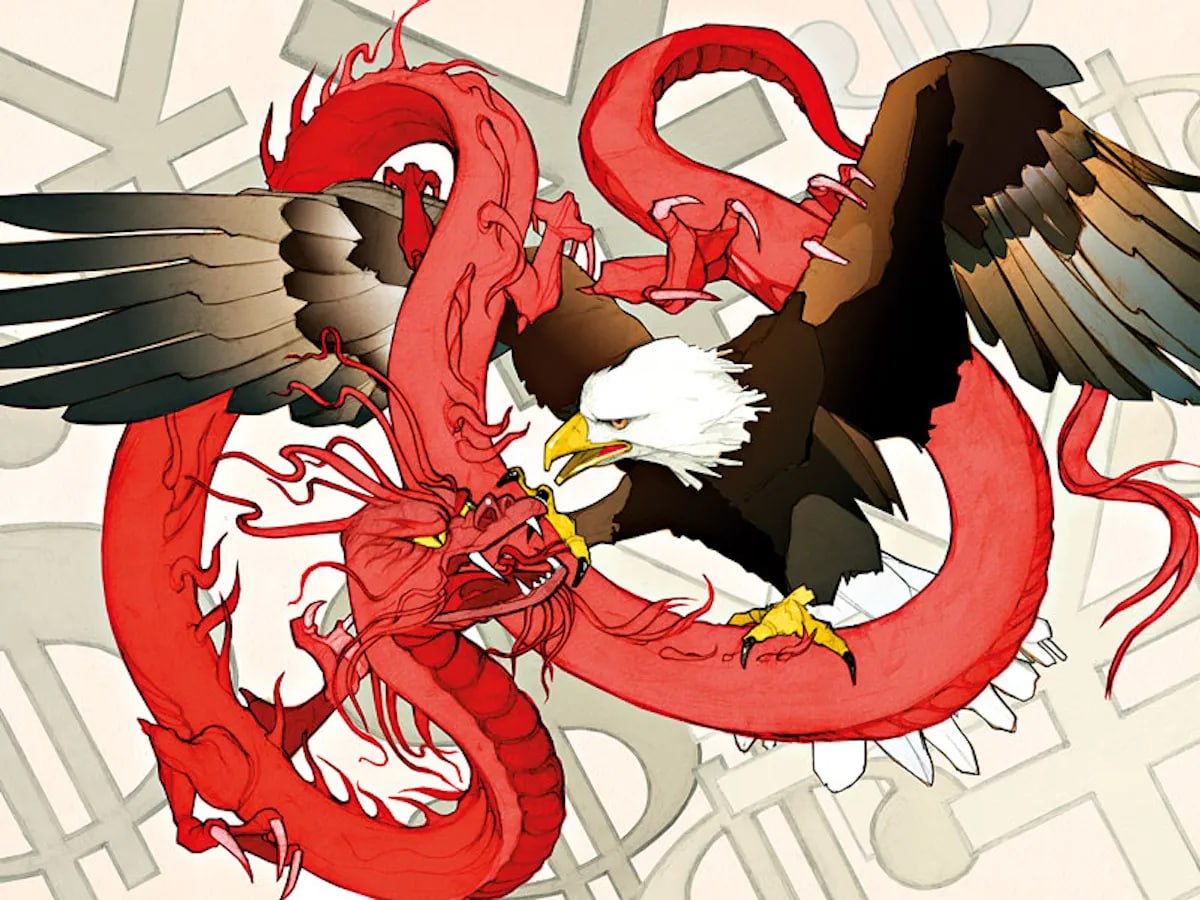
During the summit, PRC leader Xi Jinping introduced a new formula for Sino-American dialogue: “constructive relations of strategic stability.” However, the parties did not sign any joint declaration; thus, American political obligations were not recorded in a detailed format. What is Beijing counting on? The irreversible decline of the United States. The other side is also betting on the weakening of its opponent. Why? Not long ago, the U.S. position was shaped by one of the architects of the Trump administration’s policy in the Asia-Pacific region—Deputy Secretary of Defense Elbridge Colby (who is considered one of the leading hawks regarding Beijing).
During Trump’s first presidential term, Colby led the development of the 2018 National Defense Strategy. The document concluded that the U.S. must be prepared to confront a wide range of threats, not only from China but also from Russia, and must be able to “confront rogue regimes such as North Korea and Iran, fight terrorist threats to the United States, and consolidate our successes in Iraq and Afghanistan, while transitioning to a more resource-efficient approach.” Recently, Colby concluded that to solve the most critical task facing the U.S. in its relations with China, other priorities would have to be sacrificed. During his October speech at Dartmouth College, Colby stated that the threat from Beijing is paramount and that the U.S. is ill-prepared to deal with it.
It must be said that American concerns cannot be called groundless. China’s bet on technological development has worked—not least due to solutions borrowed from Western companies. Over two decades, the country has transformed from a supplier of consumer goods into one of the largest suppliers of high-tech products. Over the last decade, China has expanded its navy, deployed more advanced cyber warfare systems and missile complexes, and expanded its global presence, while there was no consensus in the U.S. on how to halt its expansion. According to Colby’s strategy, the U.S. could simultaneously focus on China and deploy troops to defend its own territory. However, they will most likely be unable to perform these tasks while also maintaining air defense systems and naval forces in the Middle East, not to mention tens of thousands of troops in Europe. In this regard, the current pause can be viewed as a way to catch one’s breath and regroup resources for subsequent confrontations.

Iran targeted the petrodollar system through the Strait of Hormuz and the Gulf countries. How does China view this move by Iran?
The situation in the Strait of Hormuz and the conflict between the U.S. and Iran are beneficial to China. All of this has brought China closer to its so-called dream of the “petroyuan.” Analysts at the Financial Times (FT) write that the military conflict has accelerated the use of the Chinese yuan in international oil trade and increased demand for China’s CIPS cross-border settlement system. This is, in principle, logical. After the U.S. was forced to partially ease sanctions on Russian and Iranian oil, buyers—including India—found themselves compelled to use the yuan for settlements, as Russia and Iran are effectively unable to fully utilize dollar-based payments.
Iran has now taken a position where it plans to charge fees to vessels passing through the Strait. Trump, followed by U.S. Secretary of State Marco Rubio, stated that they have no intention of paying and consider this maritime route free for passage. All of these disputes only serve the interests of both China and Russia.
Data from China’s General Administration of Customs shows that a sharp restructuring of the oil import structure was recorded in April. This occurred against the backdrop of a global energy crisis caused by the conflict in the Middle East. Aggregate oil supplies fell to 9.36 million barrels per day, reaching a minimum level in nearly four years. Against this background, China was forced to rapidly redistribute its purchases in favor of alternative suppliers. The primary compensating factor was the growth of imports from Russia—an 11% increase year-on-year to 2.18 million bpd, or 8.97 million tons for April. In the current situation, it is more advantageous for China in many respects to purchase oil from Russia, thanks in part to long-standing established relations that are executed without disruptions or violations.
Do you think it’s likely that the US will accept multipolarity?
If we use an analogy drawn from the paradigm of Jack Trout’s “Marketing Warfare” metaphors, there will come a point where it simply has to be accepted as a fact.
Is China pursuing a balancing act between the US and Russia? Or can we talk about a bloc forming between China and Russia against the US?
China and modern Russia have a long-standing partnership (25 years). Both powers face “containment” policies from the US. For China, the US is the main competitor in the struggle for technological and regional leadership. For Russia, it is the main factor in security issues, particularly as an interested party in the conflict in Ukraine. Their common goal is the transition from a unipolar world to multipolarity. Cooperation has been established between the states. Russia possesses colossal reserves of raw materials (energy, metals, food), while China possesses technologies and manufacturing capacities. This creates a stable chain: Russia ensures China’s resource security, while China ensures Russia’s economic stability under conditions of sanctions and the protracted conflict in Ukraine.
At the same time, regarding the maintenance of the balance of power, both China and Russia will, first and foremost, be guided by their own interests and will try to build a dialogue in a way that yields profit. Each side will strive to extract its own benefits. The only question lies in the approaches—in playing the long game, to which both Russia and China are committed, or in the desire to strike a deal and put out fires here and now.
China’s influence in Europe is increasing. In the context of relations with the US, what approach will China take towards Europe?
Based on China’s historical approaches to resolving geopolitical issues, a strategy of segmentation is more likely to be used—simply put, divide and rule. A strong military bloc like NATO is not beneficial to Beijing; instead, the prospect of weakening transatlantic unity to limit US capabilities to contain China looks more enticing. It is possible that in economic terms, China will deepen the dependencies of Southern and Eastern European countries on its market (through infrastructure projects and investments). It will promote the narrative of “European autonomy,” convincing Brussels that dependence on the US in security and trade matters is disadvantageous for the EU. In general, there is already a chill between the US and the EU on security-related issues. Instead of negotiating with the EU as a single geopolitical player, China may, by no means excluded, begin to shift the focus toward bilateral agreements with key powers (Germany, France), for example, in the semiconductor sector.
Do you see a Yalta Pact-like agreement between China and the US as possible?
In a constantly changing world, it is difficult to make definitive forecasts. However, China is a nation deeply rooted in historical traditions.
A certain historical analogy to the PRC’s potential actions can be found in the 1975 Helsinki Accords, when the USSR, in pursuit of strategic stability in Europe and the maintenance of limited economic cooperation with the West, made a major unilateral concession by weakening its position in the global confrontation. In essence, this was the first act of the Soviet defeat in the Cold War.
China is well aware of the grim lessons of Soviet history. Why, then, would it make such sacrifices? The matter is that Beijing operates from entirely different fundamental assumptions regarding the dynamics of great power relations. Achieving “confrontational stability” in dialogue with the United States has been a goal of China’s foreign policy since the mid-2010s.
At the core of Chinese strategy lies the perception that the PRC is strengthening and will continue to “rise” relative to the United States in the foreseeable future, while the United States itself will lose ground. This is a key distinction between China and the USSR, which, by the mid-1970s, was already clearly mired in economic crisis.
During the summit, Xi Jinping directly confirmed the existence of such perceptions by mentioning the “Thucydides Trap” in his speech. The essence of this concept, as defined by its author, American political scientist Graham Allison, is a “natural, inevitable crisis that occurs when a rising power threatens to displace a ruling power.”
It is now evident that China and the United States face a direct threat of falling into this “trap” and must avoid it. The essence of Xi’s statement regarding the “trap”—which points directly to China’s rise and its capacity to strip the US of its leadership—did not escape Trump. However, in his interpretation, “President Xi very gracefully referred to the United States as a possibly declining nation,” while actually referring to the era of “Sleepy Joe” Biden.