


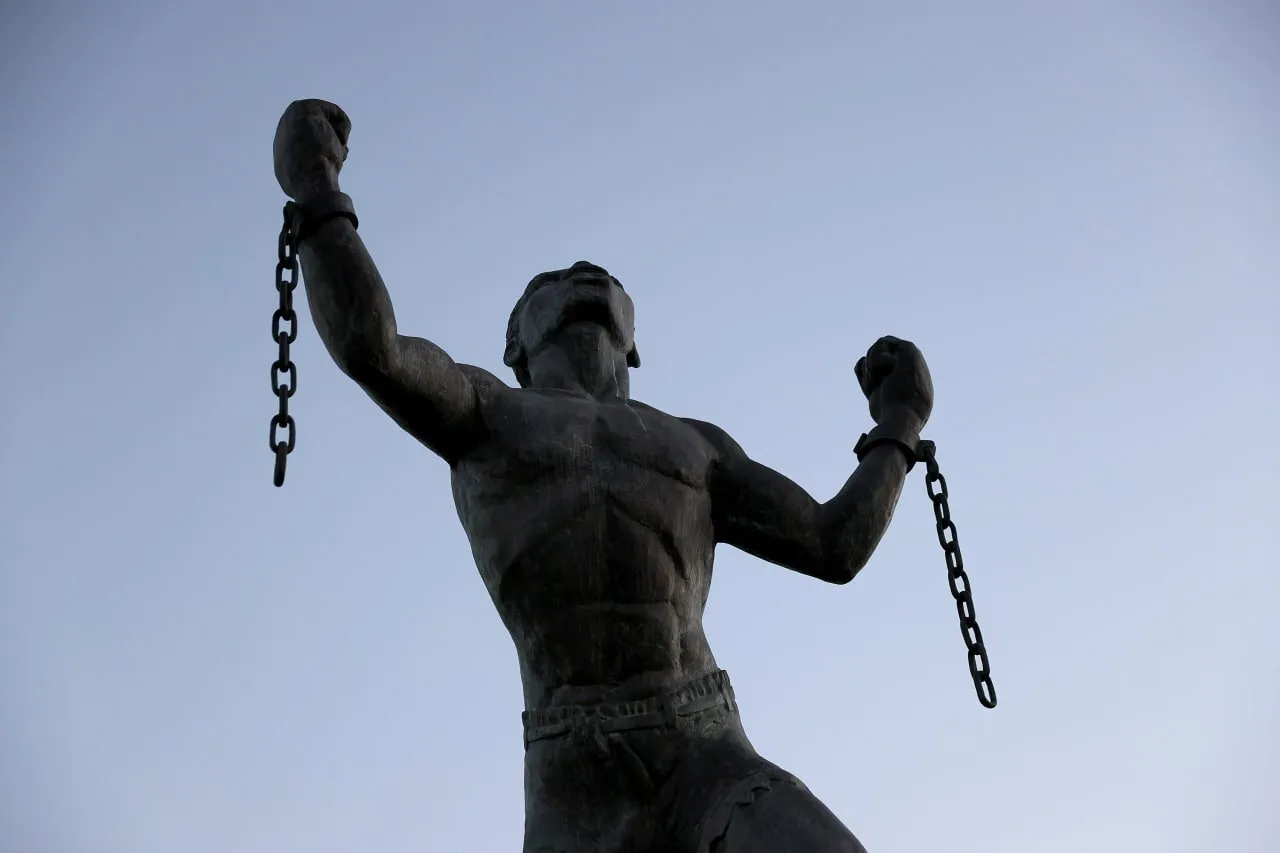
For decades, the legacy of colonialism in Africa was often treated as a closed chapter of history. Today, however, governments, historians, civil society organisations, and descendants of colonial victims are increasingly challenging that narrative. Across the continent, demands for accountability, official apologies, and financial reparations have become central to discussions about historical justice.
The debate is no longer limited to academic circles. It has entered international diplomacy, legal forums, and public discourse, forcing former colonial powers to confront actions that shaped modern Africa through violence, exploitation, forced labor, and systematic discrimination.
Indeed, European colonial expansion in Africa during the nineteenth and twentieth centuries was not merely about territorial control. It involved the extraction of natural resources, the destruction of indigenous political systems, and widespread human rights abuses.
Millions of Africans were subjected to forced labor, land confiscation, arbitrary punishment, and displacement. Colonial administrations often justified these practices under the rhetoric of “civilizing missions,” while building economies that primarily benefited European empires.
Although African states gained independence throughout the mid-twentieth century, many argue that the social and economic consequences of colonial rule continue to shape inequalities today.
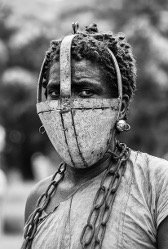
Germany and the Herero-Nama Genocide
One of the most significant examples is Germany’s colonial rule in what is now Namibia.
Between 1904 and 1908, German colonial forces carried out military campaigns against the Herero and Nama peoples following uprisings against colonial rule. Historians widely recognize these events as the first genocide of the twentieth century.
Thousands were killed during military operations, while many others died from starvation, thirst, forced displacement, and imprisonment in concentration camps. Historical records also document that the remains of some victims—including skulls and other human remains—were transported to Germany for racial and anthropological research, reflecting the pseudoscientific racism of the period.
In 2021, Germany officially acknowledged that these atrocities constituted genocide and announced a long-term financial package intended to support development projects in Namibia. However, many representatives of the Herero and Nama communities argue that the agreement falls short because it does not include formal reparations negotiated directly with descendants of the victims.
The debate continues to illustrate the broader challenge of distinguishing development assistance from reparative justice.
Belgium and the Congo
Belgium also faces increasing scrutiny over its colonial record in the Democratic Republic of the Congo.
During the rule of King Leopold II in the late nineteenth century, millions of Congolese are believed to have died due to forced labor, violence, famine, and disease linked to the exploitation of rubber and other natural resources.
In recent years, Belgium has taken symbolic steps, including expressions of regret and the return of looted cultural artifacts. Nevertheless, activists continue to call for more comprehensive measures, including reparations, greater transparency regarding colonial archives, and institutional reforms addressing the colonial legacy.
Britain, France, and Other Colonial Powers
The debate extends well beyond Germany and Belgium.
Britain has previously reached legal settlements with victims of abuses committed during the Mau Mau uprising in colonial Kenya. France continues to face criticism over its colonial policies in Algeria and West Africa, while Portugal, Spain, and Italy have also encountered renewed examination of their historical roles on the continent.
Across Africa, demands increasingly focus on three interconnected objectives: Official acknowledgment of historical crimes. The return of looted cultural heritage and human remains. Reparative measures that address the lasting consequences of colonial exploitation.
What Do Reparations Mean?
Reparations are often misunderstood as simply financial compensation. In reality, international discussions encompass a much broader range of measures.
These may include formal state apologies, educational initiatives, memorial projects, institutional reforms, debt relief, cultural restitution, scholarship programs, and investments designed in partnership with affected communities.
Supporters argue that reparations represent a recognition of historical responsibility rather than charity. Critics, however, question how responsibility should be assigned across generations and what forms of compensation are both practical and legally justified.
The African debate over colonial reparations has become part of a wider international movement addressing historical injustices, including slavery, indigenous dispossession, and systemic racial discrimination.
International organizations, legal scholars, and human rights advocates increasingly argue that acknowledging historical crimes is essential for building more equitable relationships between former colonial powers and formerly colonized nations.
While no universal model for reparations exists, the conversation has shifted significantly. What was once dismissed as a historical issue has become a contemporary diplomatic and moral question.
Conclusion
The debate over colonial crimes and reparations is ultimately about more than financial compensation. It concerns memory, accountability, dignity, and the recognition of historical truth.
For many African communities, justice is not solely measured in monetary terms but also in acknowledgment, education, and meaningful participation in shaping how history is remembered. Whether through official apologies, the return of cultural heritage, or carefully negotiated reparative initiatives, the discussion is likely to remain a defining feature of Africa’s relationship with Europe in the years ahead.
Sources
Jürgen Zimmerer & Joachim Zeller (Eds.). Genocide in German South-West Africa: The Colonial War (1904–1908) and Its Aftermath. Merlin Press, 2008.
David Olusoga & Casper W. Erichsen. The Kaiser’s Holocaust: Germany’s Forgotten Genocide and the Colonial Roots of Nazism. Faber & Faber, 2010.
Adam Hochschild. King Leopold’s Ghost. Mariner Books, 1999.
Caroline Elkins. Imperial Reckoning: The Untold Story of Britain’s Gulag in Kenya. Henry Holt, 2005.
Frantz Fanon. The Wretched of the Earth. Grove Press, 1961.
Gençoğlu, Halim, Batı’nın Afrika Talanı, Kronik. 2024