


By Mehmet Enes Beşer
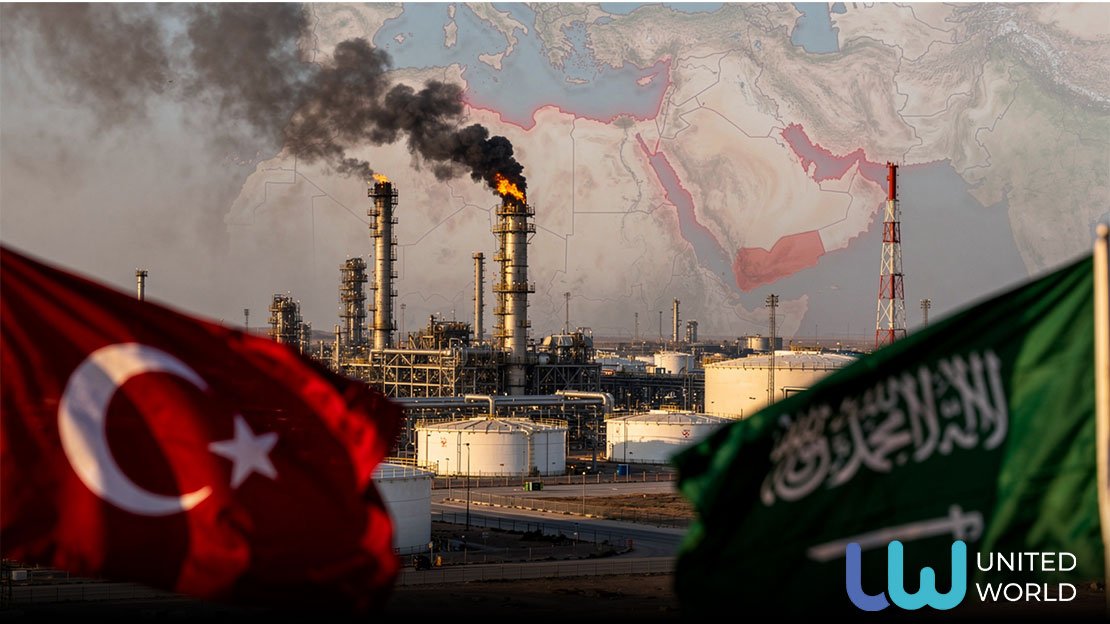
The first test of the Mecca Defense Agreement will be in Yemen. The international press is now asking the same question: What will Türkiye do as the Houthis continue to strike Saudi Arabia? And on the morning of 9 August, the first report of an attack hit the wires. Houthi forces announced that they had struck the Aramco refinery in Jazan, Saudi Arabia.
The Türkiye-Saudi Arabia-Pakistan Joint Defense Agreement, signed in Mecca on 7 August, was initially presented as an attempt to build a new security architecture in the region. Yet the timing of the agreement is as important as the geography in which it was signed.
The war between Saudi Arabia and the Houthis in Yemen is flaring up again. The Houthis have long targeted Saudi oil facilities, tankers and border areas. Saudi Arabia, meanwhile, is reportedly preparing a major operation in Yemen by sea and possibly by land. Signed in the midst of this confrontation, the Mecca agreement made Türkiye a collective-defence partner of Saudi Arabia.
The issue is no longer theoretical.
Just two days after the agreement was signed, on 9 August, the Houthis announced that they had carried out a drone attack on Saudi Aramco’s Jazan refinery. The fire at the facility was extinguished; the Saudi Ministry of Energy did not confirm the cause of the fire. But the Houthis’ claim of responsibility alone placed the first concrete question before the Mecca Agreement:
Would a Houthi attack on Saudi Arabia be considered an attack on Türkiye?
The most important publicly disclosed provision of the Mecca Joint Defense Agreement is unequivocal:
An armed attack against any one of the three countries will be regarded as an attack against all three.
Foreign Minister Hakan Fidan also said on 8 August that, technically, the mechanism is the same as NATO’s Article 5. But he added an important detail: in the event of an attack, the nature and scope of the support to be provided will be determined through consultations among the parties. The agreement therefore does not say that Turkish troops would automatically be sent to Yemen.
But the strategic situation created by the agreement is more important than that.
Türkiye is now party to a formal defense arrangement that links Saudi Arabia’s security to its own.
And today, the Houthis in Yemen are among the forces actually attacking Saudi Arabia.
Financial Times: Türkiye could be expected to take part in an anti-Houthi operation
The Financial Times was one of the international publications to set out the issue most explicitly.
The FT does not view Türkiye’s participation in the agreement merely as a general regional security move. Its report notes that Türkiye’s naval capabilities, in particular, make an important contribution to the new arrangement. The pact is placed in the context of Saudi Arabia’s renewed escalation with the Houthis and Red Sea security.
This connection is crucial. The problem Saudi Arabia faces is no longer limited to missiles launched from across its southern border. In July, the Houthis announced a naval blockade of Saudi vessels. Tankers carrying Saudi oil began changing course in the Red Sea. On 5 August, the Houthis announced that they had launched missile attacks on two Saudi oil tankers off Yanbu and in the Gulf of Aden.
This is precisely why Türkiye’s powerful navy is becoming more valuable to Riyadh.
The FT also reports that, during President Erdoğan’s meeting with Pakistan’s Chief of Army Staff Asim Munir in Ankara in July, the two discussed joint action against Houthi attacks on Saudi Arabia and Red Sea shipping.
Seen from this perspective, the possible consequence of the Mecca Agreement on the Yemen front is not limited to Turkish troops setting foot on Yemeni soil.
Turkish warships protecting Saudi tankers, conducting patrols in the Red Sea, supporting Saudi air defence with Turkish systems, sharing intelligence, or providing logistical support could all be different ways in which Türkiye becomes a party to the war.
The Guardian: “The pact’s first test could be Yemen”
The Guardian framed the issue even more explicitly, writing that the new defense pact could face its first test in Yemen.
There is an important development behind the newspaper’s assessment. Saudi Arabia is reportedly preparing a major military operation against the Houthis by sea and possibly by land. One of the aims is to break the Houthis’ pressure on Saudi oil shipping in the Red Sea.
The report cites an assessment by Hesameddin Ashena, a former adviser to Iranian President Hassan Rouhani. According to Ashena, one of the agreement’s direct consequences is:
An increased likelihood that Türkiye and Pakistan would enter the conflict if Saudi Arabia were attacked.
Al Jazeera: “If the Houthis strike Saudi Arabia, will Türkiye go to war?”
Al Jazeera also highlighted one of the agreement’s most important unknowns directly through the Yemen question.
The question posed in the analysis is simple:
If the Houthis attack Saudi Arabia from Yemen, would that bring Türkiye into the war?
Former US naval officer and Killowen Group chairman Harlan Ullman asks:
“Suppose the Houthis attack Saudi Arabia from Yemen. Does that bring Türkiye into the war? Does it bring Pakistan into the war?” His answer: “We don’t know yet.”
Indeed, there is no definitive answer to this question today. The publicly disclosed part of the agreement establishes the principle of collective defense, but it does not explain in detail what military response would follow which type of attack.
Yet this very ambiguity is, in itself, a problem for Türkiye.
Türkiye has entered a new collective-defense arrangement without the conditions under which it would assume military obligations in a war hundreds of kilometers from its borders being defined in advance.
The Indian Express: “The possibility of Turkish bombs falling on Yemen cannot be ruled out”
The Indian Express, one of India’s leading newspapers, presented the issue in even more striking terms.
The newspaper notes that the defense agreement does not mean automatic military intervention in response to every attack. But it says the current ambiguity does not rule out the possibility of Turkish bombs falling on Yemen.
This observation matters.
Because the possibility of Türkiye being drawn into the Yemen war is no longer merely a political concern voiced within Türkiye.
Publications from different countries, from the Financial Times and The Guardian to Al Jazeera and The Indian Express, have begun discussing the same possibility.
Tensions are rising in Yemen: The pact’s first test begins
Looking at developments on the Saudi-Houthi front makes it easier to understand why these discussions have emerged.
At the end of July, the Houthis targeted Saudi oil facilities in Jazan and Yanbu. Saudi-backed forces responded by attacking Houthi targets in Yemen. Reuters wrote that the conflict, which had largely remained frozen since 2022, was turning back into a war.
On 5 August, Saudi oil tankers were targeted.
On 6 August, Reuters reported that Riyadh expected imminent attacks from Iran-linked Iraqi groups from the north and from the Houthis from the south.
On 7 August, the Mecca Defense Agreement was signed.
On 9 August, the Houthis announced that they had struck the Aramco refinery in Jazan.
When these dates are placed side by side, it becomes clear that the new agreement cannot be assessed independently of the Yemen war.
Türkiye is now party to a defense arrangement under which an attack on Saudi Arabia is regarded as an attack on itself.
One of the active military threats Saudi Arabia faces today is the Houthis.
Saudi Arabia is preparing a new operation in Yemen.
The Houthis continue to strike Saudi territory, tankers and oil facilities.
And leading publications around the world are debating whether the new pact’s first real test could be Yemen.
The chain of events that could emerge in such a situation is very clear:
The Houthis strike Saudi territory and oil facilities. (already happened)
Saudi Arabia launches an operation in Yemen. (on the agenda)
The collective-defense clause of the Mecca Agreement comes into play.
Türkiye is asked to provide military assistance.
At the first stage, Türkiye does not directly contribute to the ground operation, but actively joins naval patrols under the banner of “contributing to security in the Red Sea and combating piracy,” thereby becoming a party to the conflict.
Originally published in Aydınlık in Turkish