


By Mehmet Enes Beşer
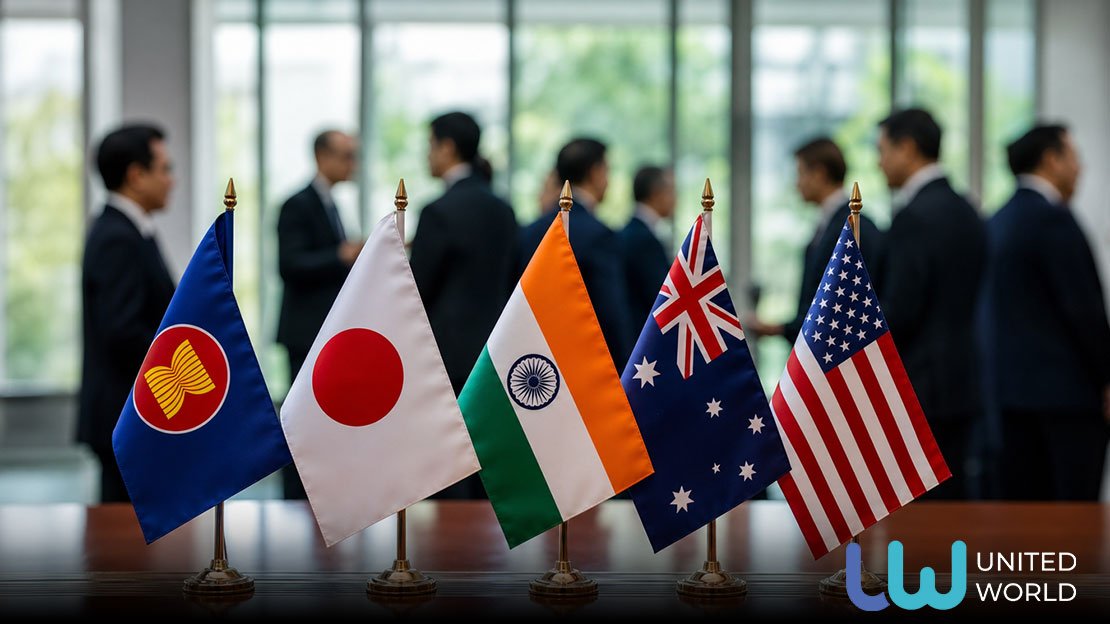
As the Indo-Pacific region faces fundamental changes in its geopolitics, the interplay of great-power competition, the declining effectiveness of multilateralism, and the growing importance of minilateralism complicates regional diplomacy. Amidst these shifts, the Quad—a forum uniting the United States, India, Japan, and Australia—is seen with suspicion by ASEAN countries that consider its implications. Is it a platform for provision of regional public goods by all players or a strategic counterweight to China? Formal relations between the Quad members and ASEAN are amicable but not deep enough. At the same time, Track Two diplomacy remains significantly underused as an opportunity to foster collaboration.
Involving academics, research institutes, civil society organizations, and former diplomats, Track Two diplomacy has served for many years as an informal means of confidence-building among Asian countries. Nonetheless, Track Two mechanisms have been insufficiently used to bridge the gap between the Quad and ASEAN. There are a number of reasons for this phenomenon: structural and political. On one hand, ASEAN members perceive the Quad as a source of great-power competition and prefer not to participate in it. On the other hand, Quad participants, in spite of their commitments to ASEAN centrality, pursue their national agendas concerning critical technologies, maritime security, and infrastructure that do not always take into consideration the concerns of the region.
Formal mechanisms of collaboration, such as the ASEAN Regional Forum (ARF) and East Asia Summit (EAS), offer useful diplomatic frameworks that are limited, however, by the decision-making based on consensus and aversion to hard security issues. Track Two diplomacy provides for the discussion of important problems in an informal manner without pressure to come up with any specific outcome and in conditions of decreased attention of the states to the process. Through Track Two dialogues, it is possible to discuss cybersecurity, climate resilience, and maritime-domain awareness.
Most importantly, the Track Two format allows reducing mutual misinterpretations: Southeast Asian officials see the Quad through the Cold-War filter of containment and fear the polarization of the region. Quad members, in turn, tend to underestimate ASEAN’s institutional complexity and preferences regarding diplomacy. However, thanks to the Track Two format of dialogue, it is possible to clear up each party’s position, synchronize the priorities, and develop trustful human relations.
Track Two diplomacy has demonstrated successful results in the past: the Council for Security Cooperation in the Asia Pacific (CSCAP) and ASEAN Institute for Strategic Studies (ASEAN-ISIS) have provided opportunities to discuss such difficult issues as territorial disputes in the South China Sea or strategies for resolving crises before turning to diplomacy. Track Two diplomacy in those instances helped generate policy-oriented ideas, create common terminology, develop common understanding of strategic concepts, and educate the new generation of security strategists.
For the Track Two diplomacy to play a key role in shaping Quad–ASEAN relations, there are several things to be done. First, Track Two dialogues have to acquire a more solid institutional foundation and funding. Though useful, ad hoc seminars and policy workshops are unable to generate a lasting effect. Instead, it is essential to establish an institutional framework of a regular annual conference with co-chairs representing Quad and ASEAN members. It is important that this track includes discussion of economic and technological challenges, such as economic resilience, digital governance, supply-chain diversification, and climate adaptation, which are already relevant for both sides.
Second, Track Two dialogues should involve broader participation of various stakeholders. Too often, Track Two events involve only elites from capitals or former diplomats. It is beneficial to involve youth, women, entrepreneurs, and policymakers at the local level. Furthermore, it is crucial to involve civil society organizations and the private sector, especially in such spheres as clean energy, digital connectivity, and education. These sectors should not be just invited as guests but also be given an opportunity to participate actively in discussions.
Third, it is necessary to make use of Track Two diplomacy to socialize policy norms. It is a characteristic feature of ASEAN to set regional expectations in favor of inclusiveness and neutrality. The Quad is trying to articulate its own policy norms regarding the open architecture of digital infrastructure, transparent investment, and freedom of navigation. To reconcile the two visions, it is necessary to engage in constant discussions of norms and interpretation of concepts. Track Two diplomacy can be considered such a forum.
Another aspect to consider is the use of technology. With Track Two diplomacy, it is possible to conduct virtual dialogues, diplomacy simulations, and policy experiments. Thanks to the COVID-19 pandemic, digital diplomacy has proved its efficiency and should be used regularly. For instance, the 2023 joint Indo-Pacific Conference on Technology and Trust held in Japan and Singapore demonstrated how to organize Track Two dialogues using hybrid models.
Nevertheless, it should be mentioned that Track Two diplomacy cannot replace formal dialogue. It is also impossible to solve fundamental differences in strategic worldview through informal talks. ASEAN will always prioritize inclusivity and neutrality, whereas the Quad may respond with growing concern to the increasing pressure from China. Yet, Track Two diplomacy provides for something formal diplomacy does not have: it is a space where creative thinking, respectful disagreements, and discussion of ideas can occur before making decisions.
Conclusion
What will determine the future of Quad–ASEAN collaboration will be not formal ties but understanding. At a time when distrust and disinformation dominate the international agenda, it is increasingly important to cultivate empathy, clarity, and policy imagination. Though not a panacea, Track Two diplomacy can play a very significant role. It can help build intellectual links, human connections, and conceptually sound frameworks for regional collaboration.
If the Quad really wants to become inclusive, and if ASEAN wants to remain the key actor in the region, both parties need to recognize Track Two diplomacy as a strategic resource and invest in it seriously. Institutionalization, participation of various stakeholders, and a long-term strategy are required. In an uncertain world of the Indo-Pacific region, Track Two diplomacy can prove to be the most reliable tool for ensuring security and prosperity.