


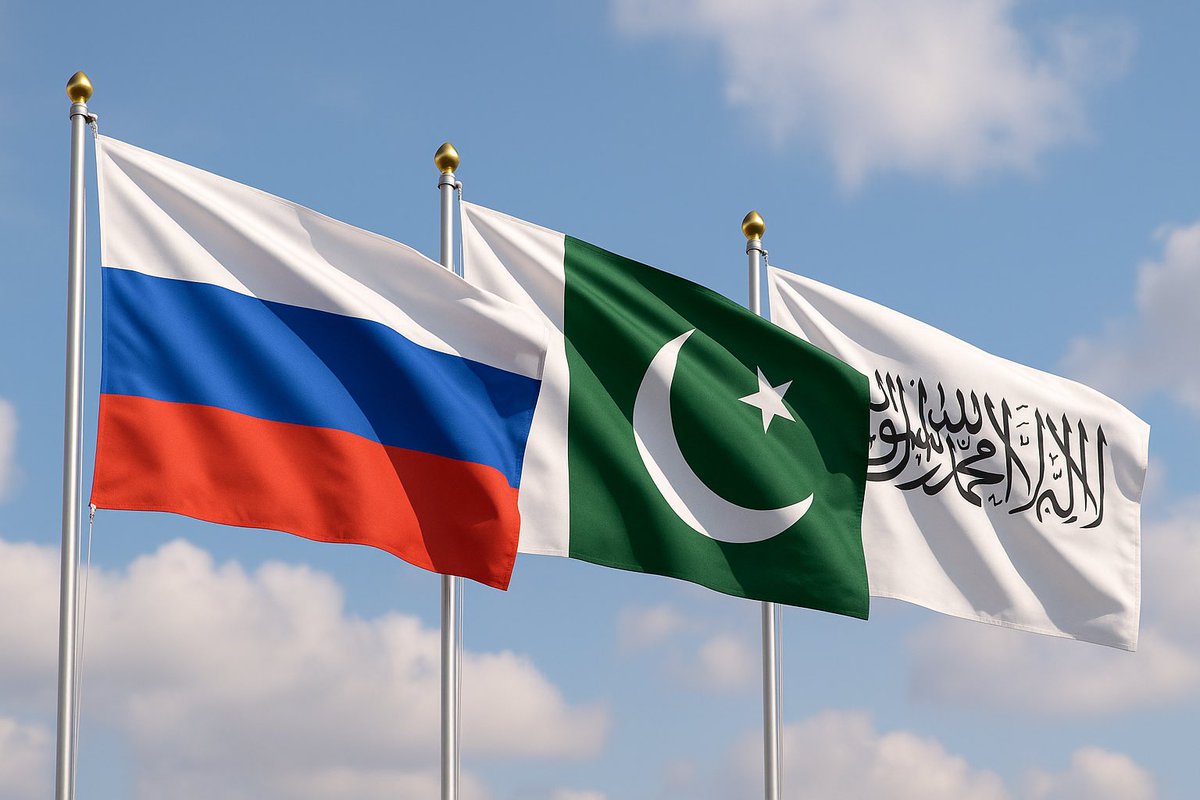
By Dure Akram, from Lahore / Pakistan
From the floor of the United Nations Security Council on June 8, 2026, Pakistan’s permanent representative issued an extraordinary warning: “Time for corrective action is rapidly running out.” Asim Iftikhar Ahmad told the Council that Islamabad would not remain silent if armed groups based in Afghanistan continued to target Pakistani civilians and security forces, demanding “concrete and verifiable” action against the Tehreek‑e‑Taliban Pakistan (TTP), Balochistan Liberation Army (BLA), its Majeed Brigade, ISIL‑Khorasan (IS‑K), the East Turkestan Islamic Movement (ETIM) and other outfits.
Pakistan says more than 5,300 terrorist incidents originating from Afghanistan were recorded in 2025 alone, resulting in over 1,200 deaths.
Islamabad’s stance was a marker of how far the Pakistan-Afghanistan crisis has moved from a difficult border dispute into a wider regional contest involving militants, mediators, intelligence claims, great-power maneuvering and the Taliban’s search for legitimacy beyond Islamabad.
The present crisis intensified last October, when Pakistan carried out airstrikes in and around Kabul after a TTP attack that killed 11 Pakistani soldiers. Strikes were also reported in Khost, Paktia and Jalalabad, and Islamabad claimed they were aimed at TTP strongholds. Kabul condemned them as violations of sovereignty. Subsequent months saw a dangerous cycle of repeated skirmishes along the Durand Line—frontier clashes, artillery exchanges and low‑tech drone attacks and an uneasy, fragile ceasefire brokered by the efforts of Qatar and Türkiye and later Saudi Arabia.
By March 2026, the conflict had entered a more volatile phase. Pakistan launched what it described as precision strikes against drone-storage sites, technical-support infrastructure and ammunition depots being used to support attacks on Pakistani civilians. Islamabad even released footage showing secondary explosions, arguing that they confirmed the presence of ammunition caches. Kabul, however, claimed heavy civilian casualties, including at the Omid drug rehabilitation center in Kabul.
The truth, at least according to Afghan and Indian media, might have become trapped inside the fog of war, hardening anti-Pakistan sentiment inside Afghanistan.
According to the UN estimates, nearly 300 have been killed or injured in Afghanistan since February. Meanwhile, the Pakistan Institute for Conflict and Security Studies has recorded the highest level of terrorist incidents in Pakistan in a decade.
Then came the May 9 attack in Bannu. A vehicle-borne suicide attack and gun assault on a police post in Khyber Pakhtunkhwa killed 15 police officers. Pakistan summoned the Afghan charge d’affaires and said technical evidence showed the attack had been planned by militants based in Afghanistan. Kabul denied allowing its territory to be used against Pakistan. For Islamabad, however, Bannu was not merely another attack. It became proof that the old formula of condemnations, border closures, mediated ceasefires and private warnings was no longer enough.
At the heart of the dispute remains the TTP. Islamabad accuses the Afghan Taliban of providing sanctuary and support to the group. Pakistan has argued that the TTP and the BLA have operational linkages and that the TTP maintains ties with al‑Qaeda. Kabul denies these allegations, claiming the TTP’s attacks are a purely Pakistani problem, and that Pakistan should resolve them internally. The Taliban also say they are fighting IS‑Khorasan as a rival and do not have the capacity to control all militant groups on Afghan soil. This is where the Afghan Taliban’s dilemma becomes real. A hard crackdown on the TTP could split its own militant ecosystem, alienate ideological allies and push fighters towards IS-K. Inaction, however, risks war with Pakistan.
Meanwhile, Pakistan alleges that India exploits Afghan territory to wage a “low‑intensity war,” complicating the track‑2 environment.
Islamabad’s frustration burst into the open at the United Nations, where Ambassador Asim Iftikhar Ahmad repeated Pakistan’s long‑standing complaints but in unusually stark terms. He said the Taliban had “completely ignored the legitimate security concerns of Pakistan and other countries,” adding that attacks by the TTP, BLA, IS‑Khorasan and ETIM were killing hundreds of Pakistanis each year. The envoy also accused India of “destabilizing Pakistan” by using terrorist groups based in Afghanistan, citing the BLA as a proxy supported and financed by India. Meanwhile, India denies these allegations and argues that Pakistan itself has supported militant proxies. Regardless, the exchange underscored how the Afghanistan‑Pakistan crisis intersects with the broader India‑Pakistan rivalry, further complicating any mediation.
Pakistan’s stance at the UN may appear maximalist, but it does reflect genuine security anxieties. Islamabad argues that its counterterrorism efforts within its borders are undermined when militants operate freely across the Durand Line. It is therefore pressing for verification and irreversible action from the Taliban. Yet critics point out that Pakistan’s own ties to the Afghan Taliban over decades created the conditions for the current impasse. Islamabad now faces the unenviable task of persuading an empowered Taliban to take actions that the Taliban regard as politically risky, while avoiding an escalatory war that it cannot afford.
Still, recent diplomatic record shows that the Pakistan-Afghanistan crisis has not been left entirely to artillery, airstrikes and angry public statements. Diplomacy has not stopped. It has simply moved into several parallel rooms.
A parallel architecture of formal mediation, quiet regional facilitation and Track 1.5 contact has been taking shape since the conflict crossed a dangerous threshold.
The first layer was the Türkiye-Qatar track. After the October 2025 border clashes, Doha helped broker a ceasefire, while Istanbul hosted follow-up talks from October 25 to 30. The joint statement issued by Turkiye said the meetings were aimed at solidifying the ceasefire and that the parties had agreed to continue the truce, discuss implementation at the principal level, and work toward a monitoring and verification mechanism that could impose penalties on the violating party. That last point remains the missing center of the crisis. Pakistan does not merely want Taliban assurances; it wants verifiable guarantees that Afghan soil will not be used by the TTP, BLA, Majeed Brigade, IS-K or ETIM.
Doha’s role should also be understood beyond formal Taliban diplomacy. The Centre for Conflict and Humanitarian Studies, based in Doha, has been part of the wider Track-II ecosystem around Afghanistan, organizing discussions with the Heart of Asia and the Centre on International Cooperation to facilitate dialogue, clarify the strategies and positions of parties to the Afghan conflict, and strengthen the role of regional and international actors.
The second layer was Saudi Arabia’s quiet mediation. Riyadh facilitated a round of direct Pakistan-Afghanistan talks in December 2025, though the discussions reportedly ended without a breakthrough.
The third and most consequential recent channel was China’s Urumqi process. From April 1 to 7, China hosted informal talks between representatives of Pakistan and Afghanistan in Xinjiang. Beijing later said both sides had agreed to avoid escalation and explore a comprehensive solution.
Urumqi sits in China’s own sensitive western frontier, where Beijing’s concerns about militancy, ETIM-linked networks, regional connectivity and the security of Chinese investments converge. Understandably so, as Beijing cannot afford a prolonged Pakistan-Afghanistan conflict that threatens CPEC, Central Asian corridors, mineral access, or its wider claim to be a stabilizing power in Eurasia.
The fourth, and most underrated, layer is Track 1.5 diplomacy. In late April, Istanbul hosted an informal dialogue titled “Afghanistan and Pakistan: A Dialogue in the Spirit of Ta’aruf – 1,” organized by IHH Humanitarian Relief Foundation and facilitated by Qatar, bringing together former officials, lawmakers, journalists, policy experts and Afghan figures close to political and diplomatic circles. IHH later conducted a second Afghanistan-Pakistan Track 1.5 meeting in Istanbul on June 8-9, with the same hope of contributing to a greater mutual understanding. These examples matter because they show that the diplomatic track has not collapsed. It has, however, become fragmented, trying to keep channels open when official diplomacy is too politicized to move.
Yet none of these efforts has solved the core problem. Islamabad wants action against anti-Pakistan militants, and Kabul wants recognition of its sovereignty. The Taliban leadership fears that a hard crackdown on the TTP could fracture its own militant ecosystem and drive fighters toward IS-K. Mediators can bring the parties into the room, but they cannot manufacture trust where the security incentives remain unchanged.
This is where Russia’s opening to the Taliban changes the equation.
Moscow’s recognition of the Taliban government in 2025 gives Kabul diplomatic oxygen at the very moment Pakistan was trying to increase pressure. Russia has since spoken of a “full-fledged partnership” with the Taliban authorities. Kazakhstan, Uzbekistan and later Tajikistan also followed suit in recognizing Taliban envoys, reopening border markets and increasing trade, calculating that a stable Afghanistan—however conservative—would better protect them from drug trafficking and extremist spillovers. These recognitions paved the way for Russian Security Council Secretary Sergei Shoigu signing a military-technical cooperation agreement with Taliban Defense Minister Mohammad Yaqoob on May 27, 2026, in a hall outside Moscow. The optics were sharpened by the presence of India’s National Security Adviser Ajit Doval at the Moscow security forum. India has already upgraded its engagement with the Taliban by announcing the reopening of its Kabul embassy. In November, Afghanistan’s Taliban trade minister also visited India seeking investments and goods, a move shaped partly by border closures with Pakistan and Kabul’s search for alternative trade routes.
While Russia’s ability to provide major military aid is limited by its war in Ukraine and Western sanctions, the symbolism remains more significant than before: Moscow’s deepening engagement would now be used by the Taliban as evidence of its role as a key interlocutor on Afghan security. The Taliban, for their part, have touted the agreement as evidence that they were not isolated and could secure partnerships with major powers.
It goes without saying that agreements concluded by a government lacking broad domestic legitimacy face inherent limitations. Nevertheless, the Taliban appear to view the accord as a way to strengthen their position amid growing tensions with Pakistan.
Russia’s recognition has shifted the diplomatic landscape. The Lowy Institute noted that after Moscow’s move, Kazakhstan and Tajikistan moved to normalize ties with the Taliban. Central Asian governments, historically suspicious of the Taliban (even as they air grievances about cross-border terrorism or sit with Pakistani Interior Minister to discuss a credible line of action against militancy and narcotics inflows), can see engagement as a pragmatic strategy to curb cross‑border threats and benefit from trade. In their eyes, perhaps, a stable, drug‑free Afghanistan under conservative rule is preferable to the chaotic insurgency that plagued the region for two decades. Russia is also seeking to demonstrate influence in its “strategic backyard” as part of its broader competition with the West.
The Gulf monarchies are watching carefully. Russia’s recognition makes formal recognition by Gulf Cooperation Council (GCC) states increasingly plausible, but not inevitable. The United Arab Emirates (UAE) has already adopted a pragmatic approach: an Abu Dhabi‑based airline services firm secured a contract in 2022 to manage Kabul’s airports, while FlyDubai continues regular flights to the Afghan capital. The UAE has provided humanitarian aid and hosted Taliban leaders, and by August 2024, it became the second country after China to accept Taliban ambassadors. The UAE’s engagement is, of course, driven by geo‑economic interests and security concerns over IS‑Khorasan, not ideological affinity. Whether Abu Dhabi will formalize recognition depends partly on how different factions within the Taliban align: the Haqqani network maintains close ties with Pakistan and the UAE, while other elements orient themselves toward Russia and Iran.
Saudi Arabia, by contrast, is unlikely to recognize the Taliban without broader international consensus. Qatar, which has long served as a diplomatic bridge between Washington and the Taliban, continues its role as mediator but is sensitive to its image in the United States.
Pakistan once saw itself as the Taliban’s principal patron. During the 1990s and early 2000s, Islamabad provided support and sanctuary to Taliban insurgents while hosting millions of Afghan refugees. The assumption was that a friendly regime in Kabul would help Pakistan secure its western frontier, provide strategic depth against India and curb cross‑border militancy. The events of 2025–26 have shattered that assumption.
Pakistan must therefore recalibrate its approach. The first step is acknowledging that military pressure alone is unlikely to achieve strategic aims. Airstrikes may temporarily disrupt militant operations but cannot dismantle networks that enjoy sanctuary. More importantly, they also risk inflaming Afghan nationalism and giving the Taliban a public argument against Pakistan.
The second lesson is that dialogue without enforcement is equally hollow. Pakistan has heard too many assurances and buried too many victims to accept vague promises.
Islamabad needs a credible diplomatic track that includes not only track‑1 ceasefire talks but also robust track‑2 engagement with civil society, tribal leaders and political factions on both sides of the border.
Türkiye and Qatar remain well‑placed to facilitate such discussions; their mediation has already produced temporary ceasefires and could, with sustained investment, yield more durable mechanisms.
Second, Pakistan should build on its engagements with Russia and Central Asian states rather than viewing their ties with the Taliban as zero‑sum. Similarly, Kazakhstan and Uzbekistan’s trade initiatives could be leveraged to encourage the Taliban to crack down on drug trafficking—another Pakistani priority.
As always, the harder task remains at home. Pakistan cannot defeat the TTP and BLA only by looking across the border. Militancy feeds on external support, but it also feeds on grievances, weak governance and local alienation. A serious Afghan strategy must therefore run alongside serious political and economic correction in Pakistan’s own vulnerable regions.