


By Mehmet Enes Beşer
Vietnam is the top nation most likely to become the world’s greatest champion of making plastic pollution a pending threat. Producing over 3.9 million tons of plastic rubbish annually, and the majority of it running into rivers, coastlines, and eventually the ocean, the problem has been a public health emergency and source of shame for a growing tourist-, fishing-, and commerce-reliant country. So, the government has introduced a range of ambitious commitments—agreeing to reduce 75% of plastic waste in coastal areas by 2030, banning specific single-use plastics, and formulating a plan for extended producer responsibility (EPR). Nice intentions, but enforcement and follow-through are another matter.
Management of plastic waste in Vietnam depends on a line of strong policy actions. Most significantly, the National Action Plan on Marine Plastic Debris (2020–2030) will progressively eliminate single-use plastics from coast tourist destinations and markets by 2025. The Law on Environmental Protection (2020) implements Extended Producer Responsibility (EPR) liability on producers to cover the monetary and administrative charges of the ensued waste from the products. These efforts, combined with cleanups on high-visibility and joint efforts with global agencies, indicate the seriousness of the government towards the problem.
Yet, nonetheless, the gap between policy promise and hard reality is still great.
Lack of implementation capacity, particularly in the provincial and municipal governments, is one of the primary discouragers. Although national agencies can make rules, they require the cooperation of the provinces and municipalities to implement them. Most of these lack technical capacity, human resources, or budget to impose prohibition, monitor compliance, or establish recycling facilities. At grassroots levels, policy is frequently rendered ineffective, with plastic continuing to cover beaches and waterways.
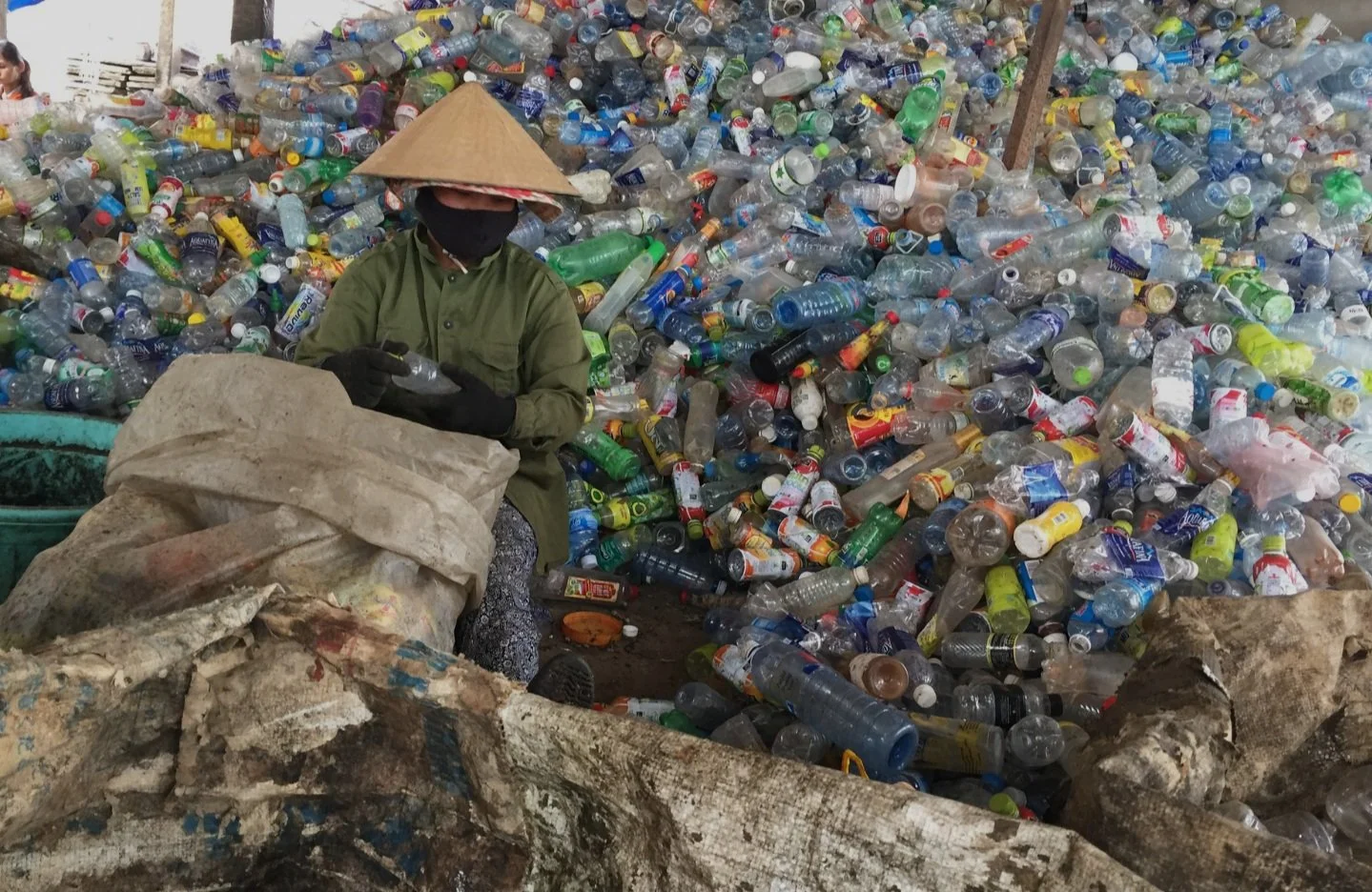
The second challenge lies in the relaxed nature of Vietnam’s waste collection process, accomplished through an extensive network of unofficial recyclers and waste pickers. They create an enormous environmental service with very little defense, training, or integration into formal waste handling mechanisms. Recycling operations and EPR schemes can unravel without form or official recognition. Professionalization and upgrading initiatives in the waste industry need to be inclusive, with informal workers involved but enhancing health and safety.
Second, and most importantly, there is consumer choice and public awareness as the breakpoint. Vietnamese youth prefer outdoors, and yet one-piece plastic pervades everywhere—pick-up orders for delivery orders via carry-out packets. Training, advertising, and reinforcing action remains one-shot and episodic. Unless one insists on forcing population itself to act more in balance in terms of plastic consumption, downstream policy cannot get its purchase.
Both at the firm level, EPR and waste reduction compliance is weak or voluntary in the majority of sectors. Global standards for sustainability can be adopted by multinationals, but enforcement by local businesses, especially small- and medium-sized enterprises, is sporadic. Vietnam’s government agencies must institute stricter guidelines, open windows of reporting, and stricter penalties for default if EPR needs to become an earnest instrument and not a routine exercise.
There are extreme technical and infrastructural limitations as well. Vietnam’s recycling infrastructure is underdeveloped and limited to only certain urban provinces. Rural provinces don’t have the luxury of formal waste treatment facilities, and waste transportation over distances has additional logistics and capital costs. Recycling technology, waste-to-energy, and domestic sorting plants have to be financed in order to create a circular economy capable of managing Vietnam’s plastic past.
All of that, however, is weighed against encouraging indications of cooperation and entrepreneurship. Pilot ventures led by NGOs and aid groups—Ho Chi Minh City circular economy systems, waste-sorting at schools, biodegradable packaging research—are promising. Even a few Vietnamese entrepreneurs are recycling plastic detritus into building materials or haute couture accessories. Such private and communal action, with increased government backing and extension, might be part of a larger solution.
Conclusion
Vietnam’s plastic pollution epidemic is not an implement one, nor a deny one—it is a do-nothing one. The government has set the groundwork with robust words, progressive policies, and lofty ideals. But unless they are to be equaled by structural investment, institutional reform, and accountability structures, then Vietnam’s plastic war remains at aspiration level.
Closing the gap between vision and reality, therefore, entails that Vietnam should first construct, consolidate local governance, legalize the shadow economy, and establish infrastructure fitting for a sustainable waste economy. Plastic pollution intersects governance, public health, environmental sustainability, and social equity. Solving this issue is less about removing plastic from the roads—it’s more about constructing an apparatus that keeps it out of the environment altogether.
Ambition is a good starting point. But when it comes to Vietnam’s fight against plastic waste, enforcement is what will turn ambition into reality.