


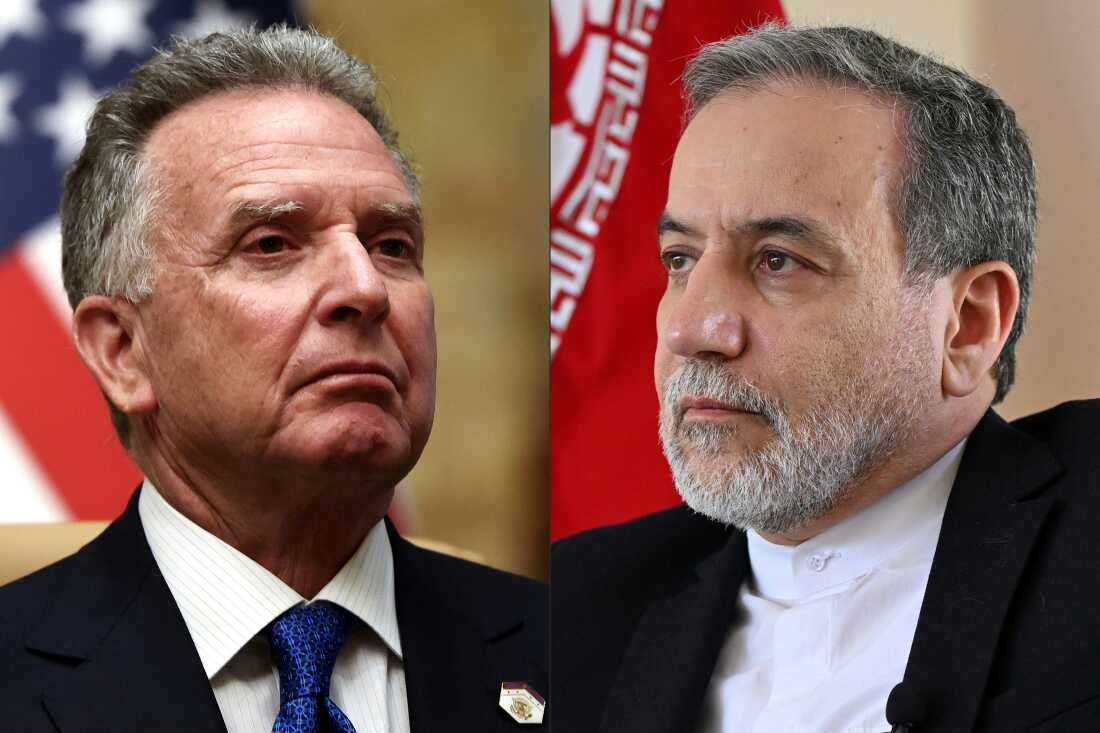
The war, which began with the US-Israeli attack on Iran on February 28, 2026, is currently in a period of ceasefire. What follows remains highly uncertain. A process full of fluctuations and contradictions continues to unfold.
What is certain, however, we are at a stage to be able to grasp what has happened so far and draw some conclusions.
The Center for Iranian Studies (İran Araştırmaları Merkezi – İRAM) in Türkiye is one of the institutions that has analyzed the issue well through its meetings and publications.
This time, we will look at the evaluations made by a researcher from the institution, Oral Toğa, during an online roundtable discussion held by the center at the end of March.
——————————————————————————–
US’s strategic ambiguity
Oral Toğa begins his remarks by stating that he agrees with the evaluations of Emine Gözde Toprak and Dr. Rahim Farzan: The US is in a deadlock. He identifies the reason for this, as Dr. Rahim Farzan also mentioned the ambiguity of the US’ strategic objectives upon entering the war. He visualizes the situation in the war as follows: You hit the person you’re up against and knock them down; they get back up, and you hit them again. This time they faint, and when they regain consciousness, you hit them once more. But why are you hitting him? Why did you start the fight in the first place?
US’ “rollercoaster of objective”
Toğa outlines the chronology of the US “objective rollercoaster”: For the US, the process began as “supporting the protesters”, then shifted to “regime change,” and later the focus moved to the “nuclear and ballistic missile” issue. While negotiations on this matter were ongoing, the war broke out. Once the war started, the US reasserted the goal of “regime change”; however, over time, this evolved into “eliminating the threat,” and subsequently into “dismantling ballistic missile capacity”. As for the recently proposed “ground operation”, its underlying purpose remains highly ambiguous according to Toğa.
Israel’s highly specific objective: An Iran wounded by the war
Similar to Dr. Rahim Farzan’s points, Oral Toğa contrasts the US’ strategic ambiguity with Israel’s highly specific objectives. Israel’s goal was for “Iran to be wounded, so severely, if possible, that those wounds would kill it after the war ends.” According to this objective, with the infrastructure and industrial destruction suffered during the war, Iran would, in the medium and long term, be crushed under its economic problems and rendered unable to meet basic needs such as electricity, water, and gas. In other words, Israel’s aim was to “sow the seeds of can of worms” on Iranian soil during this war, leaving Iran so preoccupied with its own domestic issues that it would be incapable of taking any action against Israel.
“Passive defense” of Iran
Moving on to the Iranian side, Toğa notes that while Iran’s “mosaic defense” is frequently highlighted in its wartime methods, its “passive defense” strategy should not be overlooked either. In 2003, a Passive Defense Organization was founded under Iran’s General Staff. This “passive defense” was intended to make it more difficult for infrastructure, organizations and the public to be targeted before an attack took place. This defense includes a series of measures such as selection of secure locations, the dispersion of production and storage over a wide area, reducing vulnerabilities, concealment, camouflage, deception, and the securing of critical centers and command hubs (including underground facilities). Toğa states that Iran has been working and preparing for these very days for 25 years.
Iran’s strategy of “cost-imposition”
While Iran aimed to protect itself with this “passive defense,” it simultaneously sought to deter attacks by employing a “cost-imposition” strategy. According to Toğa, the logic was as follows: I cannot build aircraft carriers or F-35s, and I cannot retaliate against attacks using such means; however I can respond to those attacking me with these aircraft carriers and F-35s in such a way that I can deter them. This is an “asymmetric defense”. Iran tailored its investments accordingly, which is, for instance, why it prioritized missile technology.
“Proofs of concept” of cost-imposition
Toğa explains that Iran conducted two “proofs of concept” for this strategy: The proof of concept for the dimension aimed at generating economic consequences was carried out through the Houthis’ activities in the Gulf of Aden over the past few years. Iran took note of the results produced by the efforts to “close” the Gulf of Aden and the types of responses they provoked. The proof of concept for the rather military dimension, the missiles, was executed through Operations True Promise 1 and 2, as well as attacks carried out by Hezbollah and other groups aligned with Iran. Once again, Iran “took its notes”. Toğa also emphasizes that the attack on Aramco was significant regarding cost-imposition.