


By Mehmet Enes Beşer
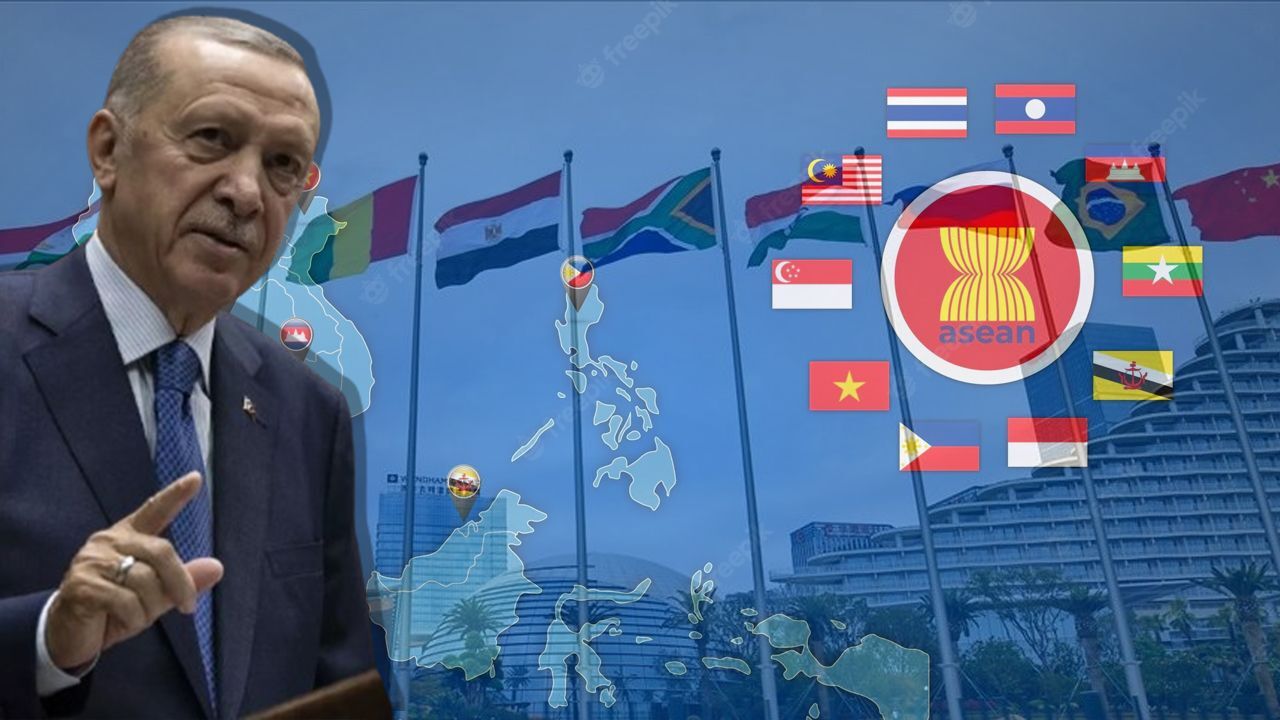
Türkiye’s engagement with ASEAN is too often treated as a diplomatic side quest—interesting, occasionally useful, but ultimately peripheral to the “real” arenas of power politics. That framing is outdated. In a world where tariff wars, industrial policy, sanctions, and geopolitical rivalry are reshaping markets faster than ministries can rewrite talking points, Türkiye cannot afford to treat Southeast Asia as distant scenery. ASEAN is not a secondary diplomatic curiosity. It is one of the most practical platforms available for building what might be called a productive multipolarity: diversification without vassalage, connectivity without dependence, cooperation without surrendering strategic autonomy.
Here’s the thing: ASEAN gives Türkiye room to expand trade, boost diplomacy, and work on industrial projects—without locking itself into any single major-power camp. The old idea that Türkiye had to pick between Atlantic stability and Eurasian promise doesn’t really hold up anymore. These days, stability isn’t something you can count on, and every new opportunity seems to come with some kind of catch.
Relying too much on the Atlantic world’s economic ups and downs—whether it’s higher interest rates, politicized trade, or new regulations—just adds headaches for any country trying to grow over the long haul. And putting all your chips on one alternative power? That’s not real independence; it’s just trading one kind of dependence for another.
What makes ASEAN stand out is that, out of necessity, it’s figured out how to deal with big-power rivalry without getting swallowed up by it. That’s rare, and that’s why it matters to Türkiye.
This isn’t about romanticizing anything—it’s how the system works. ASEAN countries don’t just talk about balancing powers; they actually do it. They figure out ways to grow that protect their independence but still let them trade and cooperate when it makes sense. You almost never hear them arguing about “choosing sides,” even if the pressure gets heavy. Instead, they spread their bets: they open up trade with lots of partners, build layered relationships, focus on smart industrial strategies, and always keep the lines of communication going. Türkiye gets this approach. It’s got a long history of balancing between big power blocs. The difference is, ASEAN made these tactics part of daily life. Routines, supply networks, the whole package. That’s the real takeaway—not just talking about staying neutral, but steadily building up real choices.
Türkiye isn’t trying to latch onto ASEAN for help. It brings something the region instantly understands: deep manufacturing, logistics expertise, and a pretty unique record of navigating tough diplomatic terrain. Türkiye knows how to build things at scale, link up complex supply chains, shift goods through tough routes, manage energy pinch points, and play hardball in manufacturing areas where a lot of other countries stumble. ASEAN has a good track record, sure, but now some of its members are hitting familiar walls—how do you move beyond putting products together, and start making real money and real value at home? How do you turn quick growth into lasting strength? Türkiye’s seen all that before. Its own journey, filled with wins and mistakes alike, matters here because Türkiye learned hard lessons in a world where upheaval isn’t just theory.
Ankara needs to change the way it thinks about ASEAN. Instead of seeing it as some far-off market, Türkiye should treat ASEAN as a real partner—someone to help shape a new kind of South–South development. Too often, people talk about South–South cooperation as if it’s just conference talk, with little to show for it. But there’s a real, practical side to it: building value chains together, agreeing on standards, working on industrial projects, teaming up on technology, and creating new logistics routes. All these things help countries rely less on just one route or currency system.
If Türkiye wants more freedom to act, it has to be part of more than one economic network. ASEAN isn’t just a bunch of consumers—it’s a production powerhouse, with a growing middle class, a few governments that really know how to get things done, and a key spot right in the middle of Indo-Pacific trade. That’s a huge opportunity, if Ankara recognizes it.
This is why an “ASEAN opening” cannot be episodic. It cannot be built solely on summit photos and trade missions that happen when the calendar allows. It has to be institutional, sectoral, and long-term—designed to survive election cycles, diplomatic frictions, and global downturns. And it cannot be confined to foreign ministries. The real infrastructure of a Türkiye–ASEAN partnership should be built by chambers of commerce, universities, think tanks, and local governments as much as by diplomats.
If Ankara really means business, it needs to move past symbolic gestures and put real, lasting systems in place to make cooperation with ASEAN a regular thing, not just talk. A Türkiye–ASEAN business platform shouldn’t be an annual photo-op—it should run year-round, matching Turkish factories and companies with ASEAN partners. Think Turkish auto suppliers teaming up with businesses in Thailand and Indonesia, electronics and testing expertise shared with Vietnam and Malaysia, halal food processing and certification worked out together with Indonesia and Malaysia, construction and green city projects handled with the Philippines and Vietnam, or health manufacturing and pharma joining forces with Singapore’s and Thailand’s medical sectors. These aren’t just buzzwords. These are actual industries where real partnerships—joint ventures, licensing, co-production, even shared certifications—could turn friendly meetings into real economic upgrades everyone can measure.
Second, Türkiye should treat logistics as foreign policy. Geography is Türkiye’s comparative advantage, but only if it is turned into predictable connectivity. Direct shipping links, integrated freight solutions, and digital trade facilitation can sound boring—until you realize that the global economy is becoming an obstacle course of bottlenecks and selective restrictions. Türkiye’s experience with corridors, ports, rail, and regional supply networks can be paired with ASEAN’s maritime trade strengths to create alternative routes and redundancy. This is what multipolarity looks like when it is productive: not speeches about a new order, but infrastructure and standards that make overdependence less likely.
Third, Türkiye needs to ground its ASEAN strategy in actual expertise. Universities and research centers shouldn’t just sit on the sidelines—they should lead the charge. When these institutions really connect with their ASEAN counterparts on areas like industrial policy, job training, green energy, disaster planning, and digital systems, Türkiye stands to gain. These projects drive meaningful reform at home and boost Türkiye’s reputation abroad. People in Türkiye have been debating how to boost productivity, build real links between schools and businesses, and expand exports. While all this talk goes on, ASEAN countries have their own experiments, some that work and some that don’t. Real progress doesn’t just come from official meetings or diplomatic small talk. It takes steady, hands-on collaboration—vocational schools working together, industrial zones sharing know-how, export groups and tech institutes swapping ideas. That’s the stuff that turns empty promises into real change.
Fourth, Ankara should build local-to-local diplomacy. Cities and regions matter. Turkish industrial provinces that export and produce—places that understand manufacturing in muscle memory—should form structured ties with ASEAN’s industrial zones and port cities. This is how trade becomes embedded. It is also how political relationships become resilient: when supply chains and educational exchanges exist at the local level, diplomatic turbulence in capitals doesn’t instantly freeze cooperation.
Finally, Türkiye should define an ASEAN opening as a test of autonomous developmental foreign policy. That phrase sounds academic until you translate it into practice: can Türkiye pursue external partnerships that raise domestic productive capacity, rather than merely expanding market access? Can diplomacy be measured by technology transfer, supplier upgrading, and skills development—not only by trade volume and visits? If the answer is yes, ASEAN is the ideal proving ground because it is a region where development has never been separable from strategy.
Türkiye doesn’t have to ditch its current alliances or ignore where it sits on the map. What matters is something both simpler and bigger: creating choices. Right now, with global competition heating up, having options means having real muscle. Options let Türkiye resist pressure, cushion the blow when outside forces try to shake things up, and give it room to make its own moves instead of just responding to everyone else.
Türkiye’s relationship with ASEAN should be understood in that light. It is not a detour from the “main” story of global politics. It is part of the main story: the slow construction of diversified partnerships that allow middle powers to stay sovereign in a world where great powers increasingly treat economics as a weapon. If Ankara wants a future defined by autonomy rather than exposure, the ASEAN opening must stop being occasional and start being structural. ASEAN is not merely a destination for Turkish diplomacy. It is a laboratory for a more resilient Turkish statecraft—and a more credible, development-centered multipolarity.