


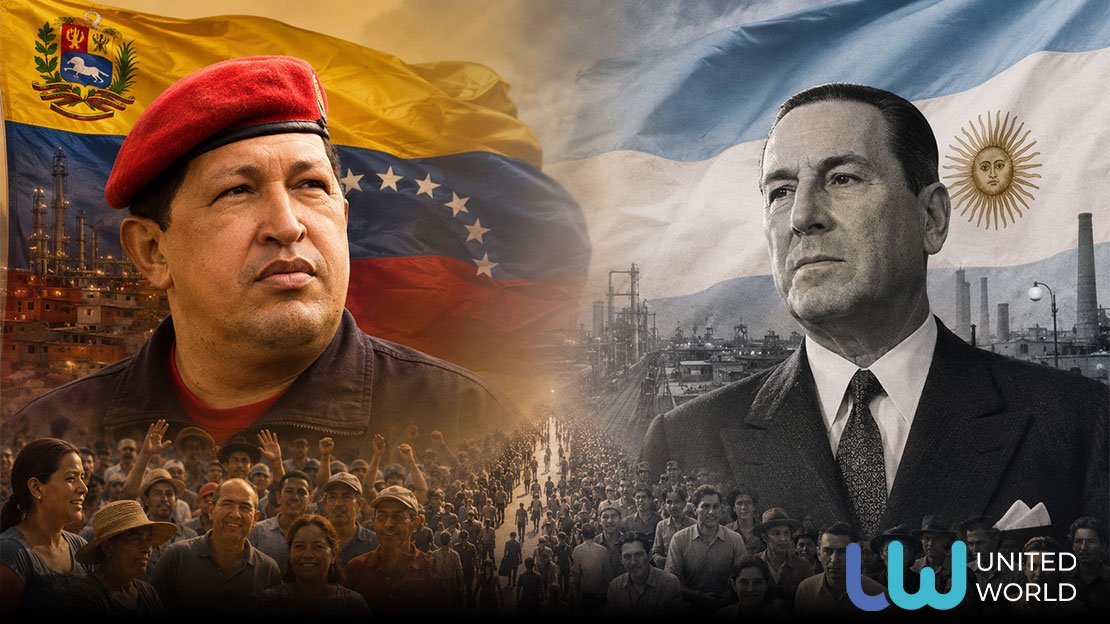
The events that unfolded in Venezuela after January 3rd have profoundly shaken the country’s political landscape. Beyond the search for culprits and traitors—mostly unfounded and driven by emotional responses to the pain and helplessness caused by the murder of hundreds of Cubans and Venezuelans and the kidnapping of President Maduro and his wife—the truth is that the government was unable to prevent what happened, and the ruling party has remained paralyzed to this day, incapable of finding solutions beyond the need for survival or formulating a political proposal for the future.
But the Venezuelan people, shaped by Commander Chávez’s political pedagogy, in a very short time (less than seven months), have been finding innovative forms of organization and mobilization that differ from the traditional methods of the last 25 years. The avalanche of meetings, demonstrations, and statements that have taken place in different sectors of society, and which reached a turning point on July 24th, the anniversary of the birth of the Liberator Simón Bolívar, clearly demonstrate this.
A unique organization and mobilization, unlike anything seen before, are charting the course and shaping the country’s political future. This movement aims to advance resistance against the current state of affairs, where the United States government dictates strategic decisions regarding the economy, finance, and foreign policy.
The trends revealed by current events indicate a growing tendency in the country toward a movement-based form of organization, given the failure of partisan politics to unify, organize, and mobilize society. In theoretical terms, movementism is a political and social trend in which identity and organization are based on a large, broad movement with the participation of diverse social sectors, supported by charismatic leadership rather than a traditional, centralized party. To that extent, it is more flexible and mobilizes a wide range of ideological positions. I believe this is what is needed at this moment to bring together a patriotic, pro-independence, and sovereigntist national will—still dispersed—that could lead to the formation of a broad anti-imperialist and anti-colonialist patriotic front, if such a goal is even possible.
The most successful movement-based experience in Latin America emerges from the practice of Peronism in Argentina. I have turned to Silvano Pascuzzo, a graduate in Political Science from the University of Salvador in Argentina and a professor in the International Relations program at the University of Lanús, to explain his country’s experience in this regard.
To illustrate this, Pascuzzo goes back to September 16, 1955, when a civic-military uprising occurred against the democratic government of General Juan Domingo Perón. The Argentine researcher states that: “Peronism, as a militant organization, was already mortally wounded. Ten consecutive years in power had transformed it into a bureaucratic structure that only knew how to repeat slogans, perform rituals, and threaten harsh reprisals, which never materialized. It wasn’t that it had ceased to be ‘popular and representative,’ but rather that it was no longer ‘revolutionary.’”
The reactionary uprising unleashed unchecked violence due to the government’s inability to respond effectively. Although the insurrection failed, General Perón opted for leniency toward the rebels in order to avoid a bloody civil war. He proposed dialogue, which was rejected. The political forces involved ultimately chose violence.
Perón decided to leave the country, leaving his supporters “distressed and bewildered.” This unleashed unprecedented violence, orchestrated by General Aramburu and Rear Admiral Rojas. A brutal period of obscurantism ensued, during which the names of Perón and his deceased wife, Evita, were banned by decree, high-ranking leaders were imprisoned, and activists were persecuted.
The mass movement that supported Perón, which Pascuzzo described as “the largest in America,” crumbled as the government announced the end of Peronism, which, according to the regime’s supporters, “would soon be overcome.” In this context emerged the figure of John William Cooke, a former congressman of nationalist origin with no strong ties to Perón, but rather an exponent of profound differences with him, yet “a faithful and passionate follower of the Leader and his Doctrine.”
Cooke had developed a precise diagnosis of the situation and intended to confront the regime by centering mobilization from below, “starting from popular bases, which—he rightly believed—were still intact.” He demanded that Perón return to his doctrinal principles and call upon the workers to be active protagonists in his government’s work. He rejected “foolish authoritarianism,” the ritual of power, the palace intrigues, and the abuse of “combative rhetoric” disconnected from reality. Finally, he was not a passionate advocate of the rapprochement with the United States, initiated between 1952 and 1954 in search of investments in the energy sector.
Cooke ended up imprisoned and prosecuted, along with other leaders. In that situation, he recommended “composure, patience, and a serious plan that included ‘specific but effective actions of resistance,’” capable of showing the people that Peronism was still alive, even in the midst of defeat. His reflections received a prompt response from the Leader, generating a high-level exchange with strong repercussions for the future.
The context created conditions for a group of army officers and nationalist civilians to rise up against the dictatorship on June 9, 1956, although Peronism, as a “mass phenomenon,” did not react and was absent. Despite the uprising’s failure, it signaled a shift in the political landscape. The regime eroded due to its own contradictions, internal disintegration began, and its support base became demoralized. Important figures abandoned the dictatorship, while the necessary circumstances arose for a broad unity among opposition sectors, which no longer openly rejected Peronism.
Pascuzzo continues, recounting that after his escape from prison, Cooke was appointed by Perón as “his personal representative in hiding,” receiving the unofficial title of “Chief of Staff of the Resistance.” In this capacity, he had risen to a position of authority sufficient to discuss with Perón the need for a medium- and long-term strategy for the hitherto apathetic National and Popular Movement.
The aim was to provide “tactical leadership” to Peronism by promoting new leaders who would be given responsibilities in the midst of the struggle, especially those with real and concrete ties to the world of labor, the Church, the Armed Forces, and culture. Cooke believed that: “To resist was to unite—in a dense network of clandestine cells—the best of the ‘Community,’ its most ethical and educated elements, to lay the foundations for a subsequent mass uprising. In this way, starting with multiple forms of struggle that were initially peaceful, the call was to ‘Resist to Live, Live to Fight, and Fight to Return.’”
Perón—from exile—had the merit of recognizing the moment and its dynamics; he listened, reflected, and acted “devoid of ego, formalities, and petty ambitions.” Under the Leader’s guidance—from afar—the Peronist movement began to react. Pascuzzo recounts that later on: “In the neighborhoods, residents organized barricades, blackouts, and minor attacks. Intellectuals published books and articles defying censorship; they gave talks, traveled, and ventured into remote places, enlightening the activists, recounting forgotten stories, and explaining fundamental processes.”
A turning point occurred. Pascuzzo says that: “The cynical and haughty middle-class professionals became militants; the university students—the vanguard of the anti-Peronist movement in the past—became activists; the women transformed their underwear into stashes for carrying clandestine correspondence. The priests, from their pulpits, and the military, in their barracks, decided to return to the ‘common home’ they had abandoned in 1955, prisoners of anger, confusion, and ignorance.” Cooke had saved Peronism, “removing its burden of a bureaucratic, corrupt, and demagogic project,” enabling it to resume the path of struggle and the fight against the dictatorship on all fronts.
The impact was immediate. Workers’ delegates, without their unions—which were under government control—created internal committees in factory hallways, break rooms, and cafeterias, explaining the virtues of a glorious past they had never known, a past made possible by Perón and Evita. It was deemed time to hold internal “elections” within Peronism.
But there was also a reaction from the Radical Civic Union (UCR), the political party that in 1946 had been the main force behind the opposition to Peronism. Now, a decade later, it found itself irreconcilably divided over whether or not to accept the legalization of the Justicialist Movement. They were looking to the future and knew the consequences it would bring.
In 1957, a radical faction led by Rogelio Frigerio traveled to Caracas, where Perón was in exile. In Cooke’s presence, they offered the former president a “lucrative tactical agreement,” requesting his support in exchange for the normalization of the unions and the lifting of the proscription against him. Cautiously, Perón did not give an immediate response. He felt he needed to discuss the proposal with Cooke. He knew that the legalization of Peronism, the reorganization of the CGT (General Confederation of Labor), and his own return to the country were important. He thought he could build an “Anti-Oligarchic and Industrialist Front” together with Frigerio and a sector of the Radical Civic Union. He agreed with Frigerio on economic and international policy issues and did not want to waste any more time, but he needed to know Cooke’s opinion before giving an affirmative answer.
Cooke had doubts; he didn’t trust the radicals or Frigerio. He sensed that their proposal involved “a cunning ploy to seize power, and then try to co-opt a portion of Peronism—its bureaucratic and conservative wing—with ‘seductive siren songs’.”
He told Perón that he would support him, whatever decision he made, but that he thought the best strategy at that juncture was to remain neutral. He believed it was necessary to continue resisting a “political system tainted by nullity, until [Peronism] was legalized by a defeated regime, through organized popular struggles.” But Perón accepted the agreement, and the “Caracas Pact” was signed, giving Frondizi the Presidency in 1958. History proved Cooke right; once in government, Frondizi and the Radicals did not honor their commitment. On the contrary, the unions continued to be persecuted, and Peronism remained illegal. The shift to the right meant unpopular economic adjustments that were rejected and resisted in the streets by Argentinians.
Cooke was forced to reactivate the Resistance, and in 1959, sixty-two unions belonging to the General Confederation of Labor (CGT) demanded the immediate normalization of their organizational structures. The workers remained Peronists and wanted to participate in the major strategic discussions.
Pascuzzo concludes by recalling that: “In 1960, Cooke resigned from his post, supporting the Cuban Revolution, which had triumphed on January 1, 1959. He never broke with Perón, remaining loyal to him until his death in 1968. He was convinced that Peronism should be a ‘Mass Movement’ with an insurrectionary strategy, given that the times of moderation and bloodless reforms were irretrievably behind us.”
Every country is different; its history and circumstances reflect its unique characteristics. However, it is important to study the experiences that offer valuable lessons for the daily struggle. Peronism is specific to Argentina; however, any discerning reader will discover in this text some variables that, from my perspective, should be considered in Venezuela today, given the current events and circumstances. It is no coincidence that Commander Chávez always expressed extraordinary admiration and respect for General Perón.