


By Yiğit Saner
The question of how the war against Iran will reshape relations between Tehran and the Gulf states has become one of the most critical issues on the West Asian agenda. From the very first day of the war, Iran targeted American bases in the region as well as Gulf territories from which attacks against it were launched. In recent days, reports in the Western press have also claimed that some Gulf countries carried out retaliatory strikes against Iran during the active phase of the war.
Reports Emerging Over The Past Week
The Wall Street Journal wrote that the UAE targeted a refinery on Lavan Island in the Persian Gulf in early April. Israeli media claimed in March that a desalination facility inside Iran had been struck.
Bloomberg said the UAE proposed joint attacks against Iran to Saudi Arabia and Qatar, but the offer was rejected.
The Financial Times revealed that Israel had sent advanced weapons systems to the UAE in order to “intercept Iranian missiles and drones.” According to the newspaper, Tel Aviv also provided Abu Dhabi with critical real-time intelligence support. US Ambassador to the United Nations Mike Waltz likewise acknowledged that Israel had deployed Iron Dome missile batteries in the UAE.
Reuters, meanwhile, reported that Saudi Arabia carried out airstrikes against Iranian territory at the end of March. It added that an informal de-escalation understanding later emerged between the two sides and that Iranian attacks decreased significantly afterward.
Collaboration Diplomacy and Threats
The Israeli Prime Minister’s Office also announced that Prime Minister Benjamin Netanyahu met UAE leader Mohammed bin Zayed Al Nahyan in Abu Dhabi on March 26. Although the UAE denied the meeting, the Tel Aviv administration insisted it had taken place. Iranian Foreign Minister Abbas Araghchi stated that Tehran was aware of both the summit and the UAE attacks, warning that “Israel’s collaborators will pay the price.”
Statements that Completed the Picture
Following all these developments, Russian Foreign Minister Sergey Lavrov’s statement that “one of the aims of the war against Iran is to prevent Tehran’s normalization with Arab countries” drew attention. A remark by Israel’s US Ambassador Mike Huckabee — “The Gulf countries must choose between Israel and Iran” — also pointed to efforts to create a new regional alignment.
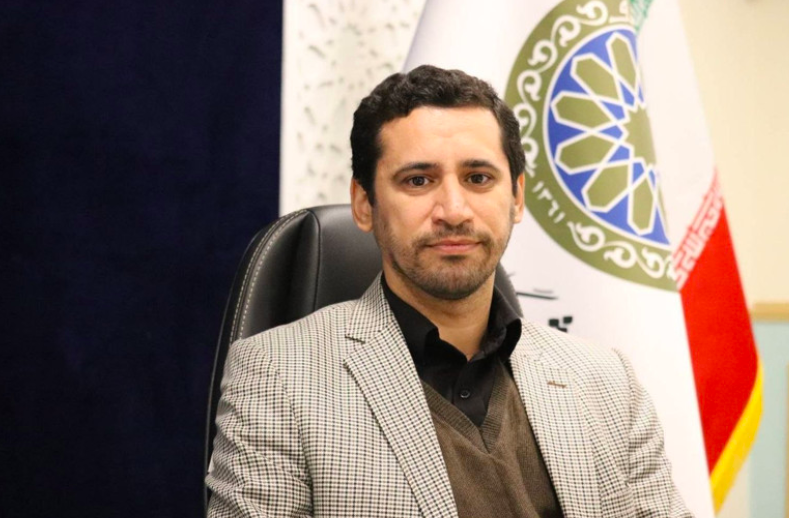
We spoke with Associate Professor Ramin Mededlu of the Department of Political Science at Iran’s Imam Sadiq University about the new balance of power in West Asia, the diverging approaches of Gulf countries toward Iran, the UAE’s increasingly hardline posture, and pressure attempts targeting Türkiye, Yemen and Iran through Somaliland.
“Regional Approaches Differ”
Is a permanent bloc against Iran emerging in the Gulf?
The narrative that a unified and permanent Arab-Israeli bloc against Iran has emerged may currently dominate mainstream Western media discourse, but it does not fully correspond to realities on the ground in the region.
Internal disputes among Gulf countries, the collapse of the image of American military power in the region, and Israel’s growing role in regional security affairs indicate not only that an Arab-Israeli bloc has failed to emerge, but also that the former cohesion of the Gulf Cooperation Council (GCC) is under threat.
Let us remember: Saudi Arabia, the UAE and Bahrain imposed a blockade on Qatar from 2017 to 2021, while Iran and Türkiye supported Doha. Oman, meanwhile, consistently criticized the military ties between GCC members and the United States. The UAE’s deepening security and political cooperation with Israel further widened the fault lines between Abu Dhabi and the other Gulf members.
This fragmentation stemming from internal disputes became fully visible during the recent war against Iran. During the conflict, we witnessed four distinct approaches among GCC members:
- Oman opposing the war and deepening friendly relations with Iran
- Qatar opposing the war and engaging in diplomatic contacts with Tehran
- Saudi Arabia cautiously opposing the regional expansion of the conflict
- The UAE acting in full coordination with the US and Israel to escalate tensions with Iran
“Their Unity Has Fragmented”
Because of these differing approaches, no unified GCC policy emerged. The UAE appeared as the third hostile country against Iran; Saudi Arabia sought to keep tensions under control and maintain diplomatic communication channels with Tehran; Qatar preserved its mediator role while engaging in secret negotiations with Iran; and Oman acted alongside Iran particularly regarding the Strait of Hormuz.
These differences stem from differing strategic outlooks toward Iran among GCC states:
- The UAE’s doctrine of hard deterrence
- Saudi Arabia’s strategy of controlled rivalry
- Qatar and Oman’s normalization-oriented engagement approach
As a result, we can comfortably say this: it is impossible to speak of a permanent bloc against Iran encompassing either regional or extra-regional powers. On the contrary, the old unity among Gulf countries is fragmenting.
“The Abu Dhabi File Cannot Be Separated From Tel Aviv And Washington”
To what extent can UAE-Israel military rapprochement deepen? Where do Iran’s red lines begin in this process?
Following the Abraham Accords, the UAE rapidly expanded military and security relations with Israel beginning in 2020. We can now say these ties have evolved beyond tactical cooperation into a strategic partnership. Israeli officers operating UAE air defense systems, the Israeli Air Force striking missile launchers inside Iran, the integration of Israeli offensive operations with UAE defenses, the $2 billion agreement signed with Elbit Systems, and the memorandum envisioning the domestic production of Hermes 900 drones in the UAE through technology transfer…
All of this demonstrates the existence of a strategic military and security partnership between Israel and the UAE. This partnership has transformed the UAE from a simple security importer into a co-producer of threats against Iran.
The shift in Iran’s view of the UAE must also be considered one of the consequences of the recent war. The conflict made clear that the strategic cooperation between Israel and the UAE was built on the basis of hostility toward Iran. Iran’s four red lines — the UAE directly entering the war, UAE territory being used for operations against Iran, radar systems in the UAE being used to monitor Iran, and attempts to alter the security architecture of the Strait of Hormuz — were violated by Abu Dhabi.
In Tehran’s eyes, the UAE is now neither a normal state nor a neighboring country like the other Gulf states. Like the Kurdistan Regional Government in Iraq, it is regarded as a “hostile base” lacking the characteristics of a fully sovereign nation-state. This also explains why Tehran does not separate the Abu Dhabi file from Washington and Tel Aviv despite its red lines having been crossed.
Iran’s Countermeasures
Is it possible for Israel to use UAE territory more actively against Iran? How could Iran respond?
The UAE’s attacks on Iranian islands on the first day of the ceasefire, its encouragement of a US occupation of those islands, and its participation in efforts to “liberate” the Strait of Hormuz demonstrate that the UAE can no longer be viewed like the other Gulf states. Rather, it has become the third party in the direct US-Israeli war against Iran.
It is entirely possible that the US and Israel could pursue a dual-track strategy — continuing the war through the UAE while simultaneously claiming they have not violated the ceasefire. The course of the war shows that Iran is preparing itself economically, militarily and politically for such a scenario.
Iran’s shift of indirect import and export routes from Jebel Ali to ports in Pakistan and Türkiye, its heavy missile and drone attacks against the UAE during the war, the expansion of its military target list in the event of renewed conflict, and the possibility of imposing a naval blockade on the UAE after operations in Hormuz all demonstrate that Tehran has adopted a strategy of hard deterrence against Abu Dhabi as well.
The Somaliland Front: Pressure Against Türkiye, Iran and Yemen
Is a new axis of Israeli influence emerging in Yemen and the Red Sea through Somaliland?
This is an extremely important question. Strategic cooperation between the UAE and Israel has expanded beyond the Persian Gulf into Africa. This cooperation directly targets the regional interests of Türkiye, Saudi Arabia and Iran. From Iran’s perspective, Israel’s formal recognition of Somaliland is a strategic move aimed directly at penetrating the Bab al-Mandeb Strait. The same objective had previously been pursued through the UAE’s involvement in the Yemeni civil war, but failed after disagreements emerged between Abu Dhabi and Riyadh.
Israel is now attempting to transform Somaliland into its own naval and air base, aiming not only to establish dominance over Yemen but also to limit Iran’s Red Sea maritime strategy and gain the ability to interfere with maritime traffic in the region. The UAE’s military and commercial presence in Somaliland further clarifies the convergence of Emirate and Israeli interests on this front.
In my view, Iran, Türkiye and Saudi Arabia should set aside their differences, adopt concrete policies against UAE-Israel relations, and, together with Yemen, regard the Israeli-Emirate military presence in Somaliland as a legitimate target.