


The closure of the Strait of Hormuz has triggered one of the biggest shocks in global energy markets in decades. Nearly one-fifth of the world’s oil trade and a substantial share of liquefied natural gas (LNG) shipments normally pass through the narrow waterway between Iran and Oman. As tensions in the Gulf escalated and shipping traffic was disrupted, countries across Europe and Asia began urgently searching for alternative supply routes.
In Ankara, the crisis has revived a long-standing geopolitical ambition: transforming Türkiye into a major regional energy hub linking the Middle East, Central Asia and Europe.
The Turkish government has aggressively promoted several projects in recent months, presenting the country as a strategic alternative to Hormuz. Officials have proposed expanding the Iraq-Türkiye oil pipeline toward Basra, reviving pipeline discussions involving Syria and Qatar, integrating Turkmen gas into Turkish networks and accelerating the so-called “Development Road” corridor stretching from Iraq to the Mediterranean.
Energy and Natural Resources Minister Alparslan Bayraktar has argued that Türkiye can become “an alternative energy corridor” during the regional crisis. According to Anadolu Agency, Ankara sees the Iraq-Türkiye crude oil pipeline from Kirkuk to Ceyhan as one of the pillars of this strategy, alongside possible Qatari and Turkmen gas routes.
At the same time, International Energy Agency chief Fatih Birol publicly backed the idea of a Basra-Ceyhan pipeline bypassing Hormuz. Speaking to media, Birol described the project as strategically important for Iraq, Türkiye and Europe’s energy security.
But behind the ambitious rhetoric lies a far more complicated reality.
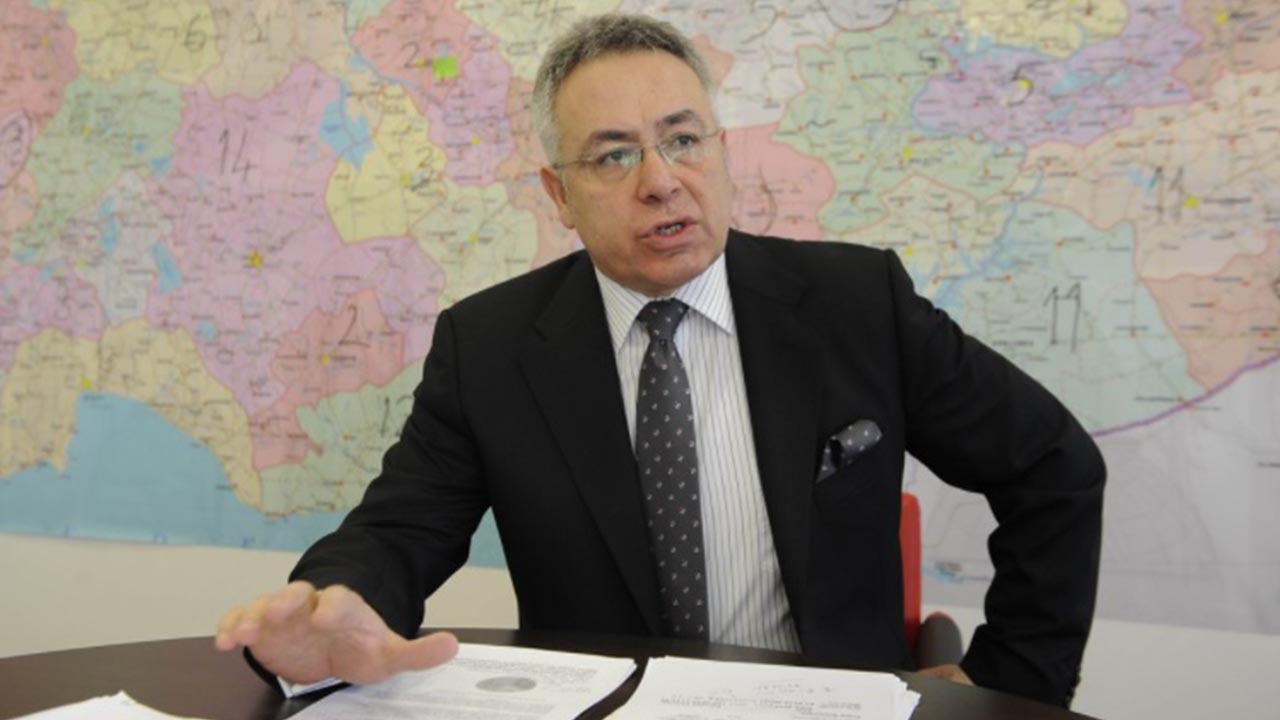
Turkish oil industry expert and engineer Necdet Pamir argues that the projects promoted by Ankara are being dramatically overstated. Pamir is a distinguished expert on the field. He was chairman of the Turkish Chamber of Oil Engineers, President of the Energy Commission of the oppositional Republican People’s Party, and continues academic research today in various universities.
Speaking to UWI, Pamir said none of the proposed corridors can realistically replace the Strait of Hormuz in either scale or economic efficiency.
“None of these projects can constitute a sufficient alternative to the Strait of Hormuz,” Pamir said. “That is where the real issue lies.”
According to him, the Turkish government and supportive media outlets are presenting infrastructure proposals as if they could absorb the enormous volume of energy normally transported through Hormuz, despite the fact that existing pipelines handle only a fraction of that capacity.
Pamir emphasized the sheer scale of the challenge. Around 20 to 21 million barrels of crude oil and petroleum products move daily through Hormuz, alongside roughly 20 percent of global LNG trade.
Against that backdrop, the Iraq-Türkiye pipeline appears modest.
“The capacity of the Iraq-Türkiye crude oil pipeline today is 1.6 million barrels per day,” Pamir noted. “Currently it carries only around 170,000 barrels.”
He criticized Turkish media outlets that portrayed the reopening of the line as a solution to the Hormuz crisis.
The pipeline itself also remains politically fragile. Flows through the Kirkuk-Ceyhan route were halted for long periods after attacks by ISIS and a major international arbitration dispute between Ankara and Baghdad over unauthorized Kurdish oil exports. Türkiye was ordered to pay roughly $1.8 billion in damages to Iraq.
Despite these complications, Ankara continues to push for expansion.
Turkish Energy Minister Bayraktar has proposed extending the line southward to Basra, Iraq’s major oil-producing region, in order to bypass the Gulf entirely. Turkish officials argue the project could redirect a significant portion of Iraqi exports toward the Mediterranean.
Investment questionable
Yet financing remains highly uncertain.
Pamir questioned whether international investors would commit tens of billions of dollars to infrastructure running through some of the most unstable territory in the Middle East.
“For the Türkiye-Iraq Development Road Project, they speak of 17 billion dollars even on paper,” he said. “Who would invest such money into a geography that is not sufficiently secure and contains so many risks?”
He argued that geopolitical instability alone makes long-term infrastructure investment deeply risky. Any route crossing Iraq would remain exposed to militia attacks, regional rivalries and shifting alliances.Pamir said this road would be perceived as a project against Iran and the Hashd Shabi, or the PKK, thus becoming an easy target.
“This is not an easy investment,” he warned. “That 17 billion dollars can quickly become 25 or 27 billion.”
The expert also criticized reporting about the Development Road. “It is claimed that the Turkish part of the Road is to 95% already completed. But then, you look at the reality: the path was announced starting operations beginning 2026, but if you look into the details of the project itself, it has three different stages: 2028, 2033 and 2050. All the terminology is mixed up here.”
“Is there really a state in Syria today?”
Another route passes through Syria, where Pamir pointed to the unresolved instability. Turkish officials and regional actors have increasingly discussed the possibility of pipeline routes through Syrian territory connecting Gulf gas to Türkiye and Europe. Some proposals date back years, including rival plans involving Qatar and Iran.
However, Syria’s infrastructure remains devastated after years of war.
Analysts and regional observers note that pipelines, ports, railways and electricity systems inside Syria require massive reconstruction before the country could serve as a serious energy corridor.
Pamir was even more blunt.
“You overthrew Assad,” he said. “But is there really a state in Syria today? This is more a structure that only stands thanks to US, Israeli and even Turkish support.”
There is also the question of economics.
Much of the proposed “Development Road” between Iraq and Türkiye involves railways and highways rather than pipelines. While officials describe it as a transformative trade corridor, Pamir stressed that maritime transport remains dramatically cheaper than overland routes.
“Sea transportation is seven times cheaper than road transport, three times cheaper than rail and twenty-one times cheaper than air transport,” he said. “When Hormuz reopens, will your proposed route remain commercially attractive?”
That concern is shared by international analysts. Even countries already possessing bypass infrastructure — such as Saudi Arabia and the United Arab Emirates — cannot fully compensate for a prolonged Hormuz closure. Existing alternatives cover only part of the disrupted flows and remain vulnerable to attacks and political instability.
Still, Ankara’s push is not solely about emergency crisis management. The projects also reflect Türkiye’s broader geopolitical repositioning.
Over the past several years, Ankara has sought to capitalize on Europe’s desire to diversify away from Russian energy dependence. The war in Ukraine accelerated that process, increasing Türkiye’s importance as a transit state between East and West.
At the same time, Türkiye itself remains heavily dependent on imported energy.
Pamir noted that Türkiye imports around 88 percent of its oil, 96 percent of its natural gas and 97 percent of its hard coal needs.
“That makes the economy extremely fragile,” he said.
He pointed out that energy price spikes following the Russia-Ukraine war caused Türkiye’s energy import bill to surge to nearly $97 billion in 2022. When oil prices later declined, the import bill dropped significantly, illustrating how vulnerable the Turkish economy remains to global energy fluctuations.
Ankara has therefore tried to diversify suppliers while maintaining leverage in negotiations with Moscow.
According to Pamir, Türkiye’s dependence on Russian gas has fallen somewhat compared with previous decades, though Russian oil imports remain substantial because Moscow continues to offer discounted prices under sanctions pressure.
At the same time, Türkiye has increased LNG imports from the United States.
“There is generally a tendency toward America,” Pamir said, though he cautioned against excessive dependence on any single partner.
This balancing act is central to Türkiye’s energy hub ambitions. Ankara wants to position itself simultaneously as a transit state, a trading center and a geopolitical broker capable of connecting Russian, Middle Eastern, Central Asian and potentially Eastern Mediterranean energy supplies to European markets.
The vision extends beyond pipelines. Türkiye is also promoting the “Middle Corridor,” an overland trade route linking Asia and Europe through the Caucasus. Turkish officials argue the corridor can provide an alternative not only to Hormuz but also to routes passing through Russia.
Yet nearly every proposed corridor faces major political and technical obstacles.
The Iraq-Türkiye pipeline requires stable cooperation between Baghdad, Erbil and Ankara. Syrian routes depend on reconstruction and political normalization. Central Asian gas projects require difficult agreements across the Caspian region. Financing remains uncertain for almost all major infrastructure initiatives.
For now, the closure of Hormuz has undoubtedly strengthened Türkiye’s geopolitical relevance. European governments and international energy institutions increasingly view the country as an important transit partner in a fragmented global energy landscape.
But becoming a true replacement for Hormuz is another matter entirely.
“The projects may increase Türkiye’s importance in the region,” Pamir said. “But they can never create an alternative equivalent to Hormuz.”