


By Adem Kılıç, Political Scientist
The war that U.S. President Trump declared “won” in its very first week now presents a very different picture, especially when viewed from the Pentagon’s perspective.
The reality on the ground has not deterred Iran but, on the contrary, has led Iran to come to the negotiating table with even greater confidence than it had at the Geneva talks, while simultaneously depleting U.S. military reserves.
From the U.S. perspective, both the battlefield and the negotiating table appear to have turned into a strategic dead end, leaving only narrower and riskier options compared to the starting point.
The rhetoric of “victory” has sparked serious scrutiny, particularly among military experts, and the question of what kind of victory is being discussed in an environment where Iran’s regime remains standing, maintains its presence on the ground, and preserves its influence over critical waterways has become a complete mystery.
In other words, Trump’s constant declarations of “victory” appear to be more of a political framing than a genuine strategic assessment, and this situation clearly highlights the gulf of incompatibility between military reality and political narrative.
In my view, two key issues lie at the root of this impasse.
The first is that Iran has viewed its nuclear program as a matter of sovereignty for years and is not backing down from it under any circumstances.
The second is the strategic use of the Strait of Hormuz by Iran—an issue that was not on the table before the war but has now become the core problem of this conflict.
If there had been a “victory” as Trump claimed, these two positions would have shifted in the opposite direction by now. In other words, the war should have meant Iran losing its fundamental strategic parameters.
However, neither on the ground nor at the negotiating table—which mirrors the reality on the ground—has anything changed.
The shifting balance and the asymmetric warfare model
On the other hand, from the U.S. perspective, the real change has emerged in the very nature of the military equation on the ground.
While the U.S. entered the conflict with high-cost, high-tech systems with long production cycles, Iran responded with low-cost, rapidly replaceable asymmetric tools.
This situation dealt a serious blow to the traditional model of conventional superiority.
The model Iran established through small, unmanned platforms, mines, ballistic systems, and dispersed cell structures shifted the cost-effectiveness balance against the U.S. At the very least, it prevented Iran from being the losing side under such intense attacks.
In other words, while the U.S. sought to maintain a high-tech capability, Tehran succeeded in dominating the battlefield with a low-cost yet sustainable attrition strategy.
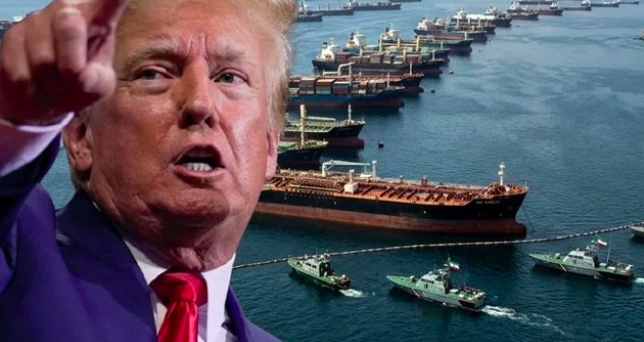
In this context, it appears that Iran is asserting control over the Strait of Hormuz not through a conventional navy or air force, but through a network-centric and decentralized resistance architecture, which can act as a deterrent against a military superpower like the U.S. from conducting a military operation in the Strait of Hormuz.
Political Calculations and Strategic Boundaries
At this juncture, the vast majority of analyses published on the global stage interpret the process and its outcome in the same way I do.
It indicates that the war initiated by the U.S. was actually launched not by military rationality, but by a group unable to read the realities on the ground, driven by strong political commitments and Israel’s misinterpretations of intelligence.
Indeed, the reality on the ground clearly demonstrates that this war is far removed from classic wars, lacking clear objectives and a sustainable exit strategy.
Moreover, the fact that Gulf countries and other U.S. allies—who have suffered significant economic and security losses due to the conflict—have refrained from intervening in the war despite Trump’s calls further supports the assessment that this is a war “lacking clear objectives and a sustainable exit strategy.”
Conclusion
This picture indicates that countries like the U.S., which possess classical military superiority, must now accept that they are entering an era where they cannot achieve strategic success through these conventional methods.
They are now forced to operate under the reality that high-tech power projection may fail to achieve success against low-cost, dispersed asymmetric systems.
Indeed, Trump, who recognizes this reality, finds himself caught between the political cost of acknowledging this impasse and the military risk of a second wave of attacks—one that even the Pentagon doubts would yield different results.
At this juncture, the question is:
Will Trump opt for a “victory” narrative he doesn’t even believe in, or will he succumb to Western arrogance and risk an even greater defeat by launching attacks on the Strait of Hormuz?